Gila purpurea
Yaqui chub
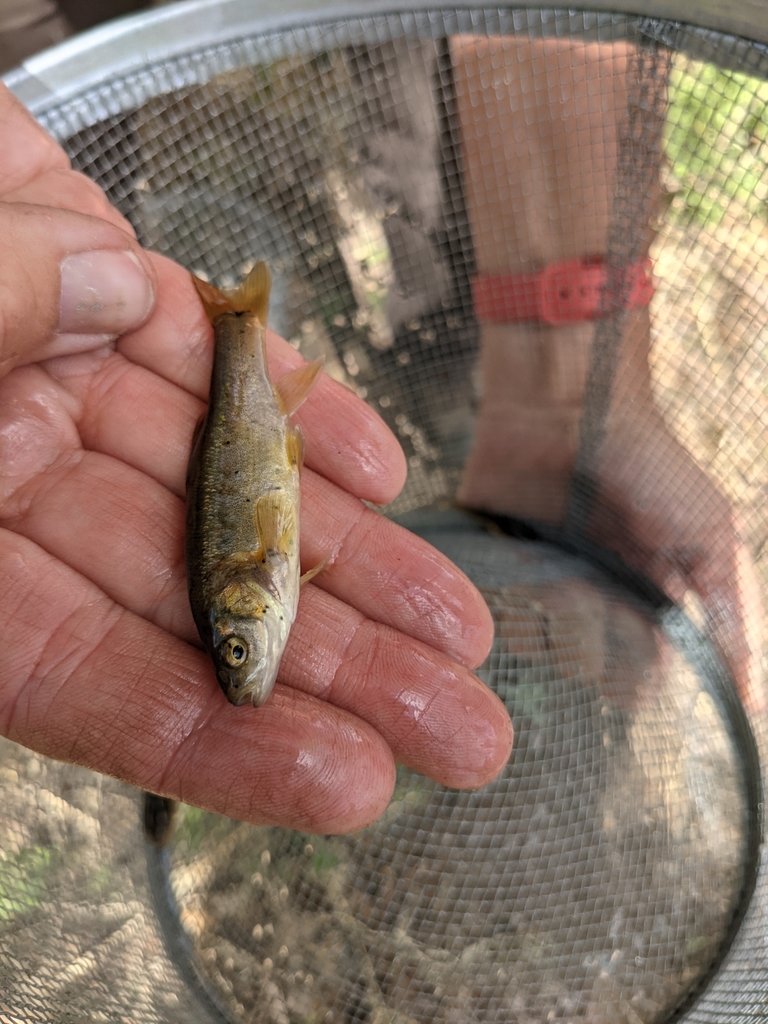
(c) stevemerkley, some rights reserved (CC BY) · licence
Family: Unknown · Class: Unknown · Order: Unknown
Conservation status: Endangered
Gila purpurea (Yaqui chub) is a California animal in the Unknown family.
The Yaqui chub (Gila purpurea) is a small freshwater fish endemic to the Rio Yaqui basin in Arizona and northwestern Mexico. This cyprinid species was first described by C. Girard in 1856 from specimens collected in San Bernardino Creek. Adults typically measure 50 to 75 millimeters (2.0 to 3.0 inches) in standard length, with a moderately compressed body typical of the genus Gila. The species displays a grayish-brown coloration on the dorsal surface, fading to silver on the sides and white on the belly. Distinguishing features include a subterminal mouth, pharyngeal teeth arranged in a 2,4-4,2 pattern, and cycloid scales. The Yaqui chub can be differentiated from the closely related desert chub (Gila eremica), which was separated as a distinct species in 1991, by subtle morphological differences and geographic distribution. Historically, the Yaqui chub occurred throughout the Rio Yaqui drainage system in Arizona and Sonora, Mexico. The species' range included numerous tributaries and cienegas within this basin. Currently, the species persists in only a few isolated locations in Arizona, primarily in the headwater reaches of streams that once supported extensive populations. The dramatic range reduction reflects the species' vulnerability to habitat modification and water diversions throughout the watershed. Yaqui chub inhabit shallow pools, backwaters, and slow-flowing reaches of desert streams and springs. The species prefers areas with sandy or muddy substrates and moderate vegetation cover. Water temperatures in occupied habitats typically range from 15 to 25 degrees Celsius (59 to 77 degrees Fahrenheit), with some tolerance for seasonal variation. These fish require permanent water sources and are intolerant of complete stream drying, making them particularly vulnerable to drought conditions and water extraction. The species exhibits typical cyprinid feeding behavior, consuming algae, aquatic insects, small crustaceans, and plant matter. Spawning occurs during spring months when water temperatures rise, typically from March through May. Females deposit adhesive eggs on vegetation or rocky substrates in shallow areas. The species reaches sexual maturity at approximately one year of age and has a lifespan of three to four years under natural conditions. The U.S. Fish and Wildlife Service listed the Yaqui chub as endangered in 1984. Primary threats include water development and groundwater pumping, which constitute the greatest threat to species survival. Introduction of non-native fish species poses additional risks through competition and predation. Habitat degradation from livestock grazing, stream channelization, and urban development further compromises remaining populations. Recovery efforts focus on habitat protection, water rights acquisition, and captive breeding programs to maintain genetic diversity and establish refugia populations.
Classification
Class: Unknown · Order: Unknown · Family: Unknown
Conservation status
Endangered
Frequently asked questions
How is Gila purpurea classified?
Gila purpurea belongs to class Unknown, order Unknown, family Unknown.
What family does Gila purpurea belong to?
Gila purpurea is in the Unknown family.
Is Gila purpurea protected or of conservation concern?
Gila purpurea carries the following status: Endangered.
What is Gila purpurea?
The Yaqui chub (Gila purpurea) is a small freshwater fish endemic to the Rio Yaqui basin in Arizona and northwestern Mexico.
Is Gila purpurea found in California?
Yes. Gila purpurea is recorded in California in The California Species Project's catalogue.
Related species
Other California species in the same genus, family, or bioregion.
Data from The California Species Project — 14,000+ California species with verified data from CNPS, CDFW, USFWS, and more.