Gillichthys mirabilis
Longjaw mudsucker
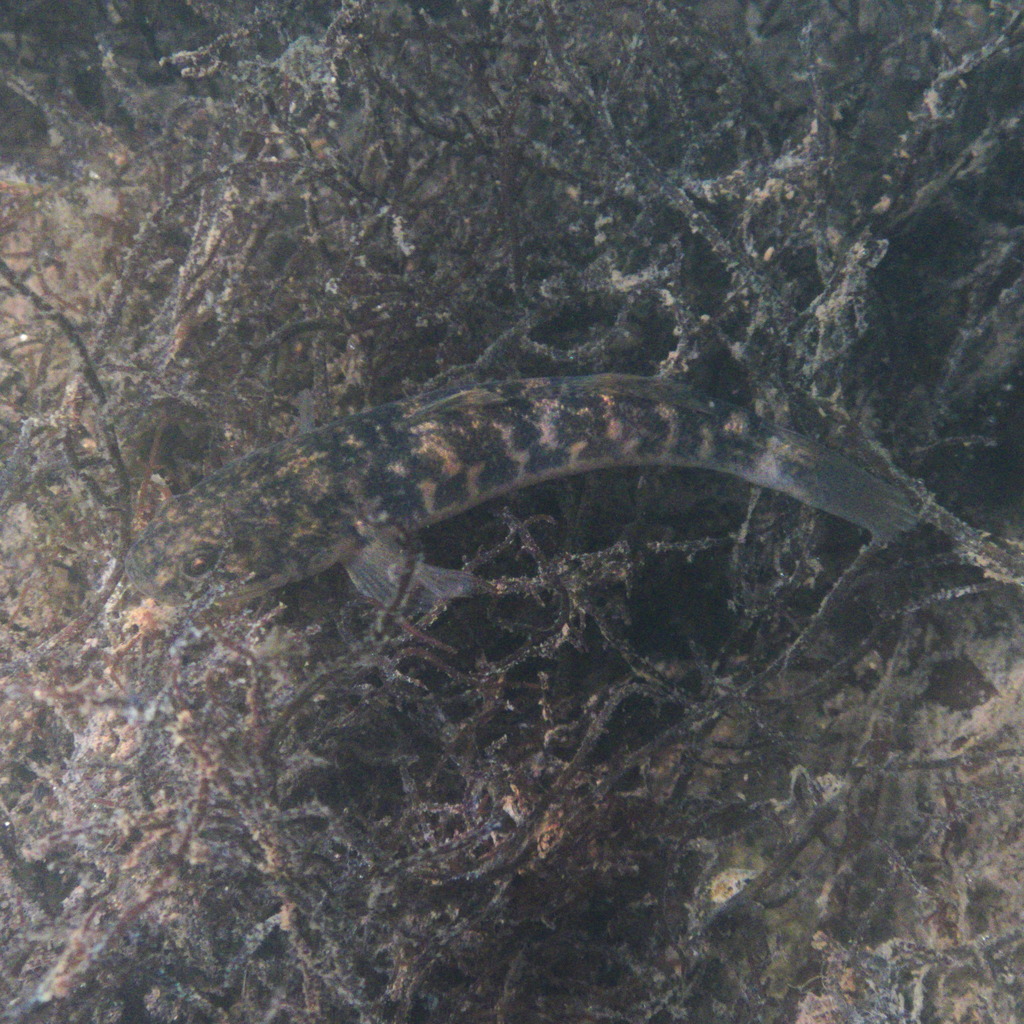
(c) Tynen Benson, some rights reserved (CC BY) · licence
Family: Gobiidae · Class: Actinopterygii · Order: Perciformes
Gillichthys mirabilis (Longjaw mudsucker) is a California animal in the Gobiidae family.
The longjaw mudsucker is a small, elongate gobiid fish endemic to coastal California. Adults typically reach 60 to 100 mm (2.4 to 3.9 inches) in total length, with a maximum recorded length of 140 mm (5.5 inches). The species is characterized by an extremely large mouth that extends well beyond the eyes when opened, giving rise to its common name. The body is compressed laterally with a broad, flattened head. Coloration ranges from olive-brown to grayish-brown dorsally, becoming lighter on the ventral surface. Males during breeding season develop darker pigmentation and enlarged lips. The longjaw mudsucker occurs along the Pacific coast from Tomales Bay in Marin County south to Baja California, Mexico. In California, populations are documented in San Francisco Bay, Monterey Bay, Morro Bay, and various coastal lagoons and estuaries throughout the central and southern regions. The species inhabits shallow marine and estuarine environments, particularly areas with soft substrates including mud flats, salt marshes, and tidal pools. This species demonstrates significant adaptability to extreme environmental conditions. Longjaw mudsuckers are found in habitats with highly variable salinity levels, from full seawater to nearly fresh water conditions. They occupy intertidal zones where they may be exposed to air for several hours during low tides. The species tolerates temperatures ranging from 10 to 30°C (50 to 86°F) and can survive in waters with very low dissolved oxygen levels that would be lethal to most other fish species. Longjaw mudsuckers are opportunistic predators that feed primarily on small invertebrates including polychaete worms, amphipods, copepods, and insect larvae. They employ a suction feeding strategy, using their large mouth to rapidly engulf prey items. Reproduction occurs from spring through summer, with peak spawning activity typically occurring between April and July. Males construct and defend nests in burrows or under rocks and shells. Females deposit 200 to 1,500 eggs depending on body size, with larger females producing more eggs. Males provide parental care by guarding the nest and fanning the eggs to ensure adequate oxygenation. The longjaw mudsucker is not federally or state listed, and populations appear stable throughout most of its range as of December 2025. The species benefits from its tolerance of disturbed habitats and ability to persist in areas with moderate human impact. However, localized populations face threats from habitat loss due to coastal development, pollution, and altered hydrology in estuarine systems. Climate change may affect the species through sea level rise and changing precipitation patterns that alter salinity regimes in coastal lagoons. The species' adaptability to environmental stress suggests resilience to moderate habitat modifications, though protection of remaining undisturbed estuarine habitats remains important for long-term conservation.
Classification
Class: Actinopterygii · Order: Perciformes · Family: Gobiidae
Frequently asked questions
How is Gillichthys mirabilis classified?
Gillichthys mirabilis belongs to class Actinopterygii, order Perciformes, family Gobiidae.
What family does Gillichthys mirabilis belong to?
Gillichthys mirabilis is in the Gobiidae family.
What is Gillichthys mirabilis?
The longjaw mudsucker is a small, elongate gobiid fish endemic to coastal California.
Is Gillichthys mirabilis found in California?
Yes. Gillichthys mirabilis is recorded in California in The California Species Project's catalogue.
Related species
Other California species in the same genus, family, or bioregion.
Data from The California Species Project — 14,000+ California species with verified data from CNPS, CDFW, USFWS, and more.