Givira lotta
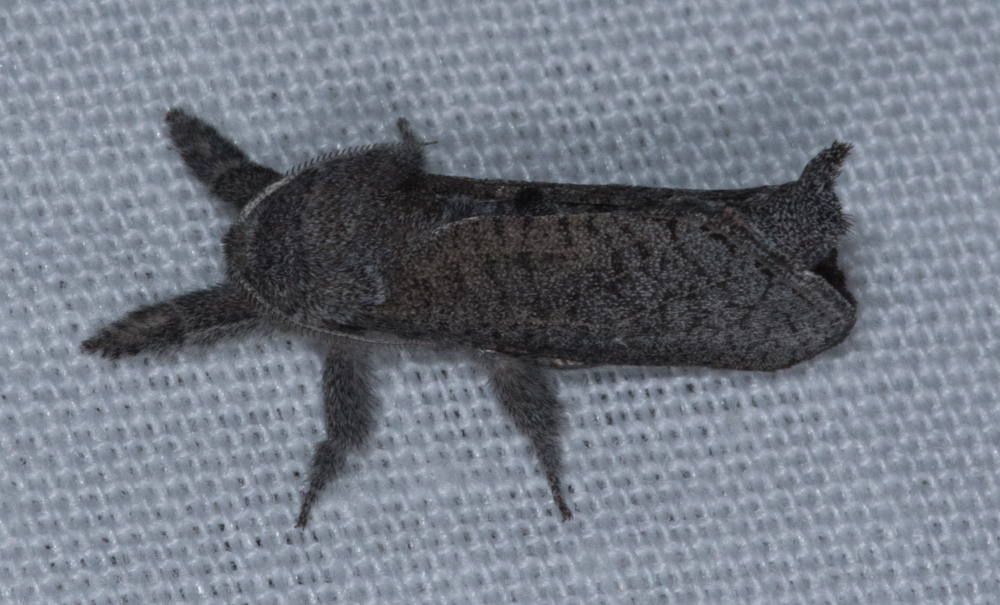
(c) Don Loarie, some rights reserved (CC BY) · licence
Family: Cossidae · Class: Insecta · Order: Lepidoptera
Givira lotta is a California animal in the Cossidae family.
Givira lotta is a moth species in the family Cossidae, commonly known as wood moths or goat moths. This family consists of internal wood-boring species whose larvae develop within the stems and roots of woody plants. Adult Cossidae moths typically have heavy bodies and broad wings with muted coloration patterns that provide camouflage against tree bark. Wing patterns often consist of gray, brown, or tan coloration with darker markings or streaks. Sexual dimorphism is common in the family, with males generally smaller and having more feathered antennae compared to females. The current distribution and range of Givira lotta in California remains poorly documented in available databases. The genus Givira is represented by several species across North America, with most species having restricted ranges within specific geographic regions. Many Cossidae species exhibit narrow habitat requirements tied to their host plant associations, which can limit their distribution to areas where suitable host species occur. Habitat requirements for Givira lotta are likely closely tied to the presence of suitable woody host plants, as is typical for all Cossidae species. Wood moths require living or recently dead wood for larval development, with different species showing preferences for specific tree or shrub species. The larvae bore into stems, branches, or roots where they create galleries while feeding on wood tissue. Adults are typically active during evening hours and may be attracted to artificial lights. Habitat quality depends on the availability of mature host plants and minimal disturbance to allow for the multi-year larval development period common in this family. The life cycle of Givira lotta likely follows the typical Cossidae pattern of complete metamorphosis with extended larval development. Females deposit eggs on or near host plants, and newly hatched larvae bore into woody tissue where they may remain for one to several years depending on the species and environmental conditions. Larvae create tunnels within the wood while feeding, potentially weakening host plants. Pupation typically occurs within the larval galleries or in chambers constructed near the wood surface. Adults emerge to mate and complete the reproductive cycle, with flight periods varying among species and geographic locations. The conservation status of Givira lotta has not been formally assessed by state or federal agencies. Like many specialist herbivorous insects, wood moths may face threats from habitat loss, host plant decline, and changes in forest management practices. Climate change could affect the species through alterations to host plant distributions and phenology. The lack of comprehensive survey data for this species makes it difficult to assess population trends or conservation needs. Further research is needed to document the basic biology, host associations, and distribution of Givira lotta to inform future conservation planning efforts.
Classification
Class: Insecta · Order: Lepidoptera · Family: Cossidae
Frequently asked questions
How is Givira lotta classified?
Givira lotta belongs to class Insecta, order Lepidoptera, family Cossidae.
What family does Givira lotta belong to?
Givira lotta is in the Cossidae family.
What is Givira lotta?
Givira lotta is a moth species in the family Cossidae, commonly known as wood moths or goat moths.
Is Givira lotta found in California?
Yes. Givira lotta is recorded in California in The California Species Project's catalogue.
Related species
Other California species in the same genus, family, or bioregion.
Data from The California Species Project — 14,000+ California species with verified data from CNPS, CDFW, USFWS, and more.