Glaucina macdunnoughi
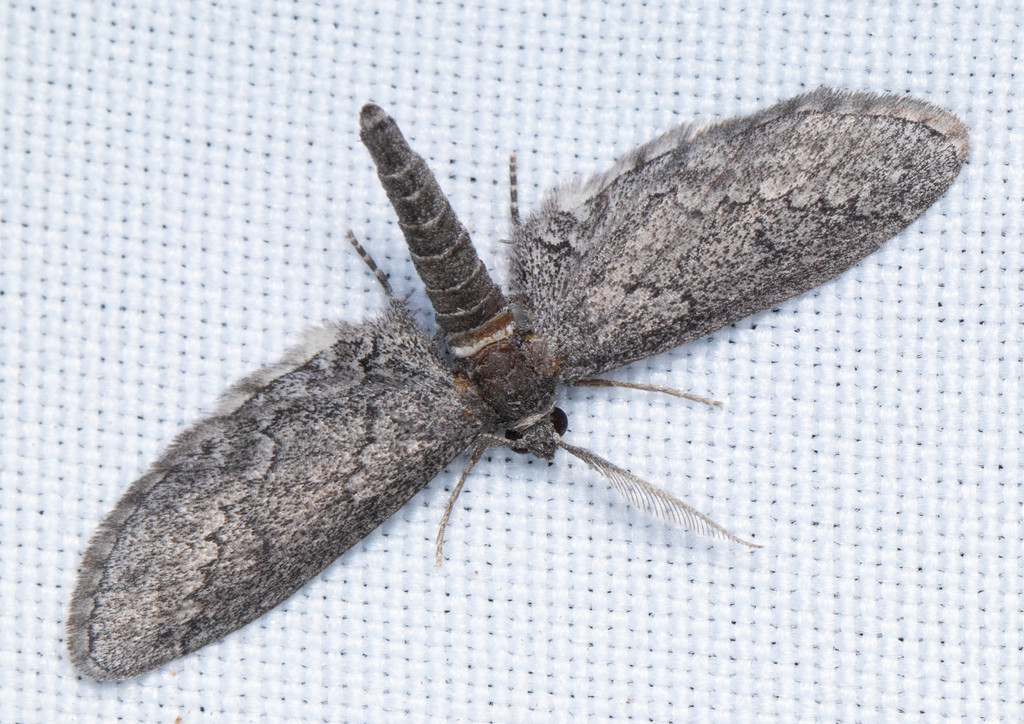
(c) Luis Fernando Valdez Ojeda, some rights reserved (CC BY) · licence
Family: Geometridae · Class: Insecta · Order: Lepidoptera
Glaucina macdunnoughi is a California animal in the Geometridae family.
Glaucina macdunnoughi is a moth species in the family Geometridae, commonly known as geometrid moths or inchworms. This species belongs to the genus Glaucina, which comprises a small group of North American moths characterized by their relatively robust build compared to other geometrids. Adult moths typically display muted earth tones, with forewings that are brownish-gray to olive-brown, often with subtle darker cross-lines and small discal spots. The hindwings are generally paler than the forewings, ranging from light gray to whitish. Wing patterns may include fine wavy lines and indistinct markings that provide camouflage against tree bark and lichen. Sexual dimorphism is present, with males typically having more feathery antennae and slightly smaller body size compared to females. The range and distribution of Glaucina macdunnoughi remains poorly documented in the scientific literature. Based on available taxonomic records, this species appears to have a limited distribution within North America, though specific geographic boundaries have not been comprehensively mapped. The species may occur in western North America, consistent with the distribution patterns of related Glaucina species, but definitive range data requires further research and field surveys. Habitat preferences for Glaucina macdunnoughi are not well-established in current literature. Like other geometrid moths, this species likely inhabits forested areas where larvae can access appropriate host plants. Geometridae larvae, known as inchworms or loopers, typically feed on the foliage of trees and shrubs. The specific habitat requirements, including elevation preferences, forest types, and microhabitat associations, remain undocumented for this species. Behavioral and ecological information for Glaucina macdunnoughi is extremely limited. Adult moths are presumably nocturnal, following the typical pattern of most geometrid species. Flight periods, mating behaviors, and larval development cycles have not been described in available literature. The larvae likely exhibit the characteristic looping locomotion of geometrids, moving by bringing the posterior end of the body forward to meet the anterior end before extending forward again. Host plant associations remain unknown, though related species often utilize various deciduous trees and shrubs. The conservation status of Glaucina macdunnoughi is currently undetermined due to insufficient data on population size, distribution, and threats. The species does not appear on federal or state endangered species lists, nor has it been assessed by the International Union for Conservation of Nature. This data deficiency highlights the need for systematic surveys to determine the species' current status, population trends, and potential conservation needs. Many geometrid moths face threats from habitat loss, light pollution, and climate change, but the specific vulnerabilities of G. macdunnoughi cannot be assessed without additional research. Future studies should focus on clarifying the species' taxonomy, distribution, life history, and ecological requirements to inform appropriate conservation strategies.
Classification
Class: Insecta · Order: Lepidoptera · Family: Geometridae
Frequently asked questions
How is Glaucina macdunnoughi classified?
Glaucina macdunnoughi belongs to class Insecta, order Lepidoptera, family Geometridae.
What family does Glaucina macdunnoughi belong to?
Glaucina macdunnoughi is in the Geometridae family.
What is Glaucina macdunnoughi?
Glaucina macdunnoughi is a moth species in the family Geometridae, commonly known as geometrid moths or inchworms.
Is Glaucina macdunnoughi found in California?
Yes. Glaucina macdunnoughi is recorded in California in The California Species Project's catalogue.
Related species
Other California species in the same genus, family, or bioregion.
Data from The California Species Project — 14,000+ California species with verified data from CNPS, CDFW, USFWS, and more.