Glaucomys oregonensis californicus
San Bernardino Flying Squirrel
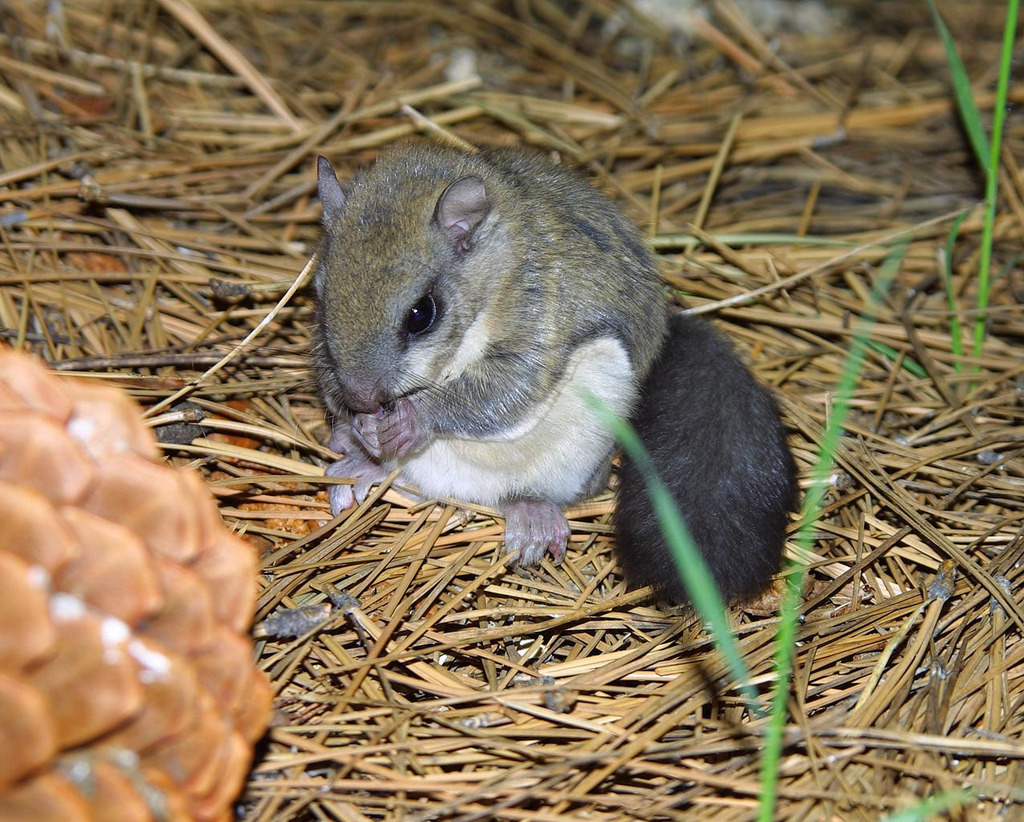
(c) Chris Brown, some rights reserved (CC BY) · licence
Family: Sciuridae · Class: Mammalia · Order: Rodentia
Conservation status: G5T1T2 S1S2
Glaucomys oregonensis californicus (San Bernardino Flying Squirrel) is a California animal in the Sciuridae family.
The San Bernardino flying squirrel (Glaucomys oregonensis californicus) is a small nocturnal mammal endemic to the coniferous forests of Southern California's high-elevation mountain ranges. This subspecies of the northern flying squirrel is distinguished by its grayish-brown dorsal fur with darker guard hairs and whitish to pale gray ventral surface. Adults typically measure 255-370 mm (10-14.6 inches) in total length, with the distinctive gliding membrane (patagium) extending from the wrists to the ankles, allowing for controlled gliding between trees. The subspecies has an extremely restricted range, occurring only in the San Bernardino and San Jacinto mountain ranges of Southern California. According to NatureServe, this small range encompasses two mountain ranges in southern California, making it one of the most geographically limited flying squirrel populations in North America. The species is found at elevations typically above 1,500 meters (4,900 feet) in these montane environments. Habitat requirements are highly specific, with the species dependent on mature, dense conifer forests containing large amounts of down woody material (USFWS). These forests are characterized by mixed conifer stands including white fir, Jeffrey pine, sugar pine, and incense cedar. The abundance of snags, fallen logs, and dense canopy cover is critical for providing nesting sites, foraging opportunities, and the continuous canopy connections necessary for gliding locomotion. Tree cavities in mature conifers serve as primary den sites for reproduction and daily roosting. San Bernardino flying squirrels are primarily nocturnal and arboreal, spending daylight hours in tree cavities or leaf nests. Their diet consists mainly of fungi, particularly hypogeous (underground) fungi, along with nuts, seeds, lichens, and occasionally bird eggs and nestlings. Reproduction typically occurs once annually, with females giving birth to 2-4 young after a gestation period of approximately 40 days. The species exhibits strong site fidelity and may use the same den trees repeatedly. The subspecies faces significant conservation challenges, reflected in its NatureServe ranking of T1, indicating it is critically imperiled with a very high risk of extinction. Population size and trends are poorly documented, but ongoing threats include anthropogenic climate change, forest management practices, air pollution, and urban development (Center for Biological Diversity 2010). The U.S. Fish and Wildlife Service conducted a 12-month finding on a petition to list the species under the Endangered Species Act in 2016, though the current federal listing status remains undesignated. The restricted range, specialized habitat requirements, and mounting environmental pressures make this subspecies particularly vulnerable to population declines and local extirpations in Southern California's montane ecosystems.
Classification
Class: Mammalia · Order: Rodentia · Family: Sciuridae
Conservation status
G5T1T2 S1S2
Frequently asked questions
How is Glaucomys oregonensis californicus classified?
Glaucomys oregonensis californicus belongs to class Mammalia, order Rodentia, family Sciuridae.
What family does Glaucomys oregonensis californicus belong to?
Glaucomys oregonensis californicus is in the Sciuridae family.
Is Glaucomys oregonensis californicus protected or of conservation concern?
Glaucomys oregonensis californicus carries the following status: G5T1T2 S1S2.
What is Glaucomys oregonensis californicus?
The San Bernardino flying squirrel (Glaucomys oregonensis californicus) is a small nocturnal mammal endemic to the coniferous forests of Southern California's high-elevation mountain ranges.
Is Glaucomys oregonensis californicus found in California?
Yes. Glaucomys oregonensis californicus is recorded in California in The California Species Project's catalogue.
Related species
Other California species in the same genus, family, or bioregion.
Data from The California Species Project — 14,000+ California species with verified data from CNPS, CDFW, USFWS, and more.