Glaucomys sabrinus
Northern Flying Squirrel
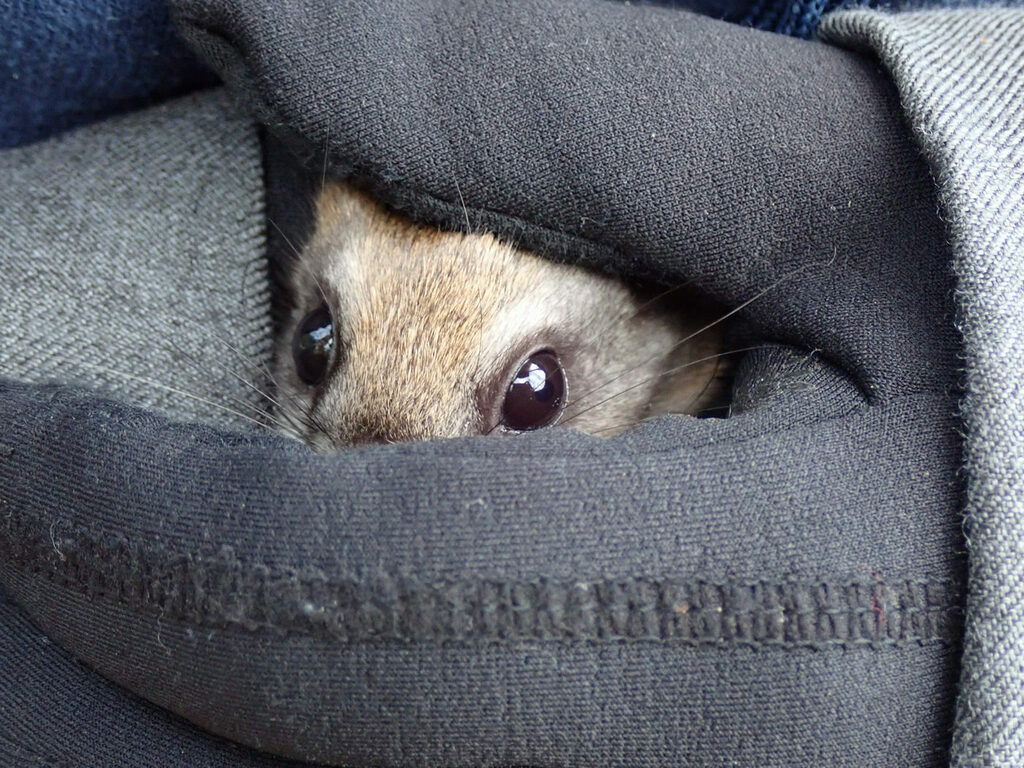
(c) Evan M. Raskin, some rights reserved (CC BY) · licence
Family: Sciuridae · Class: Mammalia · Order: Rodentia
Glaucomys sabrinus (Northern Flying Squirrel) is a California animal in the Sciuridae family.
The Northern Flying Squirrel is a medium-sized nocturnal rodent measuring 255 to 375 mm (10 to 14.8 inches) in total length, with adults weighing 110 to 230 grams (3.9 to 8.1 ounces). The species is distinguished by a loose fold of furred skin called a patagium that extends between the front and hind legs, enabling gliding flight. The dorsal pelage is grayish-brown to cinnamon-brown, while the ventral surface is creamy white to pale gray. The tail is flattened and densely furred, serving as a rudder during gliding. Large, dark eyes provide enhanced night vision, and the species possesses long, sensitive whiskers for navigation in darkness. In California, Northern Flying Squirrels occur in montane coniferous forests of the Sierra Nevada, Cascade Range, and isolated populations in the Warner Mountains of Modoc County. The species ranges from approximately 1,200 to 2,700 meters (3,900 to 8,900 feet) elevation, with most populations occurring above 1,500 meters (4,900 feet). Historically, the species likely had a more continuous distribution across suitable habitat, but current populations are fragmented due to habitat modification and climate factors. Northern Flying Squirrels inhabit mature and old-growth coniferous forests dominated by Douglas fir, true firs, pine, and hemlock species. The species requires forests with adequate canopy closure for gliding between trees and abundant snags or hollow trees for nesting. Understory vegetation and coarse woody debris provide foraging areas and cover. Den sites include tree cavities, abandoned woodpecker holes, and occasionally external nests constructed of lichens, bark strips, and other organic materials. These squirrels are strictly nocturnal and highly arboreal, rarely descending to the ground. Gliding distances typically range from 20 to 60 meters (65 to 200 feet), though longer glides exceeding 90 meters have been recorded. The diet consists primarily of hypogeous fungi (truffles), which can comprise 60 to 80 percent of food intake during certain seasons. Additional food items include lichens, tree seeds, nuts, buds, and occasionally bird eggs. Northern Flying Squirrels serve as important dispersers of mycorrhizal fungi spores, facilitating forest ecosystem health. Breeding occurs once annually, with mating in early spring. After a gestation period of approximately 40 days, females produce litters of 2 to 4 young in late spring or early summer. The Northern Flying Squirrel has no federal listing status but faces conservation challenges in California. Primary threats include habitat fragmentation from logging and development, fire suppression leading to altered forest structure, and climate change potentially shifting suitable habitat to higher elevations. The species' dependence on old-growth forest characteristics makes it vulnerable to intensive forest management practices. Population monitoring is limited due to the species' nocturnal habits and specialized habitat requirements, making status assessment challenging.
Classification
Class: Mammalia · Order: Rodentia · Family: Sciuridae
Frequently asked questions
How is Glaucomys sabrinus classified?
Glaucomys sabrinus belongs to class Mammalia, order Rodentia, family Sciuridae.
What family does Glaucomys sabrinus belong to?
Glaucomys sabrinus is in the Sciuridae family.
What is Glaucomys sabrinus?
The Northern Flying Squirrel is a medium-sized nocturnal rodent measuring 255 to 375 mm (10 to 14.8 inches) in total length, with adults weighing 110 to 230 grams (3.9 to 8.1 ounces).
Is Glaucomys sabrinus found in California?
Yes. Glaucomys sabrinus is recorded in California in The California Species Project's catalogue.
Related species
Other California species in the same genus, family, or bioregion.
Data from The California Species Project — 14,000+ California species with verified data from CNPS, CDFW, USFWS, and more.