Glaucopsyche lygdamus
Silvery Blue
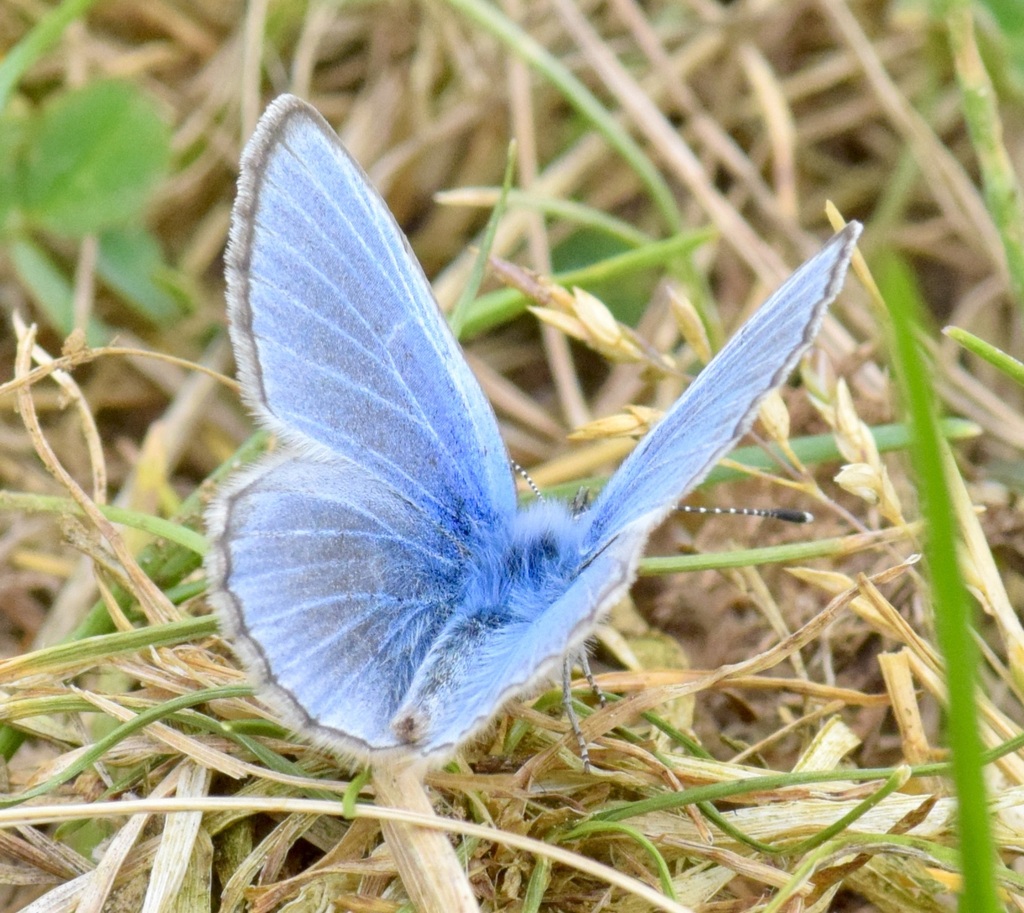
(c) Bernie Paquette, some rights reserved (CC BY) · licence
Family: Lycaenidae · Class: Insecta · Order: Lepidoptera
Glaucopsyche lygdamus (Silvery Blue) is a California animal in the Lycaenidae family.
The Silvery Blue (Glaucopsyche lygdamus) is a small butterfly in the family Lycaenidae with a wingspan ranging from 22 to 32 mm (0.9 to 1.3 inches). Males display bright silvery-blue dorsal wing surfaces with narrow black borders, while females exhibit darker blue to brownish coloration with more extensive dark markings. The ventral wing surfaces of both sexes are pale gray to white with small black spots arranged in irregular rows and distinctive orange-red spots near the wing margins. The species can be distinguished from similar blues by the presence of orange crescents on the hindwing underside and the lack of tails on the hindwings. The Silvery Blue has one of the most extensive distributions among North American blues, ranging from central Alaska south to southern California, Baja California, Arizona, New Mexico, and western Kansas, and extending across the northern United States east to Nova Scotia and south to Georgia. In California, populations occur primarily in mountainous regions from the Sierra Nevada to the Coast Ranges, typically at elevations between 1,200 and 3,400 meters (4,000 to 11,000 feet). The species is also found in suitable habitat throughout the Cascade Range and northern coastal mountains. Silvery Blues inhabit open meadows, forest clearings, alpine zones, and disturbed areas where their host plants are abundant. The species shows a strong preference for areas with native legumes and can be found in both natural and semi-natural environments including roadsides, old fields, and garden edges where appropriate host plants occur. Adults are most commonly observed nectaring on flowers in sunny, protected locations with nearby larval food sources. The species is univoltine across most of its range, producing one generation per year. Adults typically fly from May through August, with peak emergence varying by elevation and latitude. Eggs are deposited singly on flower buds or young pods of host plants in the pea family (Fabaceae), including species of Astragalus, Lotus, Lupinus, Melilotus, Oxytropis, Lathyrus, and Vicia. Larvae feed on developing seeds and flowers, often attended by ants that provide protection in exchange for honeydew secretions. The species overwinters as a pupa, with some populations experiencing extended diapause lasting multiple years in response to environmental conditions. The Silvery Blue is not federally or state listed and appears to maintain stable populations across much of its extensive range. However, local populations may face pressure from habitat loss due to development, agricultural conversion, and changes in land management practices that affect host plant availability. The species benefits from its ability to utilize multiple host plants and its tolerance for disturbed habitats, though continued monitoring of populations in areas experiencing rapid environmental change remains important for long-term conservation.
Classification
Class: Insecta · Order: Lepidoptera · Family: Lycaenidae
Frequently asked questions
How is Glaucopsyche lygdamus classified?
Glaucopsyche lygdamus belongs to class Insecta, order Lepidoptera, family Lycaenidae.
What family does Glaucopsyche lygdamus belong to?
Glaucopsyche lygdamus is in the Lycaenidae family.
What is Glaucopsyche lygdamus?
The Silvery Blue (Glaucopsyche lygdamus) is a small butterfly in the family Lycaenidae with a wingspan ranging from 22 to 32 mm (0.9 to 1.3 inches).
Is Glaucopsyche lygdamus found in California?
Yes. Glaucopsyche lygdamus is recorded in California in The California Species Project's catalogue.
Related species
Other California species in the same genus, family, or bioregion.
Data from The California Species Project — 14,000+ California species with verified data from CNPS, CDFW, USFWS, and more.