Glena grisearia
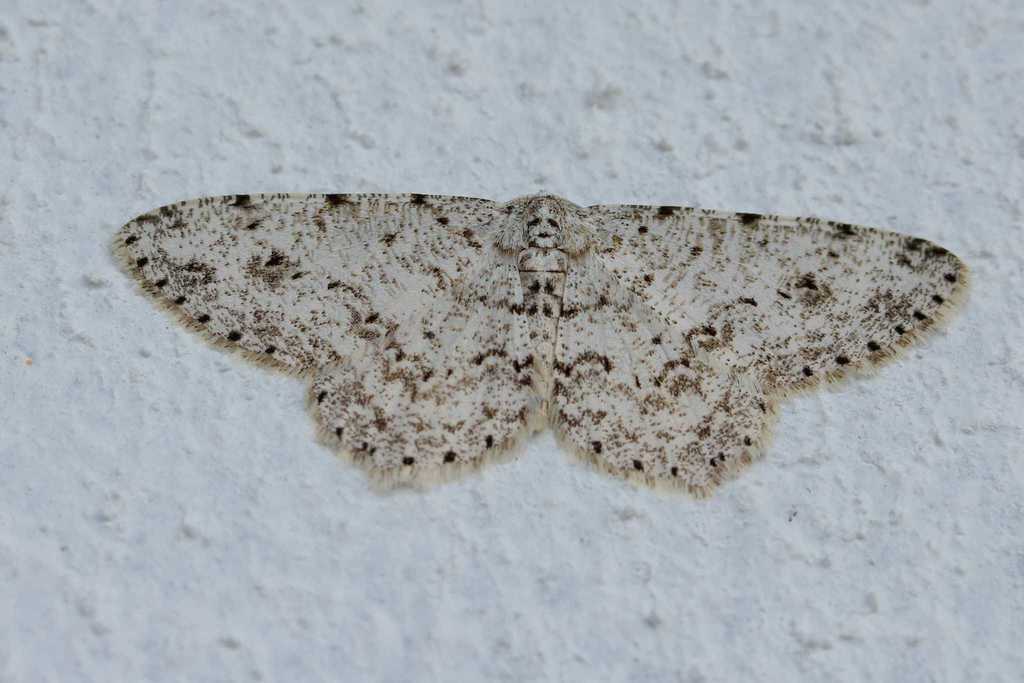
(c) Carlos Muñoz-Amezcua, some rights reserved (CC BY) · licence
Family: Geometridae · Class: Insecta · Order: Lepidoptera
Glena grisearia is a California animal in the Geometridae family.
Glena grisearia is a geometrid moth in the family Geometridae, commonly known as inchworms or loopers. This species belongs to the subfamily Ennominae and is part of the diverse moth fauna of western North America. Adult moths exhibit the typical geometrid wing pattern with forewings that are pale gray to brownish-gray, often marked with darker transverse lines and subtle mottling. The wingspan typically ranges from 25 to 35 millimeters (1.0 to 1.4 inches). The hindwings are similarly colored but generally paler than the forewings. Males can be distinguished from females by their more feathery antennae and slightly smaller size. The range of Glena grisearia extends across western North America, with documented occurrences in California, Oregon, Washington, and portions of the intermountain west. Within California, this species has been recorded from various counties, though comprehensive distribution data remains limited. The species appears to have a relatively broad elevational tolerance, occurring from near sea level to montane environments. This moth inhabits diverse habitats including mixed coniferous forests, oak woodlands, chaparral, and riparian corridors. Adults are typically found in areas with abundant shrub cover and understory vegetation. The species shows preference for environments with moderate moisture levels and protection from direct sunlight during daylight hours. Larval habitat requirements are closely tied to host plant availability and suitable overwintering sites. Glena grisearia larvae, like other geometrids, are characterized by their distinctive looping locomotion, having only two pairs of prolegs compared to the five pairs found in most caterpillars. The caterpillars are typically green or brown with cryptic coloration that provides camouflage against plant stems and bark. Feeding behavior involves consumption of foliage from various deciduous shrubs and trees, though specific host plant relationships require further documentation. Adults are nocturnal and attracted to artificial lights. Flight period varies with elevation and latitude but generally occurs from late spring through early fall, with peak activity during summer months. Mating typically occurs shortly after adult emergence, with females depositing eggs on or near host plants. The conservation status of Glena grisearia has not been formally assessed at federal or state levels. Like many moths, this species may face population pressures from habitat modification, urbanization, and changes in forest management practices. The use of artificial lighting in natural areas may disrupt normal behavior patterns and increase vulnerability to predation. Climate change could potentially affect the species through alterations in host plant phenology and distribution. Limited research on this species makes it difficult to assess population trends or specific conservation needs. The moth's apparent habitat flexibility suggests some resilience to environmental changes, though localized populations may be vulnerable to intensive land use changes. Further research is needed to better understand the species' ecology, distribution, and conservation requirements.
Classification
Class: Insecta · Order: Lepidoptera · Family: Geometridae
Frequently asked questions
How is Glena grisearia classified?
Glena grisearia belongs to class Insecta, order Lepidoptera, family Geometridae.
What family does Glena grisearia belong to?
Glena grisearia is in the Geometridae family.
What is Glena grisearia?
Glena grisearia is a geometrid moth in the family Geometridae, commonly known as inchworms or loopers.
Is Glena grisearia found in California?
Yes. Glena grisearia is recorded in California in The California Species Project's catalogue.
Related species
Other California species in the same genus, family, or bioregion.
Data from The California Species Project — 14,000+ California species with verified data from CNPS, CDFW, USFWS, and more.