Gluphisia septentrionis
Common Gluphisia
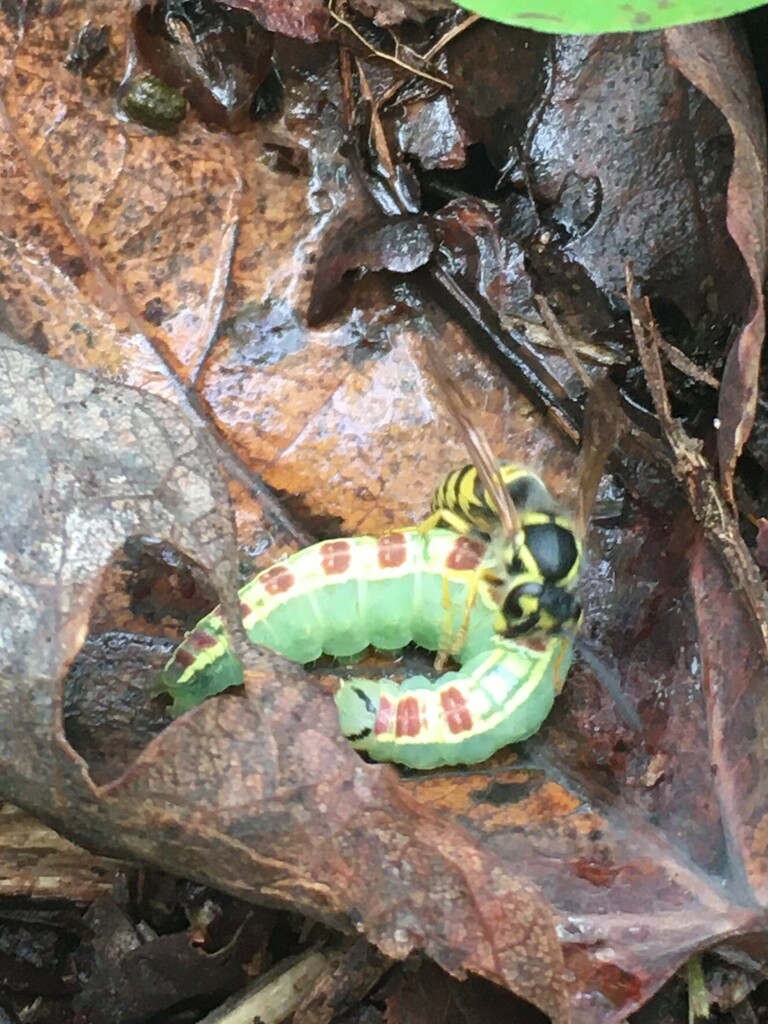
(c) Jonathan Layman, some rights reserved (CC BY) · licence
Family: Notodontidae · Class: Insecta · Order: Lepidoptera
Gluphisia septentrionis (Common Gluphisia) is a California animal in the Notodontidae family.
Gluphisia septentrionis, commonly known as the Common Gluphisia, is a moth in the family Notodontidae, a group commonly called prominent moths. Adults typically measure 35 to 45 mm (1.4 to 1.8 inches) in wingspan. The forewings display a mottled pattern of brown, gray, and white scales, with darker cross-lines and a distinctive white or pale yellow patch near the costa. The hindwings are lighter, ranging from pale brown to grayish-white. At rest, the moth holds its wings in a tent-like position characteristic of many notodontids. The thorax and abdomen are covered in dense, hair-like scales that match the wing coloration. The Common Gluphisia occurs across a broad range of northern North America, extending from Alaska and northern Canada south through the Pacific Northwest, Rocky Mountain region, and northern portions of the Great Lakes states. In California, the species is found primarily in montane regions of the Sierra Nevada and Cascade Range, typically at elevations above 1,500 meters (4,900 feet). Populations also occur in higher elevation areas of the Coast Range and mountains of far northern California. This species inhabits coniferous and mixed forests, showing a strong association with areas containing its primary host plants. Common Gluphisia larvae feed on various species of poplar (Populus) and willow (Salix), particularly quaking aspen (Populus tremuloides) and black cottonwood (Populus trichocarpa). The moths prefer mature forest stands and forest edges where these deciduous trees occur within predominantly coniferous landscapes. Adults are most commonly found in areas with moderate to high canopy cover and access to moisture sources. Adults are active from late May through August, with peak flight activity typically occurring in June and July. The species is univoltine, producing one generation per year. Females deposit eggs singly or in small clusters on the undersides of host plant leaves. Larvae develop through five instars, feeding primarily at night and resting during the day on bark or among leaf litter. Mature larvae are distinctive, measuring up to 50 mm (2.0 inches) in length, with a prominent dorsal hump behind the head and tubercles along the body segments. Pupation occurs in a shallow chamber in soil or leaf litter, with adults emerging the following spring. The species overwinters in the pupal stage. Common Gluphisia is not federally listed or considered a species of special concern in California as of December 2025. The species appears to maintain stable populations throughout much of its range, benefiting from the widespread distribution of its host plants in montane forest ecosystems. However, like many forest-dependent species, it may face localized impacts from timber harvesting practices that remove mature aspen and cottonwood stands, wildfire management activities, and climate change effects on montane forest composition. Forest management practices that maintain diverse age classes of deciduous trees within coniferous forests support continued population viability.
Classification
Class: Insecta · Order: Lepidoptera · Family: Notodontidae
Frequently asked questions
How is Gluphisia septentrionis classified?
Gluphisia septentrionis belongs to class Insecta, order Lepidoptera, family Notodontidae.
What family does Gluphisia septentrionis belong to?
Gluphisia septentrionis is in the Notodontidae family.
What is Gluphisia septentrionis?
Gluphisia septentrionis, commonly known as the Common Gluphisia, is a moth in the family Notodontidae, a group commonly called prominent moths.
Is Gluphisia septentrionis found in California?
Yes. Gluphisia septentrionis is recorded in California in The California Species Project's catalogue.
Related species
Other California species in the same genus, family, or bioregion.
Data from The California Species Project — 14,000+ California species with verified data from CNPS, CDFW, USFWS, and more.