Gluphisia severa
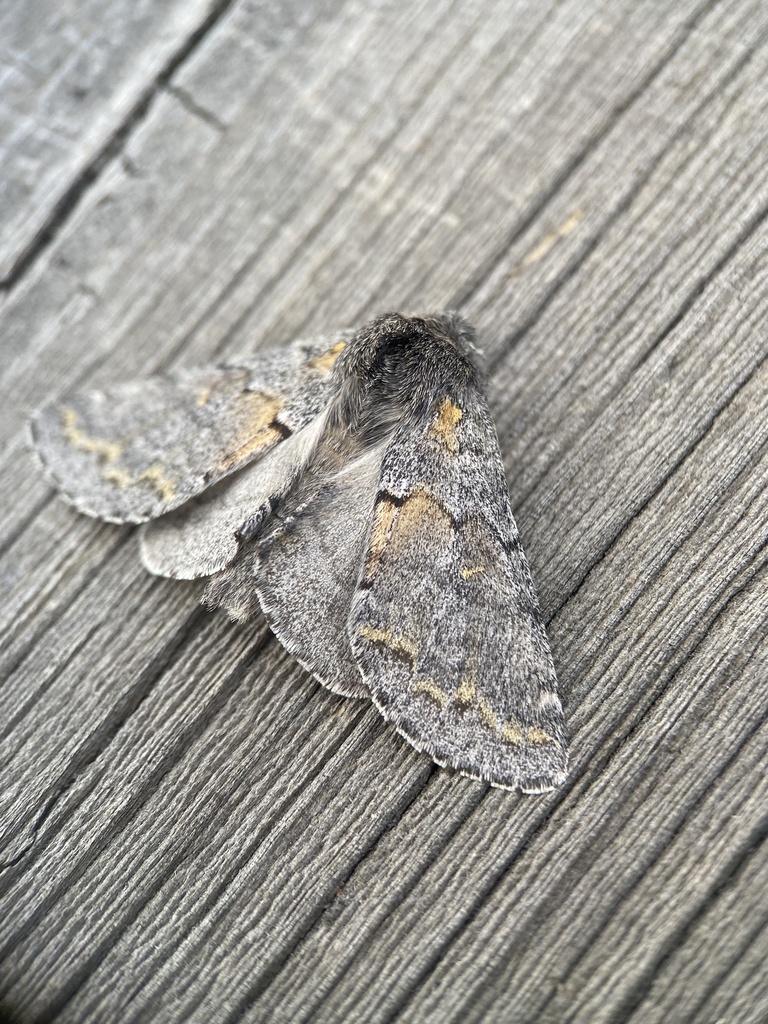
(c) Z, some rights reserved (CC BY) · licence
Family: Notodontidae · Class: Insecta · Order: Lepidoptera
Gluphisia severa is a California animal in the Notodontidae family.
Gluphisia severa is a moth species in the family Notodontidae, commonly known as prominent moths. This nocturnal lepidopteran belongs to a group characterized by tufted forewings that create a prominent silhouette when the moth is at rest. Adult moths typically measure 25-35 mm (1.0-1.4 inches) in wingspan, with forewings displaying mottled brown and gray coloration that provides effective camouflage against tree bark. The hindwings are typically paler, ranging from light brown to cream-colored. Males can be distinguished from females by their more feathered antennae and slightly smaller size. The species occurs in western North America, with documented populations in California, Oregon, Washington, and extending into British Columbia. In California, Gluphisia severa has been recorded in mountainous regions including the Sierra Nevada and Cascade Range, though specific county-level distribution data remains limited. The species appears to have a disjunct distribution pattern typical of many montane lepidopterans. Gluphisia severa inhabits coniferous and mixed coniferous-deciduous forests at elevations ranging from approximately 1,000 to 2,500 meters (3,280 to 8,200 feet). The species shows a preference for mature forest habitats with diverse canopy structure. Adults are typically associated with areas containing their larval host plants, which include various deciduous trees and shrubs. The moth demonstrates strong fidelity to forested habitats with adequate moisture and moderate temperatures. Larvae of Gluphisia severa feed on the foliage of deciduous trees, including species in the families Rosaceae and Salicaceae. Caterpillars are typically green with longitudinal stripes and develop through five instars before pupating in soil or leaf litter. The species is univoltine, producing one generation per year. Adults emerge during late spring and early summer, typically from May through July, with peak flight activity occurring in June. Mating occurs shortly after emergence, with females depositing eggs singly or in small clusters on host plant foliage. The species overwinters as pupae in the soil. Adult moths are attracted to artificial lights and can be collected using standard lepidopteran sampling methods including mercury vapor and ultraviolet light traps. Flight behavior is primarily crepuscular and nocturnal, with males actively seeking females through pheromone detection. The species demonstrates typical notodontid resting posture, with forewings folded tent-like over the body. Gluphisia severa does not currently hold federal or state conservation status listings in California. However, like many forest-dependent lepidopterans, the species may face habitat pressures from forest management practices, wildfire, and climate change effects on montane ecosystems. Population trends and detailed ecological requirements remain poorly documented, reflecting the general lack of comprehensive surveys for non-commercial lepidopteran species. The moth's apparent preference for mature forest habitats suggests potential vulnerability to extensive logging or significant forest disturbance events.
Classification
Class: Insecta · Order: Lepidoptera · Family: Notodontidae
Frequently asked questions
How is Gluphisia severa classified?
Gluphisia severa belongs to class Insecta, order Lepidoptera, family Notodontidae.
What family does Gluphisia severa belong to?
Gluphisia severa is in the Notodontidae family.
What is Gluphisia severa?
Gluphisia severa is a moth species in the family Notodontidae, commonly known as prominent moths.
Is Gluphisia severa found in California?
Yes. Gluphisia severa is recorded in California in The California Species Project's catalogue.
Related species
Other California species in the same genus, family, or bioregion.
Data from The California Species Project — 14,000+ California species with verified data from CNPS, CDFW, USFWS, and more.