Glycaspis brimblecombei
Red Gum Lerp Psyllid
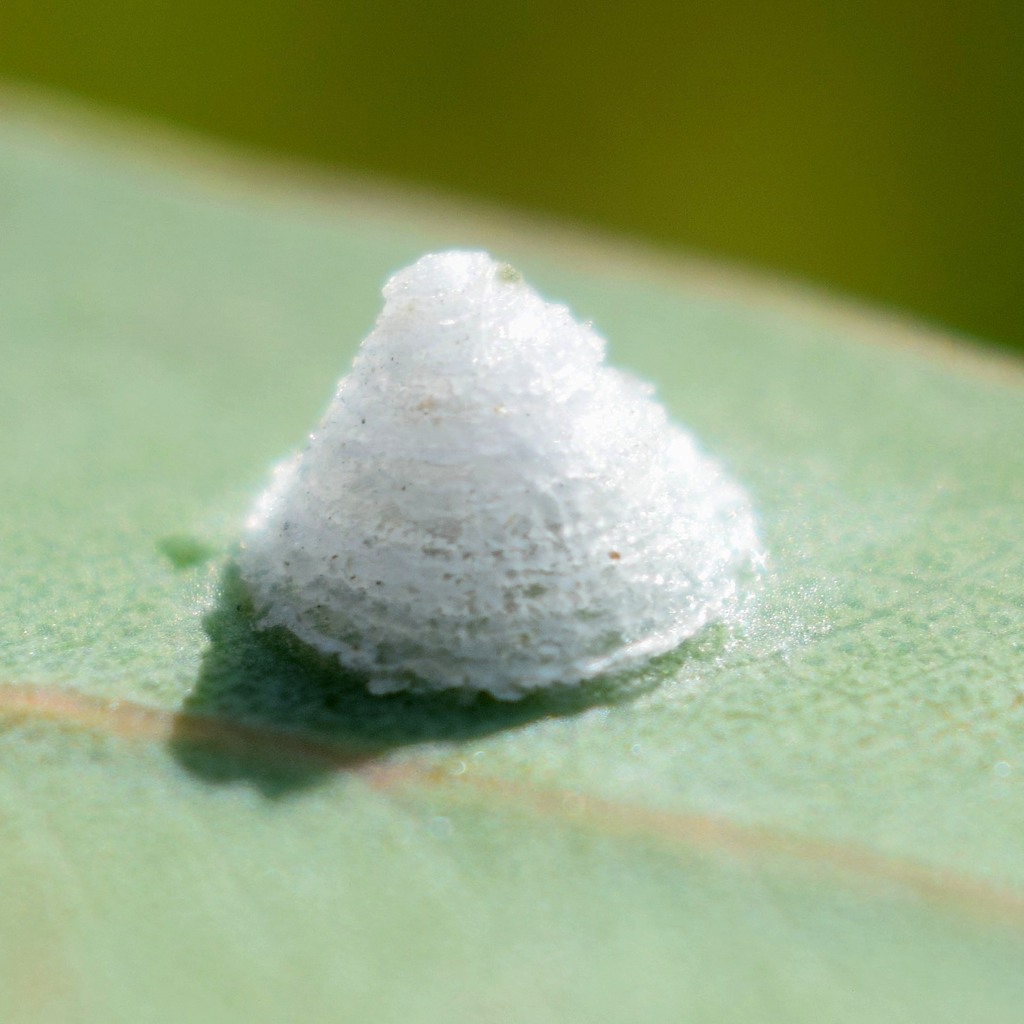
no rights reserved · CC0
Family: Aphalaridae · Class: Insecta · Order: Hemiptera
Glycaspis brimblecombei (Red Gum Lerp Psyllid) is a California animal in the Aphalaridae family.
The Red Gum Lerp Psyllid is a small, invasive sap-sucking insect in the family Aphalaridae. Adults are approximately 3-4 mm in length with a brownish coloration and transparent wings held tent-like over the body. The species is most readily identified by the distinctive dome-shaped protective structures, called lerps, that nymphs construct from honeydew and wax secretions. These white to cream-colored lerps, measuring 2-3 mm in diameter, cover the developing nymphs on leaf surfaces and are often the first sign of infestation. Native to Australia, this species was first detected in California in 1998 and has since established populations throughout much of the state (Percy et al. 2012). The psyllid now occurs from San Diego County north to the San Francisco Bay Area, with scattered populations reported in the Central Valley. Its distribution closely follows that of its primary host plants, various Eucalyptus species, particularly red gum eucalyptus (Eucalyptus camaldulensis). The Red Gum Lerp Psyllid inhabits eucalyptus groves, urban plantings, windbreaks, and naturalized stands from sea level to approximately 1,900 meters elevation. The species shows strong host specificity for eucalyptus trees, with E. camaldulensis being the preferred host, though it may also utilize other eucalyptus species. Infestations are typically heaviest on stressed trees in drought conditions or disturbed environments. Nymphs complete five instars under their protective lerp covers, feeding on phloem sap through piercing-sucking mouthparts. The lerp provides protection from natural enemies and environmental conditions while the nymph develops. Adults are mobile and capable of flight, facilitating dispersal to new host trees. The species can complete multiple generations per year in California's mild climate, with peak populations typically occurring during warmer months. Heavy infestations can cause yellowing and premature dropping of eucalyptus leaves, reducing tree vigor and potentially contributing to tree mortality when combined with other stressors such as drought. As an introduced species, the Red Gum Lerp Psyllid is considered a pest rather than a conservation concern. The psyllid currently plagues E. camaldulensis stands in southern and central California, regularly defoliating trees and reducing plant vigor. Biological control efforts have been implemented, including the introduction of Psyllaephagus bliteus, a specialized parasitoid wasp from Australia, in 1998 to help manage psyllid populations. The species' impact extends beyond direct tree damage, as infested eucalyptus groves that serve as monarch butterfly overwintering sites may experience reduced habitat quality due to defoliation and tree stress. While not threatening native ecosystems directly, the psyllid represents an ongoing management challenge for maintaining eucalyptus plantings and addressing its indirect effects on wildlife species that utilize these non-native tree stands.
Classification
Class: Insecta · Order: Hemiptera · Family: Aphalaridae
Frequently asked questions
How is Glycaspis brimblecombei classified?
Glycaspis brimblecombei belongs to class Insecta, order Hemiptera, family Aphalaridae.
What family does Glycaspis brimblecombei belong to?
Glycaspis brimblecombei is in the Aphalaridae family.
What is Glycaspis brimblecombei?
The Red Gum Lerp Psyllid is a small, invasive sap-sucking insect in the family Aphalaridae.
Is Glycaspis brimblecombei found in California?
Yes. Glycaspis brimblecombei is recorded in California in The California Species Project's catalogue.
More California species
This species has no close relatives in our California data — here are other species to explore.
Data from The California Species Project — 14,000+ California species with verified data from CNPS, CDFW, USFWS, and more.