Glyphodes onychinalis
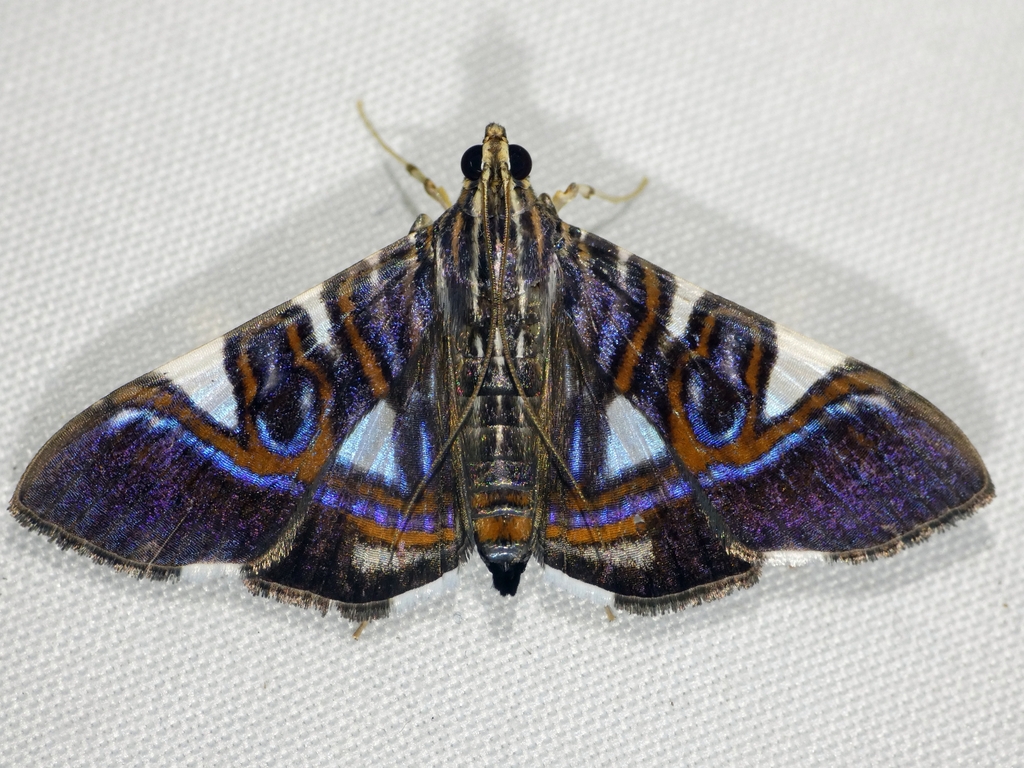
(c) Kai Squires, some rights reserved (CC BY) · licence
Family: Crambidae · Class: Insecta · Order: Lepidoptera
Glyphodes onychinalis is a California animal in the Crambidae family.
Glyphodes onychinalis is a moth species in the family Crambidae, order Lepidoptera. This species belongs to a genus of tropical and subtropical moths commonly known as grass moths or snout moths. Limited taxonomic and biological information is available for this specific species in scientific literature. Physical description details for Glyphodes onychinalis are not well-documented in current literature. Members of the genus Glyphodes typically exhibit wingspan measurements ranging from 15 to 30 millimeters (0.6 to 1.2 inches). These moths generally display patterns of white, yellow, or pale coloration with darker markings or bands across the forewings. The hindwings are often lighter in coloration than the forewings. Like other Crambidae species, they possess relatively narrow wings and elongated bodies with prominent palpi extending forward from the head. The geographic range and distribution of Glyphodes onychinalis remain poorly defined in available taxonomic databases and regional fauna surveys. The genus Glyphodes contains numerous species distributed across tropical and subtropical regions worldwide, with concentrations in Southeast Asia, the Pacific islands, and parts of the Americas. Without specific collection records or regional surveys documenting this species, its presence in California or North America cannot be confirmed from current authoritative sources. Habitat preferences for Glyphodes onychinalis are not established in the literature. Other Glyphodes species typically inhabit areas with suitable host plants, often in disturbed habitats, agricultural areas, or forest edges. Many Crambidae moths are attracted to artificial lights and can be found in residential and urban environments where host plants are present. Life history and ecological information specific to Glyphodes onychinalis is not available in current entomological literature. Moths in the family Crambidae typically undergo complete metamorphosis with egg, larval, pupal, and adult stages. Larvae of related species often feed on grasses, herbaceous plants, or plant debris. Adults are generally nocturnal and may be attracted to light sources. Breeding patterns, flight periods, and generation numbers per year are not documented for this species. No conservation status has been assigned to Glyphodes onychinalis by federal, state, or international conservation organizations. The species does not appear on the United States Fish and Wildlife Service endangered species lists, California Department of Fish and Wildlife special concern species lists, or International Union for Conservation of Nature Red List assessments. This absence from conservation databases may reflect either stable population status, insufficient survey data, or taxonomic uncertainty regarding the species' validity and distribution. Further taxonomic research and field surveys would be necessary to determine the species' conservation needs and population status.
Classification
Class: Insecta · Order: Lepidoptera · Family: Crambidae
Frequently asked questions
How is Glyphodes onychinalis classified?
Glyphodes onychinalis belongs to class Insecta, order Lepidoptera, family Crambidae.
What family does Glyphodes onychinalis belong to?
Glyphodes onychinalis is in the Crambidae family.
What is Glyphodes onychinalis?
Glyphodes onychinalis is a moth species in the family Crambidae, order Lepidoptera.
Is Glyphodes onychinalis found in California?
Yes. Glyphodes onychinalis is recorded in California in The California Species Project's catalogue.
Related species
Other California species in the same genus, family, or bioregion.
Data from The California Species Project — 14,000+ California species with verified data from CNPS, CDFW, USFWS, and more.