Gnorimoschema baccharisella
Coyote Brush Stem Gall Moth
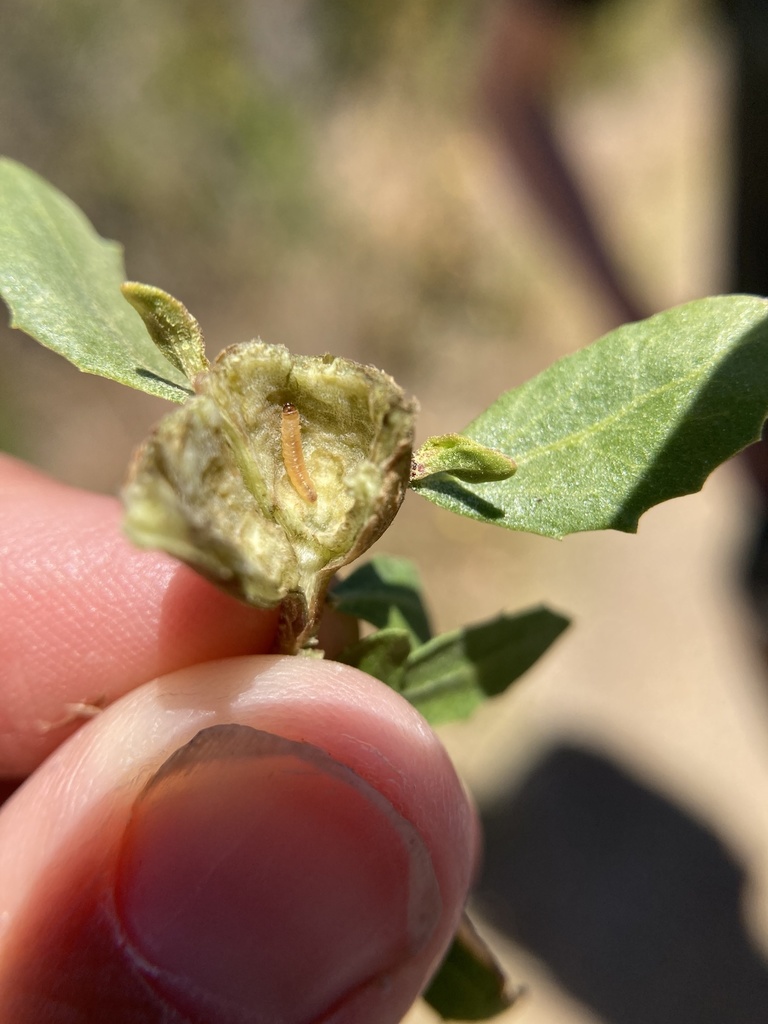
(c) Sarah Thacher, some rights reserved (CC BY) · licence
Family: Gelechiidae · Class: Insecta · Order: Lepidoptera
Gnorimoschema baccharisella (Coyote Brush Stem Gall Moth) is a California animal in the Gelechiidae family.
The Coyote Brush Stem Gall Moth (Gnorimoschema baccharisella) is a small gelechiid moth in the family Gelechiidae, originally described by Busck in 1903. This species belongs to the gallaesolidaginis species group within the genus Gnorimoschema and is assigned Hodges number 1972 in the standardized North American moth classification system. This moth occurs along the Pacific coast of California, where it is closely associated with coastal scrub and chaparral habitats. The species has been documented in coastal dune and scrub environments, particularly areas supporting its host plant. Distribution records indicate the species is found in suitable habitat throughout much of coastal California where coyote brush populations occur. Gnorimoschema baccharisella exhibits a highly specialized relationship with coyote brush (Baccharis pilularis), creating distinctive woody stem galls on this native shrub (Powell & Povolný 2001). The larvae develop as internal borers within the stems of their host plant, inducing the formation of characteristic gall structures that provide both shelter and nutrition during development. These galls represent a specialized ecological adaptation, with the moth larvae manipulating plant growth to create enlarged stem chambers. The species completes its entire larval development within the stem galls of Baccharis pilularis. Adult moths emerge from the galls after pupation, leaving characteristic exit holes in the woody gall tissue. The timing of adult emergence and specific details of reproductive behavior require further documentation, as comprehensive life history studies of this species remain limited. Like other members of the genus Gnorimoschema, this species likely has specific habitat requirements tied to the distribution and condition of its host plant. Coyote brush occurs in coastal sage scrub, chaparral, and coastal prairie habitats from sea level to moderate elevations, primarily in Mediterranean climate zones of California. The moth's distribution appears to closely follow that of its host plant, suggesting habitat requirements are largely determined by Baccharis pilularis availability and suitable microclimate conditions. No formal conservation status has been assigned to Gnorimoschema baccharisella at federal or state levels as of December 2025. However, like many specialized herbivorous insects, the species may face conservation challenges related to habitat loss and fragmentation of coastal scrub ecosystems. Coastal development, invasive plant species, and altered fire regimes potentially threaten both the moth and its host plant populations. The narrow host plant specificity of this species makes it particularly vulnerable to any factors affecting coyote brush populations or habitat quality. Taxonomic research by Powell and Povolný (2001) provided detailed morphological descriptions and ecological information for gnorimoschemine moths of California's coastal habitats. Additional research is needed to fully document the species' phenology, population dynamics, and specific habitat requirements. Current knowledge of this moth's biology and ecology remains incomplete, highlighting the need for targeted field studies of this coastal endemic species.
Classification
Class: Insecta · Order: Lepidoptera · Family: Gelechiidae
Frequently asked questions
How is Gnorimoschema baccharisella classified?
Gnorimoschema baccharisella belongs to class Insecta, order Lepidoptera, family Gelechiidae.
What family does Gnorimoschema baccharisella belong to?
Gnorimoschema baccharisella is in the Gelechiidae family.
What is Gnorimoschema baccharisella?
The Coyote Brush Stem Gall Moth (Gnorimoschema baccharisella) is a small gelechiid moth in the family Gelechiidae, originally described by Busck in 1903.
Is Gnorimoschema baccharisella found in California?
Yes. Gnorimoschema baccharisella is recorded in California in The California Species Project's catalogue.
Related species
Other California species in the same genus, family, or bioregion.
Data from The California Species Project — 14,000+ California species with verified data from CNPS, CDFW, USFWS, and more.