Gobiesox rhessodon
California Clingfish
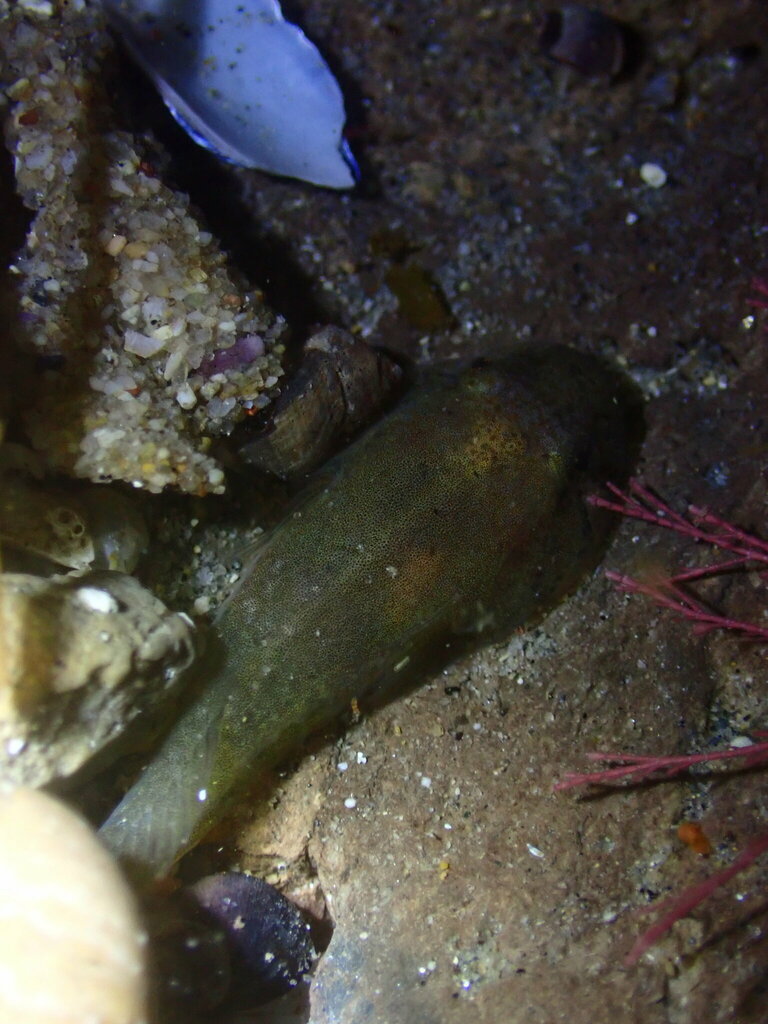
(c) Cricket Raspet, some rights reserved (CC BY) · licence
Family: Gobiesocidae · Class: Actinopterygii · Order: Blenniiformes
Gobiesox rhessodon (California Clingfish) is a California animal in the Gobiesocidae family.
The California clingfish is a small marine fish endemic to the coastal waters of California and Baja California. Adults typically reach 50-75 mm (2.0-3.0 inches) in total length, with a distinctive flattened, elongated body adapted for life in rocky intertidal zones. The species possesses a powerful ventral adhesive disc formed by modified pelvic fins, allowing it to cling securely to rocks and other hard surfaces in turbulent water. The body is typically brown to olive-green dorsally with lighter ventral coloration, providing effective camouflage among kelp and rocky substrates. The California clingfish occurs along the Pacific coast from central California south to Baja California, Mexico. Within California, the species has been documented in Marina del Rey, Ballona Creek, and coastal areas throughout the southern portion of the state (Allen 1991). The species inhabits nearshore marine environments and may occasionally enter brackish estuarine waters. This species primarily inhabits rocky intertidal and shallow subtidal zones, typically at depths from the low tide line to approximately 20 meters. California clingfish are closely associated with kelp beds, rocky reefs, and areas with complex hard substrate that provide both shelter and foraging opportunities. They demonstrate strong site fidelity, using their adhesive disc to maintain position in areas with strong wave action and currents. The species shows preference for areas with moderate to high water movement where prey items are abundant. California clingfish are carnivorous, feeding primarily on small invertebrates including amphipods, mysids, and other small crustaceans found among algae and in crevices. Their feeding behavior involves careful searching of rocky surfaces and algal growth, using their small mouth to extract prey from tight spaces. Reproduction occurs during warmer months, with adults spawning in protected areas among rocks or algae. Males typically guard egg masses until hatching occurs. The species exhibits limited mobility, generally remaining within small home ranges throughout their adult lives. The California clingfish currently holds no federal or state listing status and appears to maintain stable populations within its range as of December 2025. However, the species faces potential threats from coastal development, water quality degradation, and habitat modification in estuarine environments such as Marina del Rey and Ballona Creek. Climate change impacts, including ocean warming and acidification, may affect prey availability and habitat quality. The species' restricted range and specialized habitat requirements make it potentially vulnerable to localized environmental changes. While not currently considered at risk, continued monitoring of populations in heavily modified coastal areas would help ensure long-term conservation of this endemic California species.
Classification
Class: Actinopterygii · Order: Blenniiformes · Family: Gobiesocidae
Frequently asked questions
How is Gobiesox rhessodon classified?
Gobiesox rhessodon belongs to class Actinopterygii, order Blenniiformes, family Gobiesocidae.
What family does Gobiesox rhessodon belong to?
Gobiesox rhessodon is in the Gobiesocidae family.
What is Gobiesox rhessodon?
The California clingfish is a small marine fish endemic to the coastal waters of California and Baja California.
Is Gobiesox rhessodon found in California?
Yes. Gobiesox rhessodon is recorded in California in The California Species Project's catalogue.
Related species
Other California species in the same genus, family, or bioregion.
Data from The California Species Project — 14,000+ California species with verified data from CNPS, CDFW, USFWS, and more.