Goeracea oregona
Sagehen Creek Goeracean Caddisfly
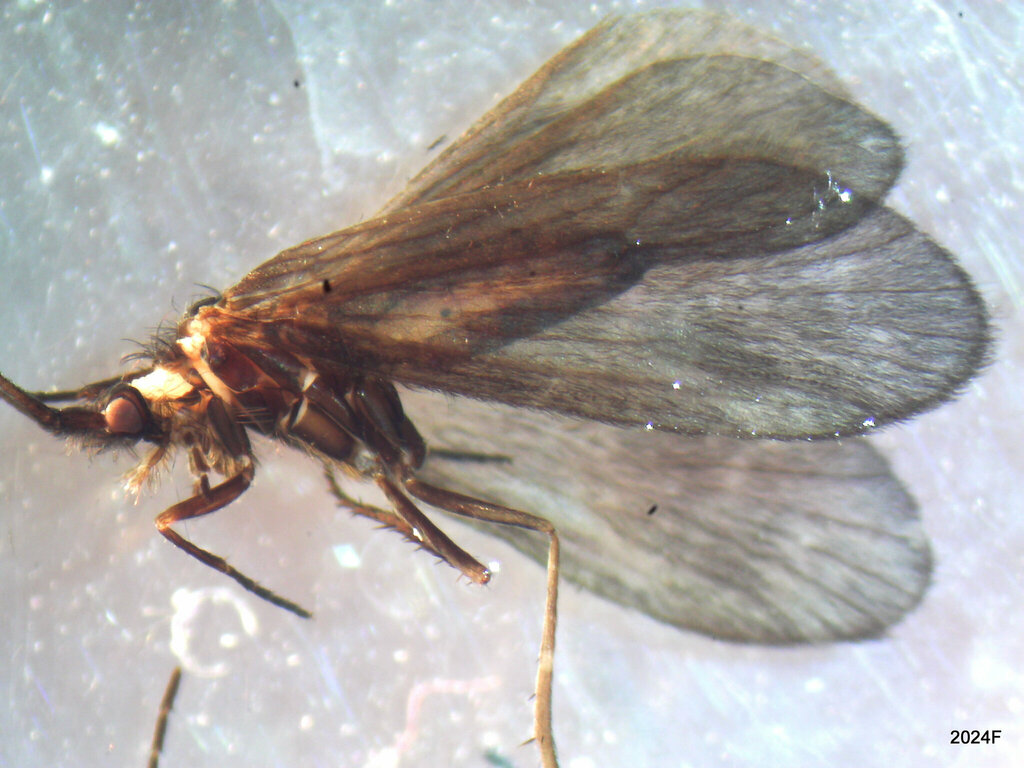
no rights reserved · CC0
Family: Goeridae · Class: Insecta · Order: Trichoptera
Conservation status: G3 S1S2
Goeracea oregona (Sagehen Creek Goeracean Caddisfly) is a California animal in the Goeridae family.
The Sagehen Creek goeracean caddisfly is a small aquatic insect in the family Goeridae, subfamily Goerinae. Adult caddisflies typically measure 6-12 mm in body length with brownish coloration and wings folded tent-like over the abdomen when at rest. Like other members of the Goeridae family, adults possess reduced maxillary palps and forewings with distinctive venation patterns. The larvae construct portable cases from small stones and sand grains, which they carry as protection while foraging on stream substrates. This species has an extremely restricted range, occurring only in California. According to the U.S. Fish and Wildlife Service, Goeracea oregona is known to occur or is believed to occur within California's boundaries (USFWS ECOS 2025). The species' common name suggests a strong association with the Sagehen Creek watershed, though detailed distribution data remains limited in available scientific literature. The species inhabits cold-water stream environments typical of montane regions in California. Caddisfly larvae in the Goeridae family generally prefer rocky substrates in fast-flowing waters with high dissolved oxygen levels. The larval cases, constructed from mineral particles, provide both protection and ballast in swift currents. Adults likely emerge during warmer months when water temperatures and photoperiod trigger pupation, though specific emergence timing for this species has not been well documented. Larval Goeracea oregona likely feed on periphyton, detritus, and small organic particles scraped from rock surfaces, consistent with feeding habits observed in related goerid species. The larvae play important ecological roles as both grazers of algal communities and prey for fish and other aquatic predators. Adult females probably deposit eggs in gelatinous masses on submerged rocks or vegetation, where they develop through winter months before hatching in spring. The species likely has a univoltine life cycle, completing one generation per year. Goeracea oregona carries a global rank of G3 (vulnerable) and a California state rank of S1S2 (critically imperiled to imperiled), indicating significant conservation concern. The species faces threats typical of aquatic insects in California's mountain streams, including habitat fragmentation, water diversions, climate change impacts on snowpack and streamflow patterns, and potential degradation of water quality from various sources. The extremely limited range makes the species particularly vulnerable to localized environmental changes or disturbances within its watershed. Currently, the species does not appear on federal or state endangered species lists, though its precarious conservation status suggests ongoing monitoring is warranted. Protection of the Sagehen Creek watershed and maintenance of natural flow regimes are likely critical for the species' persistence. Research into the species' detailed life history, habitat requirements, and population status would inform future conservation planning efforts. Scientific documentation for this species remains limited despite its conservation ranking. This species is included on the California Department of Fish and Wildlife's Special Animals List. The information presented here synthesizes available data from taxonomic databases and general knowledge of related caddisfly species. Additional field studies and taxonomic research would enhance understanding of this rare California endemic.
Classification
Class: Insecta · Order: Trichoptera · Family: Goeridae
Conservation status
G3 S1S2
Frequently asked questions
How is Goeracea oregona classified?
Goeracea oregona belongs to class Insecta, order Trichoptera, family Goeridae.
What family does Goeracea oregona belong to?
Goeracea oregona is in the Goeridae family.
Is Goeracea oregona protected or of conservation concern?
Goeracea oregona carries the following status: G3 S1S2.
What is Goeracea oregona?
The Sagehen Creek goeracean caddisfly is a small aquatic insect in the family Goeridae, subfamily Goerinae.
Is Goeracea oregona found in California?
Yes. Goeracea oregona is recorded in California in The California Species Project's catalogue.
More California species
This species has no close relatives in our California data — here are other species to explore.
Data from The California Species Project — 14,000+ California species with verified data from CNPS, CDFW, USFWS, and more.