Gomphus kurilis
Pacific clubtail
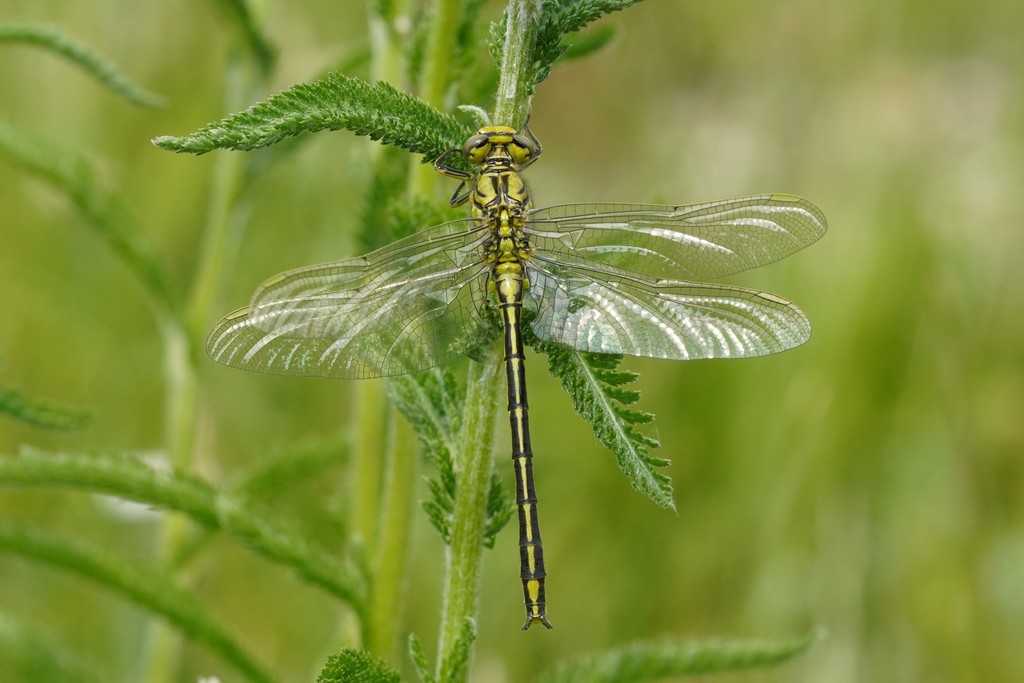
(c) Julia Moning, some rights reserved (CC BY) · licence
Family: Gomphidae · Class: Insecta · Order: Odonata
Gomphus kurilis (Pacific clubtail) is a California animal in the Gomphidae family.
The Pacific clubtail is a medium-sized dragonfly belonging to the family Gomphidae, characterized by the distinctive clubbed appearance of its abdomen tip. Adults typically measure 50-60 mm (2.0-2.4 inches) in length with a wingspan of approximately 70-80 mm (2.8-3.1 inches). The species exhibits the typical gomphid coloration pattern with yellow and black markings, though specific morphological details distinguishing it from closely related clubtails require expert identification. Gomphus kurilis occupies a western North American distribution extending from the Seattle area of Washington south through Oregon to the northern half of California. The species demonstrates a relatively broad elevational tolerance, occurring from near sea level up to approximately 610 meters (2,000 feet) in Washington and extending to 1,463 meters (4,800 feet) in Oregon (Xerces Society). In California, populations are concentrated in the northern counties, though specific distribution records within the state require further documentation. This species occupies an unusually wide range of aquatic habitats compared to many dragonflies. Suitable breeding sites include sand-bottomed lakes, muddy ponds, large swift rivers, and slow streams. In Washington, Pacific clubtails are primarily found at lentic sites including ponds, lakes, and slow-moving streams, while Oregon populations utilize a broader habitat spectrum encompassing rock-bottomed lakes, eutrophic rivers, and various stream types (Xerces Society). The species can apparently tolerate some level of agricultural pollution, though habitat quality remains important for population persistence. Larvae are fossorial, requiring fine substrate such as mud or sand for normal burrowing behavior where they function as ambush predators. The aquatic larval stage likely extends multiple years, as is typical for gomphids in temperate regions. Adults emerge during late spring and summer months, with males establishing territories along shorelines and females approaching water only for mating and oviposition. Adults bask on ground surfaces near water and on vegetation, or may be found on substrates away from water sources during non-reproductive periods. The Pacific clubtail is not federally listed under the Endangered Species Act, though it faces significant conservation challenges. In Washington, the species is ranked S1 (Critically Imperiled) due to extreme rarity, with few known populations and possible declining numbers (Xerces Society). Primary threats include habitat degradation through watershed activities such as road construction, building development, cattle grazing, and logging operations that increase erosion and sediment delivery to aquatic systems. These activities degrade the fine substrate essential for larval burrowing behavior. Additionally, insecticides, herbicides, and other agricultural contaminants carried through runoff and wind drift may seriously impact reproductive potential and long-term population viability. Climate change may exacerbate these threats through altered precipitation patterns and increased temperature extremes affecting aquatic habitat conditions.
Classification
Class: Insecta · Order: Odonata · Family: Gomphidae
Frequently asked questions
How is Gomphus kurilis classified?
Gomphus kurilis belongs to class Insecta, order Odonata, family Gomphidae.
What family does Gomphus kurilis belong to?
Gomphus kurilis is in the Gomphidae family.
What is Gomphus kurilis?
The Pacific clubtail is a medium-sized dragonfly belonging to the family Gomphidae, characterized by the distinctive clubbed appearance of its abdomen tip.
Is Gomphus kurilis found in California?
Yes. Gomphus kurilis is recorded in California in The California Species Project's catalogue.
Related species
Other California species in the same genus, family, or bioregion.
Data from The California Species Project — 14,000+ California species with verified data from CNPS, CDFW, USFWS, and more.