Gorgonocephalus eucnemis
Common basket star
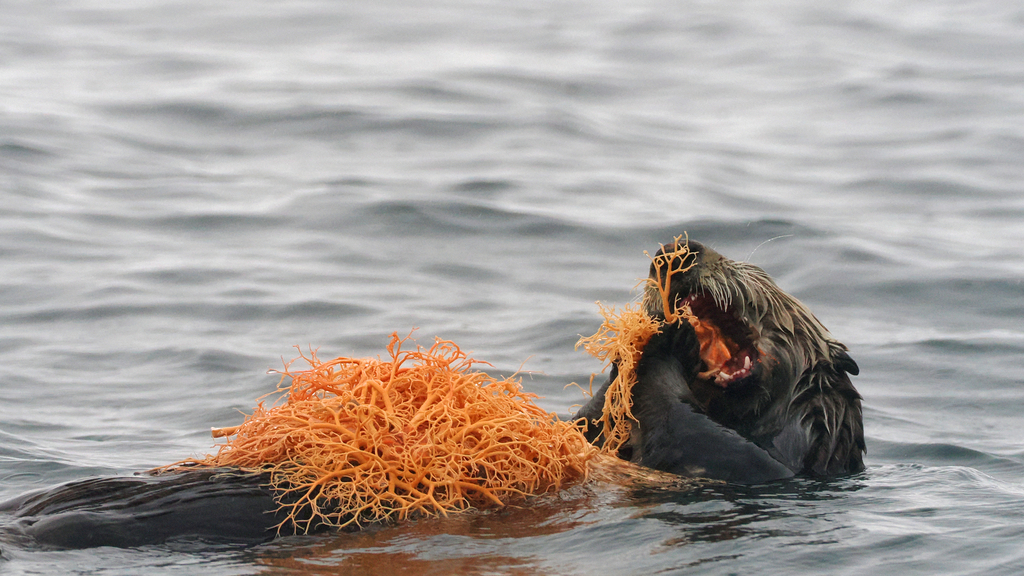
no rights reserved · CC0
Family: Gorgonocephalidae · Class: Ophiuroidea · Order: Phrynophiurida
Gorgonocephalus eucnemis (Common basket star) is a California animal in the Gorgonocephalidae family.
The common basket star is a distinctive echinoderm belonging to the class Ophiuroidea, characterized by its highly branched, tree-like arms that distinguish it from typical sea stars. This species exhibits a central disc from which five primary arms extend, each subdividing repeatedly into numerous smaller branches, creating a complex branching pattern resembling a basket or coral formation. The branching arms can span considerable distances when fully extended for feeding, but coil tightly against the central body when not actively feeding. Gorgonocephalus eucnemis occurs in North Pacific waters, with documented populations along the California coast. The species has been observed in California's marine protected areas, including deep-water habitats off the North Coast where it inhabits rocky reef environments (CDFW Science Institute). Remotely operated vehicle surveys have documented basket stars in association with rocky substrates at various depths along California's coastline. This species inhabits deep-water marine environments, typically associated with hard, rocky substrates and reef systems. Basket stars are commonly found on rocky seafloor areas where they can anchor themselves while extending their branched arms into the water column. They occur alongside other deep-water species including various rockfish, sea cucumbers, white-plumed anemones, and sponges. The species appears to favor areas with moderate to strong currents that facilitate their suspension feeding behavior. Basket stars are suspension feeders that capture small planktonic organisms and organic particles from the water column using their extensively branched arms. The numerous arm branches create an effective filtering network, with microscopic tube feet and mucus helping to trap food particles. When feeding, the arms extend upward and outward into the current, maximizing the surface area available for particle capture. During periods of low current or when disturbed, the arms coil tightly around the central disc, giving the animal a compact, ball-like appearance. Reproduction involves the release of gametes into the water column, with development occurring through planktonic larval stages. Currently, Gorgonocephalus eucnemis does not appear on federal or state endangered species lists. However, like many deep-water marine species, basket stars may face pressures from fishing activities, bottom trawling, and ocean acidification. Their presence in California's marine protected areas provides some protection from direct human disturbance. The species serves as an indicator of healthy deep-water rocky reef ecosystems. Continued monitoring through remotely operated vehicle surveys helps document population distributions and habitat associations, contributing to our understanding of deep-water marine biodiversity along the California coast.
Classification
Class: Ophiuroidea · Order: Phrynophiurida · Family: Gorgonocephalidae
Frequently asked questions
How is Gorgonocephalus eucnemis classified?
Gorgonocephalus eucnemis belongs to class Ophiuroidea, order Phrynophiurida, family Gorgonocephalidae.
What family does Gorgonocephalus eucnemis belong to?
Gorgonocephalus eucnemis is in the Gorgonocephalidae family.
What is Gorgonocephalus eucnemis?
The common basket star is a distinctive echinoderm belonging to the class Ophiuroidea, characterized by its highly branched, tree-like arms that distinguish it from typical sea stars.
Is Gorgonocephalus eucnemis found in California?
Yes. Gorgonocephalus eucnemis is recorded in California in The California Species Project's catalogue.
More California species
This species has no close relatives in our California data — here are other species to explore.
Data from The California Species Project — 14,000+ California species with verified data from CNPS, CDFW, USFWS, and more.