Gosodesmus claremontus
Pink Feather Boa Millipede
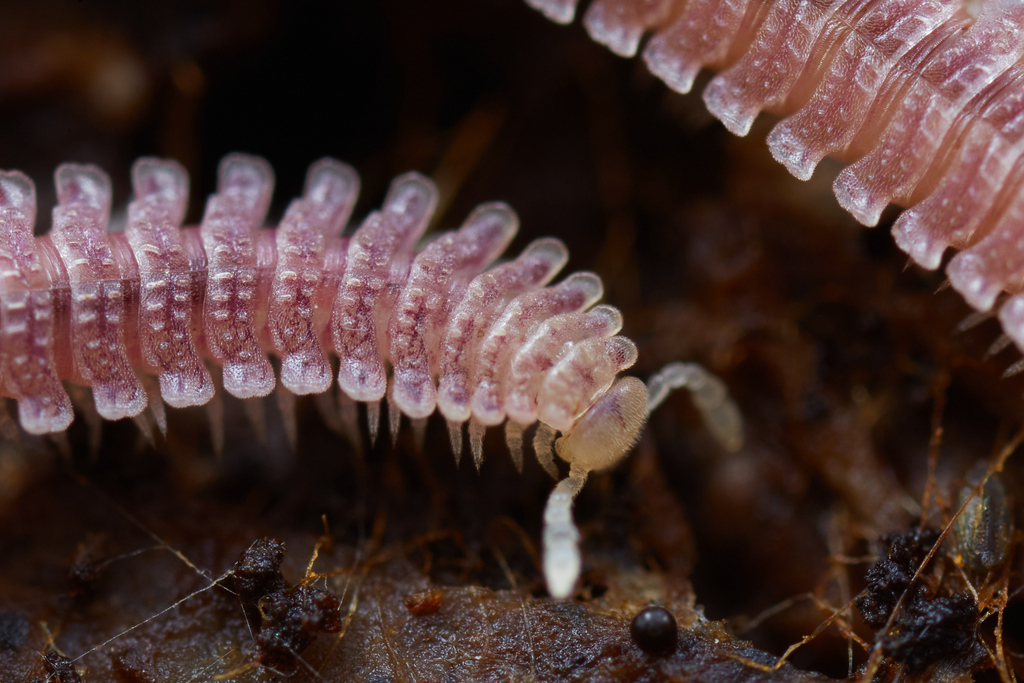
(c) Ken-ichi Ueda, some rights reserved (CC BY) · licence
Family: Andrognathidae · Class: Diplopoda · Order: Platydesmida
Gosodesmus claremontus (Pink Feather Boa Millipede) is a California animal in the Andrognathidae family.
Gosodesmus claremontus, commonly known as the Pink Feather Boa Millipede, is a rare arthropod species in the order Platydesmida, family Andrognathidae. This millipede belongs to a specialized group of myriapods distinguished by their flattened body segments and unique defensive secretions. The species exhibits the characteristic segmented body plan of diplopods, with each body segment bearing two pairs of legs. Adult specimens display the pink coloration referenced in the common name, though detailed morphological descriptions remain limited in the scientific literature. The Pink Feather Boa Millipede is endemic to California, representing one of the state's lesser-known invertebrate species. The species name 'claremontus' suggests an association with the Claremont area, though precise distributional data requires further documentation. Current range information indicates a restricted distribution within California, typical of many endemic millipede species that often occupy specialized microhabitats. Habitat requirements for G. claremontus have not been extensively documented in the available literature. Like other members of the Platydesmida, this species likely inhabits leaf litter, decaying organic matter, and soil environments where moisture levels remain relatively stable. Millipedes in this order typically prefer areas with adequate humidity and organic debris for feeding and shelter. The species may be associated with specific vegetation types or soil conditions that support its particular ecological requirements. As a detritivore, the Pink Feather Boa Millipede likely feeds on decomposing plant material, contributing to nutrient cycling in its ecosystem. Platydesmid millipedes are known for their ability to process organic matter and their role in soil health. Reproductive biology and seasonal activity patterns for this species remain poorly understood, though most millipedes exhibit seasonal breeding cycles and maternal care of eggs. The species likely follows typical millipede development, progressing through multiple molts before reaching sexual maturity. Conservation status information for Gosodesmus claremontus is limited, with no current federal or state listing designations identified in available databases. The species appears on California's special animals tracking list, indicating it may face conservation concerns or requires monitoring. Limited distributional data and potential habitat specificity could make this species vulnerable to environmental changes, habitat loss, or development pressures. The restricted nature of many endemic California millipede populations suggests that G. claremontus may warrant conservation attention, though comprehensive population assessments and threat analyses have not been documented. Further research is needed to understand population trends, ecological requirements, and potential conservation needs for this endemic California species. Scientific documentation for this species remains limited. The information presented here synthesizes available data from taxonomic databases and the U.S. Fish and Wildlife Service taxonomic framework. Additional field studies, morphological descriptions, and ecological research would significantly enhance understanding of this endemic millipede's biology and conservation requirements.
Classification
Class: Diplopoda · Order: Platydesmida · Family: Andrognathidae
Frequently asked questions
How is Gosodesmus claremontus classified?
Gosodesmus claremontus belongs to class Diplopoda, order Platydesmida, family Andrognathidae.
What family does Gosodesmus claremontus belong to?
Gosodesmus claremontus is in the Andrognathidae family.
What is Gosodesmus claremontus?
Gosodesmus claremontus, commonly known as the Pink Feather Boa Millipede, is a rare arthropod species in the order Platydesmida, family Andrognathidae.
Is Gosodesmus claremontus found in California?
Yes. Gosodesmus claremontus is recorded in California in The California Species Project's catalogue.
More California species
This species has no close relatives in our California data — here are other species to explore.
Data from The California Species Project — 14,000+ California species with verified data from CNPS, CDFW, USFWS, and more.