Grampus griseus
Risso's Dolphin
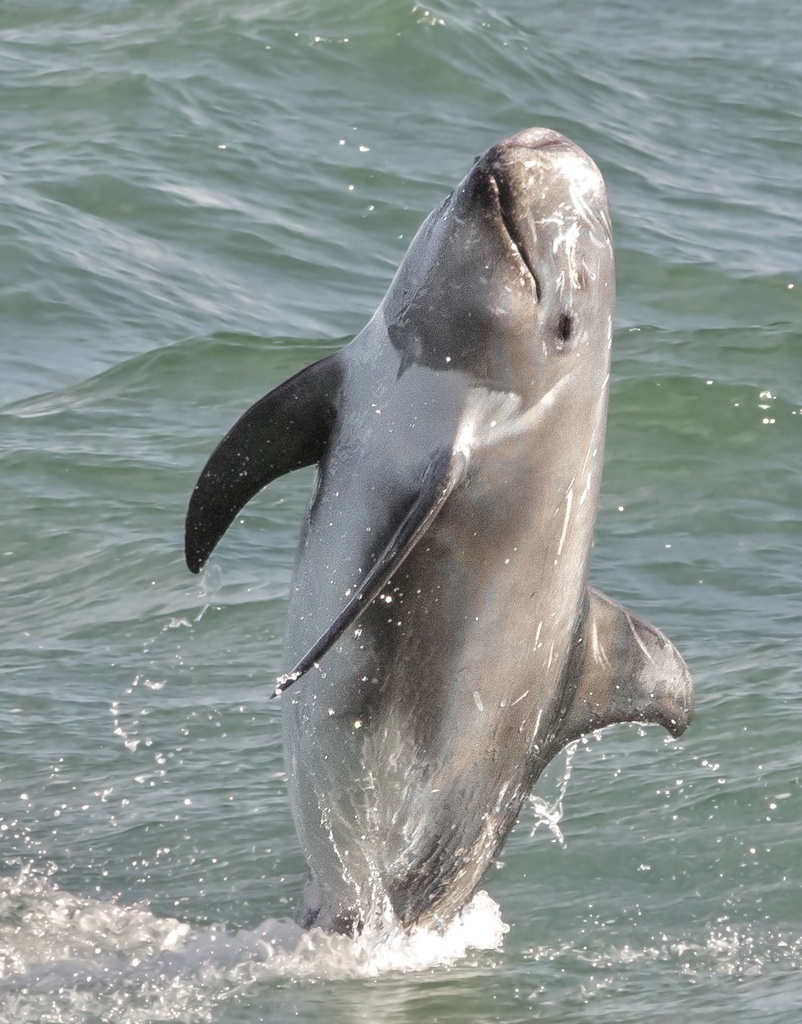
(c) Morgan Caygill, some rights reserved (CC BY) · licence
Family: Delphinidae · Class: Mammalia · Order: Artiodactyla
Grampus griseus (Risso's Dolphin) is a California animal in the Delphinidae family.
Risso's dolphin is a robust marine mammal measuring 2.6 to 4.0 meters (8.5 to 13 feet) in length and weighing 300 to 500 kilograms (660 to 1,100 pounds). Adults are characterized by a distinctive blunt, square-shaped head lacking a prominent beak, and a tall, falcate dorsal fin positioned at mid-body. Newborns are dark gray to brown, but coloration changes dramatically with age. Adults develop a pale gray to nearly white appearance due to extensive scarring from intraspecific interactions and cephalopod prey. These permanent white scars create unique individual identification patterns, with older individuals appearing almost entirely white. Risso's dolphins occur in temperate and tropical waters worldwide, including the Pacific coast of California. Along the California coast, they range from the Mexican border north to at least Monterey Bay, with occasional sightings extending to central California waters. The species is most commonly observed in the Southern California Bight, particularly around the Channel Islands and continental shelf edge waters. This species inhabits deep oceanic waters, typically preferring depths between 400 and 1,000 meters (1,310 to 3,280 feet) along the continental shelf edge and slope. Risso's dolphins favor areas with steep underwater topography where upwelling creates productive feeding zones. They are commonly found in waters with temperatures ranging from 10 to 28 degrees Celsius (50 to 82 degrees Fahrenheit) and demonstrate strong associations with submarine canyons and seamounts. Risso's dolphins are highly specialized teuthophages, feeding almost exclusively on cephalopods including squid and octopus. Their diet consists primarily of deep-water species such as market squid, Humboldt squid, and various lanternfish. They typically feed at night when their prey undergoes diel vertical migration toward the surface. The species exhibits complex social behavior, forming groups of 10 to 30 individuals, though aggregations of several hundred have been documented during feeding events. Reproduction follows typical delphinid patterns, with females reaching sexual maturity at 8 to 10 years and giving birth to single calves after an 11 to 12 month gestation period. Calving intervals average 2.4 years, and lifespan extends to approximately 35 years. Risso's dolphins are not federally listed under the Endangered Species Act and have no special conservation status in California as of December 2025. The species is classified as Least Concern by the International Union for Conservation of Nature, indicating stable global populations. However, they face threats from commercial fishing operations, particularly entanglement in drift gillnets and longlines targeting swordfish and sharks. Ship strikes pose additional risks in heavily trafficked shipping lanes off California. Pollution, including plastic debris and chemical contaminants, affects the species through bioaccumulation in their cephalopod prey. Climate change may alter prey distribution patterns, potentially affecting foraging success and population dynamics in California waters.
Classification
Class: Mammalia · Order: Artiodactyla · Family: Delphinidae
Frequently asked questions
How is Grampus griseus classified?
Grampus griseus belongs to class Mammalia, order Artiodactyla, family Delphinidae.
What family does Grampus griseus belong to?
Grampus griseus is in the Delphinidae family.
What is Grampus griseus?
Risso's dolphin is a robust marine mammal measuring 2.6 to 4.0 meters (8.5 to 13 feet) in length and weighing 300 to 500 kilograms (660 to 1,100 pounds).
Is Grampus griseus found in California?
Yes. Grampus griseus is recorded in California in The California Species Project's catalogue.
Related species
Other California species in the same genus, family, or bioregion.
Data from The California Species Project — 14,000+ California species with verified data from CNPS, CDFW, USFWS, and more.