Grapholita caeruleana
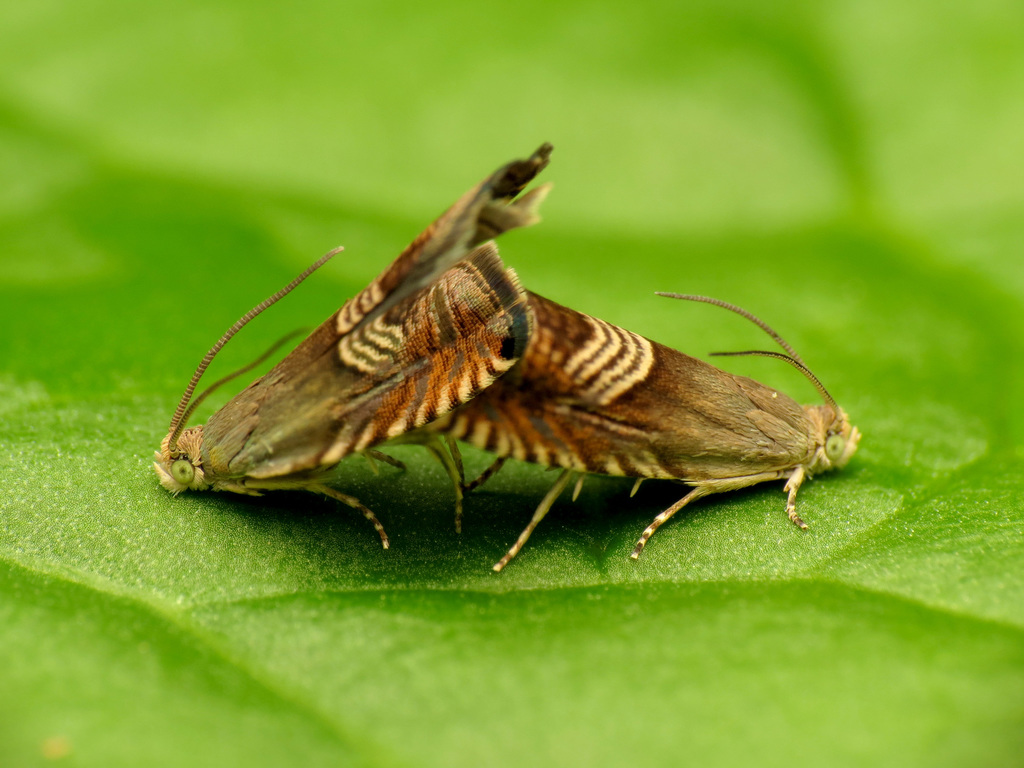
(c) Katja Schulz, some rights reserved (CC BY) · licence
Family: Tortricidae · Class: Insecta · Order: Lepidoptera
Grapholita caeruleana is a California animal in the Tortricidae family.
Grapholita caeruleana is a small moth in the family Tortricidae, commonly known as leafroller moths. This species belongs to the genus Grapholita, which contains numerous small moths whose larvae typically bore into fruits, seeds, or stems of various plant species. Adults are characterized by the typical tortricid wing pattern, with forewings that are generally narrow and rectangular when at rest, held roof-like over the body. The specific distribution and range of Grapholita caeruleana within California remains poorly documented in the scientific literature. The species appears to have a limited distribution, though comprehensive surveys to determine its current range have not been conducted. Without verified occurrence records, the historical and current distribution patterns cannot be definitively established. Habitat requirements for Grapholita caeruleana are not well-documented in available literature. Like other members of the genus Grapholita, this species likely inhabits areas where its host plants occur. Many tortricid moths in this genus are associated with specific plant families and require particular microhabitat conditions for successful reproduction and development. The elevation range and specific vegetation types used by this species remain unknown. The life history and ecological behavior of Grapholita caeruleana follow the general pattern of other Grapholita species. Adults are likely nocturnal and active during specific seasonal periods, though the exact flight season has not been documented. Larvae probably develop as internal feeders within host plant tissues, potentially boring into stems, fruits, or seeds. The number of generations per year, overwintering stage, and specific reproductive behaviors remain undocumented for this species. Females presumably lay eggs on or near host plant material, where larvae hatch and begin feeding. Development likely progresses through several larval instars before pupation occurs, either within the host plant or in nearby soil or plant debris. Adult emergence timing and mating behaviors have not been recorded in the scientific literature. The conservation status of Grapholita caeruleana is unclear due to limited available information about the species. No federal or state listing status has been assigned, and population trends are unknown. The species does not appear on major conservation databases or tracking lists, suggesting either that it is relatively secure or that it has received insufficient scientific attention to warrant conservation assessment. Primary threats to the species, if any exist, cannot be determined without better understanding of its distribution, habitat requirements, and population status. Potential threats common to specialized insects include habitat loss, invasive species, climate change, and pesticide use, though the relevance of these factors to Grapholita caeruleana specifically cannot be evaluated with current data. Further taxonomic verification, distributional surveys, and ecological research would be needed to assess the conservation needs of this species and determine whether any management actions are warranted.
Classification
Class: Insecta · Order: Lepidoptera · Family: Tortricidae
Frequently asked questions
How is Grapholita caeruleana classified?
Grapholita caeruleana belongs to class Insecta, order Lepidoptera, family Tortricidae.
What family does Grapholita caeruleana belong to?
Grapholita caeruleana is in the Tortricidae family.
What is Grapholita caeruleana?
Grapholita caeruleana is a small moth in the family Tortricidae, commonly known as leafroller moths.
Is Grapholita caeruleana found in California?
Yes. Grapholita caeruleana is recorded in California in The California Species Project's catalogue.
Related species
Other California species in the same genus, family, or bioregion.
Data from The California Species Project — 14,000+ California species with verified data from CNPS, CDFW, USFWS, and more.