Grus americana
Whooping crane
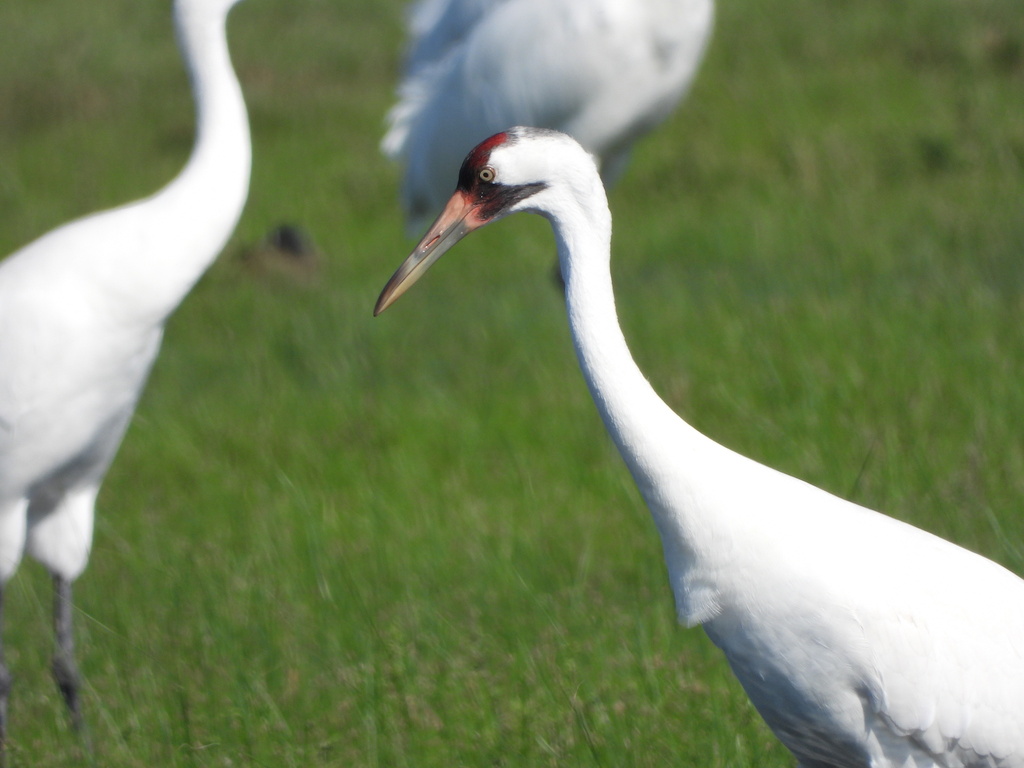
(c) Jared Shorma, some rights reserved (CC BY) · licence
Family: Gruidae · Class: Aves · Order: Gruiformes
Conservation status: Experimental Population, Non-Essential
Grus americana (Whooping crane) is a California animal in the Gruidae family.
The whooping crane is North America's tallest bird, with males reaching heights of 1.5 meters (5 feet) when standing erect. Adults display predominantly snow-white plumage except for black primaries and grayish or black alula feathers on the wing tips. The species has a distinctive red crown patch, long black bill, and long dark legs. Wingspan reaches 2.3 meters (7.5 feet), making them powerful long-distance migrants. Adults typically weigh 6.4 to 7.3 kilograms (14 to 16 pounds). Historically, whooping cranes ranged from the Arctic coast south to central Mexico and from Utah east to New Jersey, South Carolina, Georgia, and Florida, as evidenced by fossil remains dating to the Upper Pliocene and Pleistocene periods (USFWS 2007). Today, the primary wild population breeds in Wood Buffalo National Park in northern Alberta and Northwest Territories, Canada, and winters at Aransas National Wildlife Refuge along the Texas Gulf Coast. The species migrates through the Great Plains corridor, passing through eastern Montana, North Dakota, South Dakota, Nebraska, Kansas, and Oklahoma. Experimental populations have been established in multiple states including Florida, Wisconsin, and Louisiana as part of recovery efforts. Whooping cranes utilize diverse habitats including coastal marshes and estuaries, inland marshes, lakes, ponds, wet meadows, rivers, and agricultural fields. During breeding, they prefer shallow wetlands with emergent vegetation in boreal regions. Wintering habitat consists of salt marshes, shallow bays, and adjacent uplands along the Gulf Coast, extending 48 to 56 kilometers from San Jose Island and Lamar Peninsula north to Welder Point and Matagorda Island (USFWS 2007). During migration, they roost in shallow wetlands and forage in agricultural fields and grasslands. Whooping cranes are omnivorous, feeding on blue crabs, clams, frogs, aquatic insects, small fish, berries, and waste grain. They typically form monogamous pairs and nest in shallow water surrounded by bulrush or sedge. Females lay one to three eggs, usually two, with incubation lasting 29 to 31 days. Both parents care for the young, which fledge at 80 to 90 days but remain with parents through their first migration and winter. The species was listed as endangered under the Endangered Species Act due to severe historical population declines caused by habitat loss, hunting, and human disturbance. The population reached a low of 15 individuals in 1941 but has recovered through intensive management. According to the International Recovery Plan, the goal is to establish 1,000 individuals in North America by 2035 to achieve self-sustaining status (USFWS & CWS 2007). As of 2023, the Aransas-Wood Buffalo population numbered approximately 500 birds. Current threats include habitat degradation, power line collisions, climate change impacts on coastal wintering areas, and human disturbance. The species maintains its federal listing as experimental population, non-essential in reintroduction areas.
Classification
Class: Aves · Order: Gruiformes · Family: Gruidae
Conservation status
Experimental Population, Non-Essential
Frequently asked questions
How is Grus americana classified?
Grus americana belongs to class Aves, order Gruiformes, family Gruidae.
What family does Grus americana belong to?
Grus americana is in the Gruidae family.
Is Grus americana protected or of conservation concern?
Grus americana carries the following status: Experimental Population, Non-Essential.
What is Grus americana?
The whooping crane is North America's tallest bird, with males reaching heights of 1.5 meters (5 feet) when standing erect.
Is Grus americana found in California?
Yes. Grus americana is recorded in California in The California Species Project's catalogue.
Related species
Other California species in the same genus, family, or bioregion.
Data from The California Species Project — 14,000+ California species with verified data from CNPS, CDFW, USFWS, and more.