Grylloblatta washoa
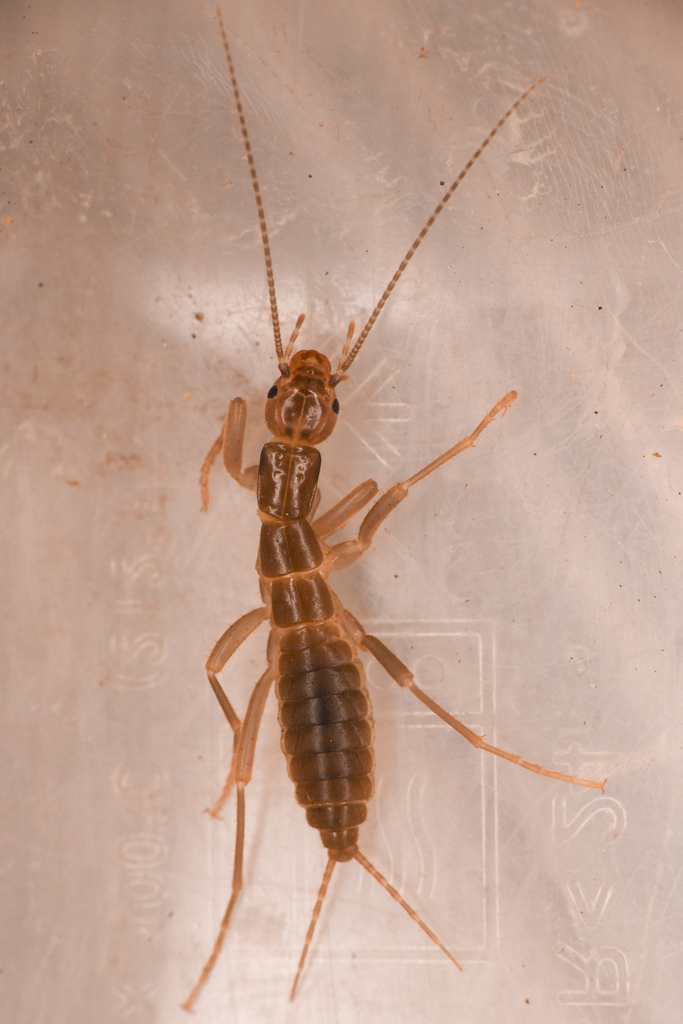
(c) Trevor Van Loon, some rights reserved (CC BY) · licence
Family: Grylloblattidae · Class: Insecta · Order: Grylloblattodea
Grylloblatta washoa is a California animal in the Grylloblattidae family.
Grylloblatta washoa is a wingless insect belonging to the family Grylloblattidae, commonly known as ice-crawlers or rock crawlers. Members of this genus are primitive insects characterized by their elongated, cylindrical bodies and lack of wings in all life stages. Ice-crawlers typically measure 15-30 mm in length, with pale yellow to brown coloration and long, thread-like antennae. The body bears resemblance to both crickets and cockroaches, reflecting their evolutionary position as ancient relatives of these orders. The species occurs in California, though specific distributional data within the state remains limited in available records. The genus Grylloblatta comprises 15 species according to USFWS taxonomic records, with G. washoa representing one of the more poorly documented members of this group. Ice-crawlers are endemic to western North America, with species distributed from Alaska to California, typically in montane regions. Grylloblatta species inhabit cold, high-elevation environments, typically found under rocks, in caves, or within talus slopes at or near the snowline. These insects are adapted to temperatures near freezing and cannot survive in warm conditions. Most species occur at elevations above 1,500 meters, often in areas where snow persists for much of the year. They prefer microhabitats with stable, cold temperatures and high humidity, such as spaces between rocks or in soil beneath snow cover. Ice-crawlers are nocturnal scavengers that feed on dead and dying arthropods, including flies, beetles, and other insects that fall onto snow or become trapped in cold environments. They are also known to consume organic matter and occasionally engage in cannibalistic behavior. Reproduction occurs through internal fertilization, with females depositing eggs in soil or rock crevices. Development is slow, with some species requiring several years to reach maturity due to the cold temperatures of their habitat. Adults are active primarily during late spring through fall when temperatures are most favorable. The conservation status of G. washoa has not been formally assessed by state or federal agencies. Like other ice-crawler species, this taxon likely faces threats from climate change, as warming temperatures reduce suitable high-elevation habitat and alter snowpack dynamics that these cold-adapted insects depend upon. Mountain ecosystems in California are particularly vulnerable to temperature increases, which could force populations to retreat to higher elevations or face local extinction. The limited distributional range typical of ice-crawler species makes them especially susceptible to habitat loss and fragmentation. Additional research is needed to determine population status, specific habitat requirements, and conservation needs for this poorly studied species.
Classification
Class: Insecta · Order: Grylloblattodea · Family: Grylloblattidae
Frequently asked questions
How is Grylloblatta washoa classified?
Grylloblatta washoa belongs to class Insecta, order Grylloblattodea, family Grylloblattidae.
What family does Grylloblatta washoa belong to?
Grylloblatta washoa is in the Grylloblattidae family.
What is Grylloblatta washoa?
Grylloblatta washoa is a wingless insect belonging to the family Grylloblattidae, commonly known as ice-crawlers or rock crawlers.
Is Grylloblatta washoa found in California?
Yes. Grylloblatta washoa is recorded in California in The California Species Project's catalogue.
More California species
This species has no close relatives in our California data — here are other species to explore.
Data from The California Species Project — 14,000+ California species with verified data from CNPS, CDFW, USFWS, and more.