Gryllodes sigillatus
Tropical House Cricket
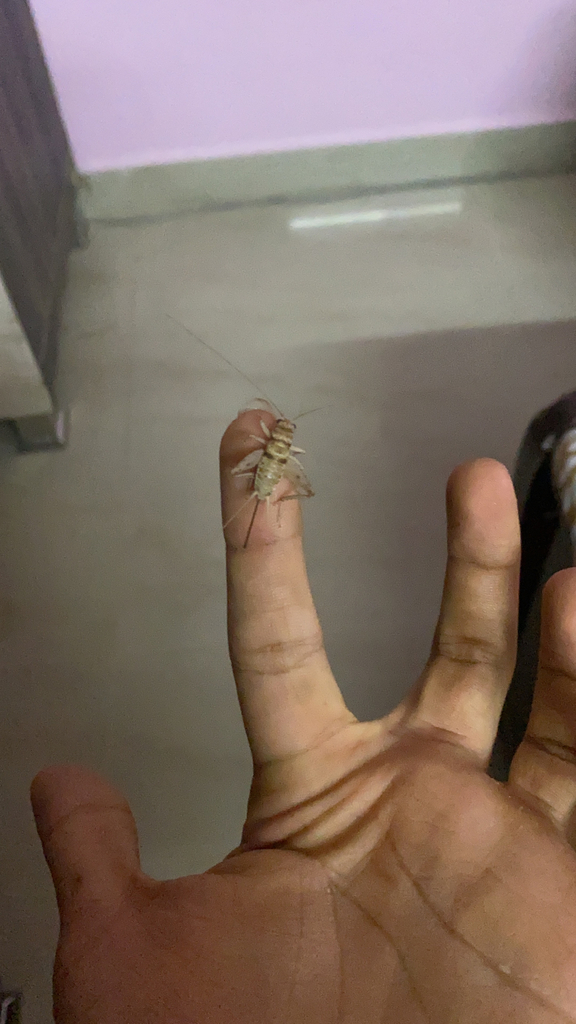
(c) Manav Dhamani, some rights reserved (CC BY) · licence
Family: Gryllidae · Class: Insecta · Order: Orthoptera
Gryllodes sigillatus (Tropical House Cricket) is a California animal in the Gryllidae family.
The Tropical House Cricket (Gryllodes sigillatus) is a small orthopteran insect in the family Gryllidae. Adults typically measure 13-17 mm (0.5-0.7 inches) in body length, with a yellowish-brown to light brown coloration. The species exhibits sexual dimorphism, with males possessing well-developed wings used for sound production, while females have reduced wing covers and a prominent ovipositor extending from the abdomen. The head is relatively large with long, threadlike antennae that can exceed body length. Originally native to tropical and subtropical regions, Gryllodes sigillatus has established populations worldwide through human-mediated dispersal. In North America, the species occurs throughout much of the southern United States and has been documented in California, particularly in urban and suburban environments. According to NatureServe, the species has a global conservation status of G5 (Secure), indicating stable populations across its range (NatureServe 2025). The widespread distribution reflects the species' adaptability to human-modified environments. Tropical House Crickets inhabit a variety of environments but show a strong association with human structures and disturbed habitats. They are commonly found in buildings, warehouses, greenhouses, and residential areas where temperatures remain relatively warm year-round. Outdoors, they occupy gardens, compost piles, and areas with organic debris. The species thrives in environments with temperatures between 25-30°C (77-86°F) and requires access to moisture and organic matter for feeding and reproduction. As omnivorous scavengers, Tropical House Crickets feed on a diverse array of organic materials including decaying plant matter, fabric, paper, and food scraps. They are primarily nocturnal, becoming active after sunset when they emerge to forage and mate. Males produce characteristic chirping calls by rubbing specialized wing structures together, with calling frequency influenced by ambient temperature. Reproduction occurs throughout the year in suitable climates, with females depositing 50-100 eggs in soil, crevices, or organic substrates. The species undergoes incomplete metamorphosis, with nymphs resembling miniature adults and molting 8-10 times before reaching maturity approximately 2-3 months after hatching. The Tropical House Cricket is not subject to any federal or state conservation listing and maintains stable populations throughout its range. As an introduced species in many regions, it is sometimes considered a minor household pest due to its tendency to damage fabrics and paper materials. However, the species also provides ecological benefits by decomposing organic waste and serving as prey for various predators including spiders, birds, and small mammals. In some cultures, crickets including G. sigillatus are utilized as food sources or in traditional medicine. The species' success in human-dominated landscapes demonstrates its ecological plasticity and ability to exploit anthropogenic resources.
Classification
Class: Insecta · Order: Orthoptera · Family: Gryllidae
Frequently asked questions
How is Gryllodes sigillatus classified?
Gryllodes sigillatus belongs to class Insecta, order Orthoptera, family Gryllidae.
What family does Gryllodes sigillatus belong to?
Gryllodes sigillatus is in the Gryllidae family.
What is Gryllodes sigillatus?
The Tropical House Cricket (Gryllodes sigillatus) is a small orthopteran insect in the family Gryllidae.
Is Gryllodes sigillatus found in California?
Yes. Gryllodes sigillatus is recorded in California in The California Species Project's catalogue.
Related species
Other California species in the same genus, family, or bioregion.
Data from The California Species Project — 14,000+ California species with verified data from CNPS, CDFW, USFWS, and more.