Gryllus lineaticeps
Variable Field Cricket
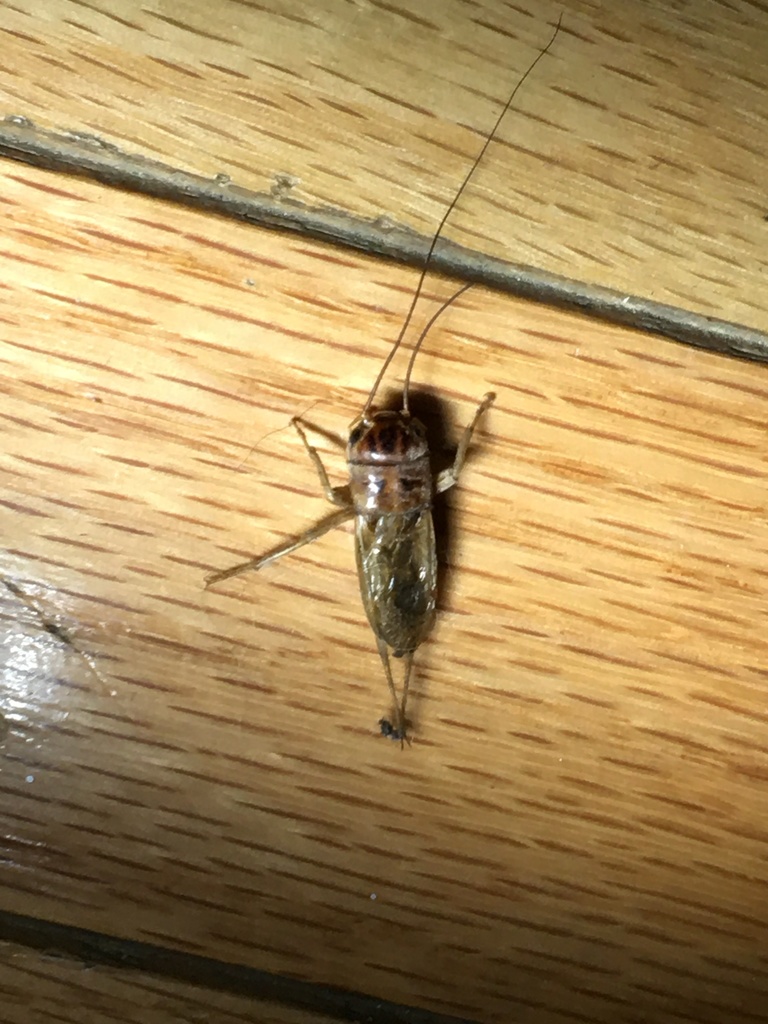
(c) Brook, some rights reserved (CC BY) · licence
Family: Gryllidae · Class: Insecta · Order: Orthoptera
Gryllus lineaticeps (Variable Field Cricket) is a California animal in the Gryllidae family.
Gryllus lineaticeps, commonly known as the Variable Field Cricket, is a member of the family Gryllidae within the order Orthoptera. This cricket species belongs to the genus Gryllus, which includes numerous field cricket species found throughout North America. Like other field crickets, G. lineaticeps likely displays the typical robust body form characteristic of this group, with strong hind legs adapted for jumping, prominent antennae, and sound-producing structures in males for acoustic communication. The geographic range of G. lineaticeps appears to be primarily centered in western North America, though specific distribution details require further documentation. The common name "Variable Field Cricket" suggests this species may exhibit morphological variation across its range, a characteristic observed in several Gryllus species that adapt to different environmental conditions. Habitat preferences for this species have not been thoroughly documented in available scientific literature. Based on the ecology of related field crickets, G. lineaticeps likely inhabits grasslands, meadows, agricultural areas, and other open terrestrial environments. Field crickets typically require areas with adequate ground cover for shelter and protection from predators, along with access to plant material and small invertebrates for feeding. The behavioral ecology of G. lineaticeps follows patterns typical of field crickets, though species-specific details remain poorly studied. Males likely produce distinctive calling songs to attract females during the breeding season, using specialized wing structures called tegmina. These acoustic signals serve both for mate attraction and territorial communication. Field crickets are generally omnivorous, feeding on plant matter, dead insects, and organic detritus. Reproduction typically involves direct development without metamorphosis, with females depositing eggs in soil or plant material. The conservation status of G. lineaticeps has not been formally assessed at federal or state levels. The species appears on Species of Greatest Conservation Need lists for Louisiana and New York (BugGuide), though the specific conservation concerns and population status in these regions are not well documented. The lack of comprehensive biological and ecological data for this species represents a significant knowledge gap in North American orthopteran diversity. Scientific documentation for G. lineaticeps remains extremely limited compared to other field cricket species. Current understanding is primarily based on taxonomic records and scattered observations. Detailed studies of this species' distribution, habitat requirements, life history, and ecological relationships are needed to develop effective conservation strategies and better understand its role in North American ecosystems. Field surveys and systematic research would help clarify the conservation status and biological characteristics of this understudied cricket species.
Classification
Class: Insecta · Order: Orthoptera · Family: Gryllidae
Frequently asked questions
How is Gryllus lineaticeps classified?
Gryllus lineaticeps belongs to class Insecta, order Orthoptera, family Gryllidae.
What family does Gryllus lineaticeps belong to?
Gryllus lineaticeps is in the Gryllidae family.
What is Gryllus lineaticeps?
Gryllus lineaticeps, commonly known as the Variable Field Cricket, is a member of the family Gryllidae within the order Orthoptera.
Is Gryllus lineaticeps found in California?
Yes. Gryllus lineaticeps is recorded in California in The California Species Project's catalogue.
Related species
Other California species in the same genus, family, or bioregion.
Data from The California Species Project — 14,000+ California species with verified data from CNPS, CDFW, USFWS, and more.