Gyponana procera
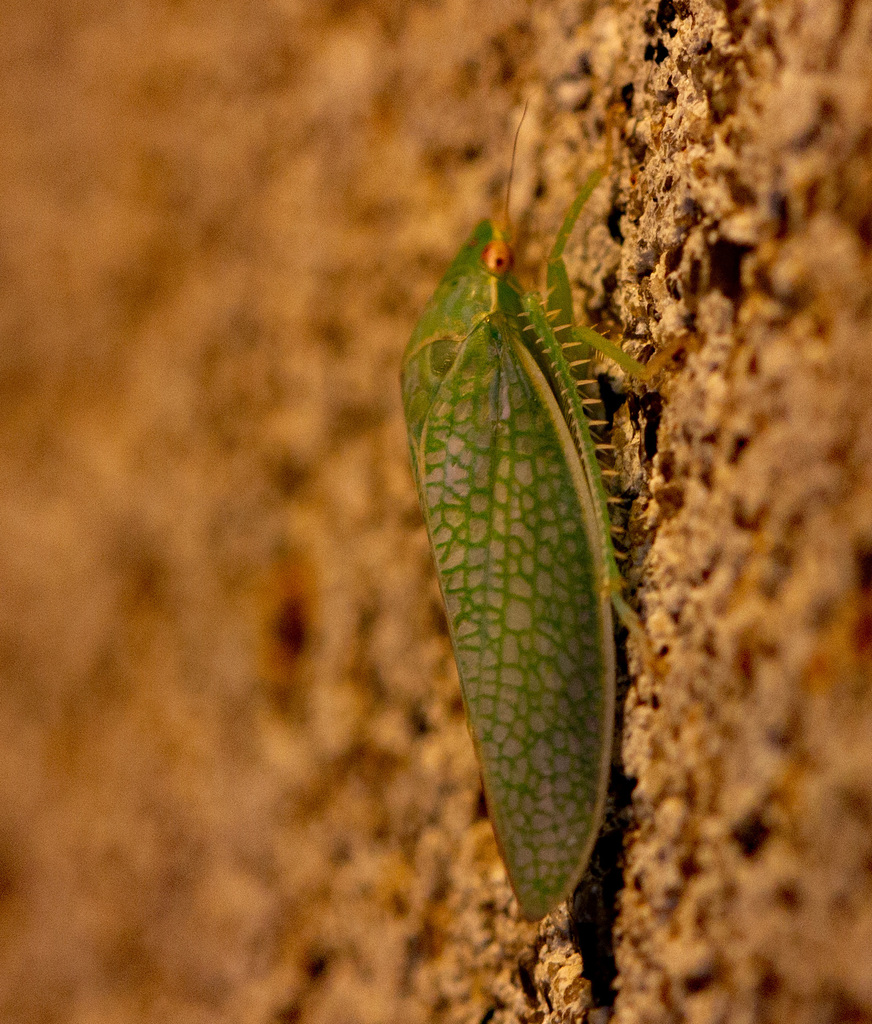
(c) threelark, some rights reserved (CC BY) · licence
Family: Cicadellidae · Class: Insecta · Order: Hemiptera
Gyponana procera is a California animal in the Cicadellidae family.
Gyponana procera is a leafhopper in the family Cicadellidae, subfamily Iassinae. Adults measure 8.5 to 10.5 mm in length, making this the largest of the four southeastern species with heavily reticulated wings (BugGuide 2006). Males are typically 1 mm shorter than females. The species displays distinctive morphological features that distinguish it from other Gyponana species, including irregular pronotal stripes and dense wing reticulation that maintains equal intensity from the wing tips to the clavus. The body appears slight and slender compared to other members of the genus, with the wing pattern creating a distinctive appearance among North American leafhoppers (BugGuide 2020). Gyponana procera occurs in the eastern United States, with documented records from New Hampshire south to Virginia and potentially extending further into the southeastern states. A specimen photographed in Essex County, Massachusetts in 2020 may represent a state record for that location, suggesting the species' range may be expanding or that distribution records remain incomplete. The species appears to be part of a complex of four closely related southeastern taxa that share similar wing reticulation patterns, including G. cana, G. protenta, and G. pruinosa. Specific habitat requirements for G. procera have not been well documented in the scientific literature. Like other members of the Cicadellidae, this species likely inhabits areas with suitable host vegetation, though specific plant associations remain unknown. Collection records from suburban and semi-natural areas in Virginia and Massachusetts suggest the species can persist in moderately developed landscapes. The species has been observed active during autumn months, with documented collections in September and October. As with other leafhoppers, G. procera likely feeds by piercing plant tissues and consuming plant fluids through specialized mouthparts. The species probably completes its development on herbaceous or woody plants, though specific host plant relationships have not been established. Males have been photographed more frequently than females in available records, which may reflect behavioral differences in activity patterns or microhabitat use during the reproductive season. The autumn activity period documented in collection records suggests the species may overwinter as eggs, with adults emerging and reproducing in late summer and fall. Gyponana procera has no federal or state conservation listing status. Population trends and conservation needs are unknown due to limited systematic surveys for this and other small leafhopper species. The apparent rarity of museum specimens and photographic records suggests either genuinely low population densities or insufficient sampling effort for this taxonomic group. Climate change and habitat loss could potentially affect populations, particularly given the species' apparently restricted eastern North American range, but specific threats have not been assessed. Additional taxonomic work may be needed to clarify relationships among the G. procera species complex and confirm the stability of current species boundaries within this group.
Classification
Class: Insecta · Order: Hemiptera · Family: Cicadellidae
Frequently asked questions
How is Gyponana procera classified?
Gyponana procera belongs to class Insecta, order Hemiptera, family Cicadellidae.
What family does Gyponana procera belong to?
Gyponana procera is in the Cicadellidae family.
What is Gyponana procera?
Gyponana procera is a leafhopper in the family Cicadellidae, subfamily Iassinae.
Is Gyponana procera found in California?
Yes. Gyponana procera is recorded in California in The California Species Project's catalogue.
Related species
Other California species in the same genus, family, or bioregion.
Data from The California Species Project — 14,000+ California species with verified data from CNPS, CDFW, USFWS, and more.