Habronattus pyrrithrix
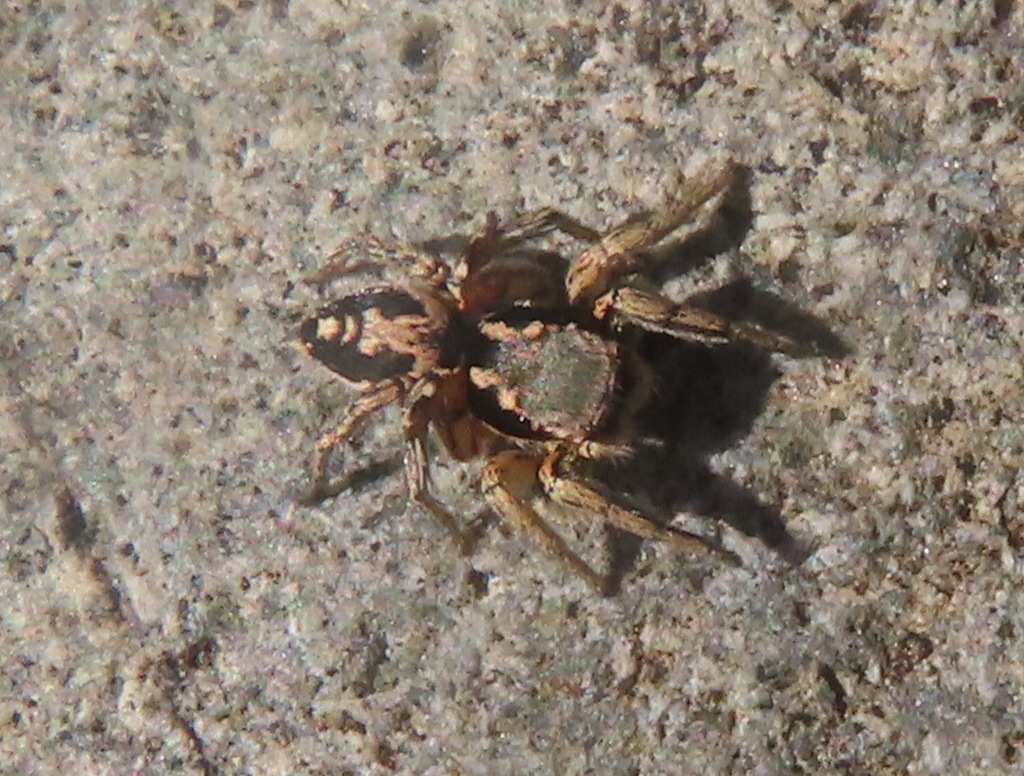
(c) Hawk T., some rights reserved (CC BY) · licence
Family: Salticidae · Class: Arachnida · Order: Araneae
Habronattus pyrrithrix is a California animal in the Salticidae family.
Habronattus pyrrithrix, commonly known as the fiery-haired paradise jumping spider, is a small arachnid in the family Salticidae. This species belongs to the diverse genus Habronattus, which comprises jumping spiders found primarily throughout North and Central America, with some species extending into South America. Adult specimens are typically small, measuring approximately 4-7 mm in body length, characteristic of most jumping spiders in this genus. The species exhibits the typical jumping spider morphology with a compact, robust body and relatively large anterior median eyes that provide excellent vision for hunting and courtship displays. Males likely display distinctive coloration patterns and ornamental features used in elaborate courtship rituals, as is typical for Habronattus species. The common name "fiery-haired" suggests distinctive reddish or orange setae, though detailed morphological descriptions remain limited in the scientific literature. The current distribution of H. pyrrithrix in California has not been comprehensively documented. The species appears to have a broader range across western North America, but specific locality records within California require further field surveys to establish. Like other Habronattus species, this spider likely inhabits diverse terrestrial environments including shrublands, grasslands, and possibly oak woodlands, though specific habitat preferences have not been thoroughly studied. As jumping spiders, H. pyrrithrix are active visual predators that hunt during daylight hours. They do not construct webs for prey capture but instead rely on their exceptional eyesight and jumping ability to stalk and pounce on small arthropod prey. Males perform complex courtship displays involving body movements, leg positioning, and visual signals to attract females. These displays often incorporate species-specific movements that help prevent hybridization with closely related species. Reproduction likely follows the typical salticid pattern with females laying eggs in silk retreats. The conservation status of H. pyrrithrix remains poorly understood. The species was included on Arkansas's Species of Greatest Conservation Need list in 2006, suggesting potential conservation concerns in at least part of its range. However, as noted by researchers, many spider species lack sufficient population data and research funding necessary for comprehensive conservation assessments (Xerces Society). The absence of federal or state listing status does not necessarily indicate population stability, but rather reflects the general lack of detailed studies on most arachnid species. Like many arthropods, H. pyrrithrix faces potential threats from habitat modification, pesticide use, and climate change, though the specific impacts on this species have not been quantified. The cryptic nature and small size of jumping spiders makes population monitoring challenging, contributing to data gaps in conservation planning. Further research is needed to establish baseline population data, habitat requirements, and distribution patterns within California to inform any future conservation efforts for this species.
Classification
Class: Arachnida · Order: Araneae · Family: Salticidae
Frequently asked questions
How is Habronattus pyrrithrix classified?
Habronattus pyrrithrix belongs to class Arachnida, order Araneae, family Salticidae.
What family does Habronattus pyrrithrix belong to?
Habronattus pyrrithrix is in the Salticidae family.
What is Habronattus pyrrithrix?
Habronattus pyrrithrix, commonly known as the fiery-haired paradise jumping spider, is a small arachnid in the family Salticidae.
Is Habronattus pyrrithrix found in California?
Yes. Habronattus pyrrithrix is recorded in California in The California Species Project's catalogue.
Related species
Other California species in the same genus, family, or bioregion.
Data from The California Species Project — 14,000+ California species with verified data from CNPS, CDFW, USFWS, and more.