Habropoda depressa
California Mountain-Digger Bee
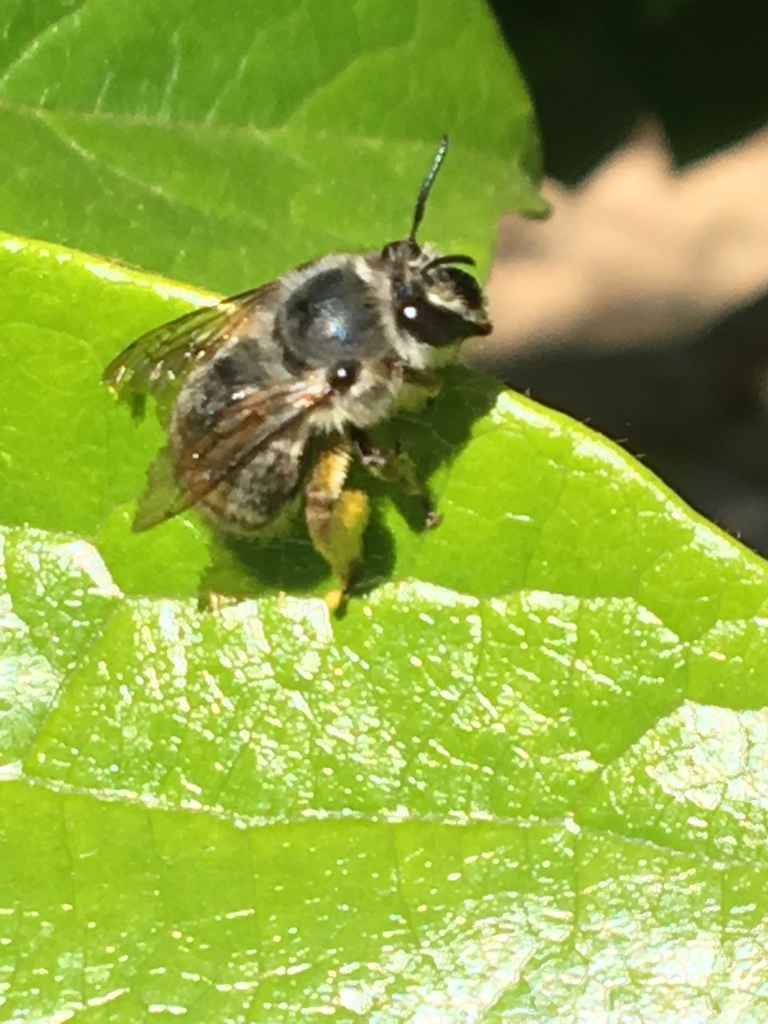
(c) Brook, some rights reserved (CC BY) · licence
Family: Apidae · Class: Insecta · Order: Hymenoptera
Habropoda depressa (California Mountain-Digger Bee) is a California animal in the Apidae family.
Habropoda depressa, commonly known as the California Mountain-Digger Bee, is a solitary bee species in the family Apidae, subfamily Apinae, tribe Anthophorini. This species belongs to a group of robust, ground-nesting bees characterized by their excavation of burrows in compacted soil substrates. Physical identification details for H. depressa are not well documented in current literature. Like other members of the genus Habropoda, this species likely exhibits the typical anthophorine characteristics of a medium to large-sized bee with robust body structure adapted for soil excavation. Members of this tribe generally display dense, often colorful pubescence and strong mandibles suited for digging activities. The range and distribution of H. depressa require further documentation. Based on its common name suggesting a California association and mountain habitat preference, this species likely occurs in elevated regions within California. However, specific county-level distribution data and elevation ranges have not been well established in available scientific literature. Habitat requirements for H. depressa appear to include areas with suitable nesting substrates, as members of the tribe Anthophorini are documented soil burrowers that nest either in banks or flat ground areas (Michener 2007). According to NatureServe, related species in this group have been found in both disturbed urban environments and relatively natural settings, provided they have access to hard-packed soil necessary for nest construction. Mountain habitats suggested by the common name would likely provide the compact soil conditions required for successful burrow excavation. Behavioral ecology of H. depressa follows the general pattern of anthophorine bees as solitary ground-nesters. Females construct individual burrows in suitable soil substrates where they provision brood cells with collected pollen and nectar. The specific flowering plants utilized by H. depressa for foraging have not been documented, though related Habropoda species typically visit flowers from multiple plant families. Nesting behavior involves excavation of tunnels with lateral brood chambers, each provisioned with a pollen ball and single egg before being sealed. Conservation status information for H. depressa is notably absent from federal and state databases. The species lacks federal listing status and does not appear in California's state listing categories as of December 2025. This absence of status designation may reflect either stable populations not requiring protection or, more likely, insufficient survey data and taxonomic research to assess population trends and conservation needs. Scientific documentation for this species remains extremely limited. The information presented here synthesizes available taxonomic placement and inferences based on related species ecology. Detailed studies of H. depressa distribution, habitat requirements, foraging behavior, and population status are lacking. We welcome contributions of verified scientific data, photographs, or field observations to enhance this species account.
Classification
Class: Insecta · Order: Hymenoptera · Family: Apidae
Frequently asked questions
How is Habropoda depressa classified?
Habropoda depressa belongs to class Insecta, order Hymenoptera, family Apidae.
What family does Habropoda depressa belong to?
Habropoda depressa is in the Apidae family.
What is Habropoda depressa?
Habropoda depressa, commonly known as the California Mountain-Digger Bee, is a solitary bee species in the family Apidae, subfamily Apinae, tribe Anthophorini.
Is Habropoda depressa found in California?
Yes. Habropoda depressa is recorded in California in The California Species Project's catalogue.
Related species
Other California species in the same genus, family, or bioregion.
Data from The California Species Project — 14,000+ California species with verified data from CNPS, CDFW, USFWS, and more.