Habropoda pallida
White Faced Bee
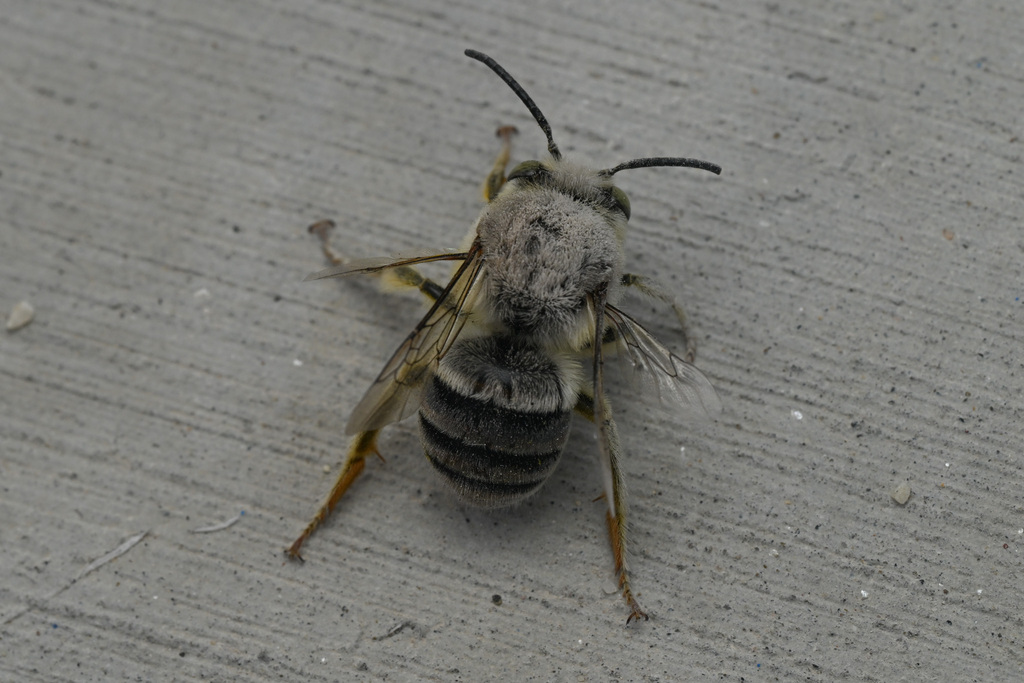
(c) Trevor Van Loon, some rights reserved (CC BY) · licence
Family: Apidae · Class: Insecta · Order: Hymenoptera
Conservation status: G3 S3
Habropoda pallida (White Faced Bee) is a California animal in the Apidae family.
The white-faced bee (Habropoda pallida) is a medium-sized, solitary digger bee in the family Apidae, subfamily Apinae. This species belongs to the tribe Anthophorini and is characterized by its distinctive white facial markings, which give the species its common name. Adults exhibit the robust, hairy body typical of digger bees, with particularly dense hair on the legs that resembles chaps. Habropoda pallida occurs in the southwestern United States, with documented populations in California, Nevada, and Utah. In California, the species has been recorded from desert and semi-arid regions, including areas of San Bernardino and Riverside counties. The species' range extends into southern Nevada and Utah, where it was documented as recently as 1973 in Washington County. The current distribution appears fragmented, with populations separated by significant distances. This species inhabits desert scrub, chaparral, and semi-arid grassland environments. White-faced bees nest in muddy streambanks and sandy soils, excavating tunnels where females provision cells with pollen and nectar for their larvae. The species shows a preference for areas with suitable nesting substrates and abundant flowering plants during its active period. Habropoda pallida exhibits solitary behavior typical of digger bees, with females constructing individual nests and provisioning cells independently. The species is active during summer and fall months, with peak activity coinciding with the blooming periods of preferred host plants. This species has been identified as the primary and most effective pollinator of the endangered plant Astragalus magdalenae var. peirsonii (Peirson's milk-vetch) (Porter et al. 2005). The close relationship between this bee and the federally endangered plant species highlights the species' ecological importance as a specialist pollinator. Adults collect pollen and nectar from various desert wildflowers, with documented associations to leguminous plants in the genus Astragalus. The conservation status of Habropoda pallida reflects moderate concern, with global and state ranks of G3 S3, indicating the species is vulnerable to extirpation. The species faces threats common to desert-dwelling insects, including habitat loss from urban development, recreational vehicle use, and climate change impacts on desert ecosystems. The specialized relationship with endangered plant species creates additional conservation concerns, as the decline of host plants directly affects pollinator populations. The species' role as the primary pollinator for Astragalus magdalenae var. peirsonii has been specifically noted in federal documents regarding the plant's conservation status, emphasizing the interconnected nature of plant-pollinator relationships in desert ecosystems. Current population trends for Habropoda pallida are not well documented, though the fragmented distribution and specialized habitat requirements suggest potential vulnerability to environmental changes. Conservation efforts for associated plant species may indirectly benefit this bee through habitat protection and restoration activities.
Classification
Class: Insecta · Order: Hymenoptera · Family: Apidae
Conservation status
G3 S3
Frequently asked questions
How is Habropoda pallida classified?
Habropoda pallida belongs to class Insecta, order Hymenoptera, family Apidae.
What family does Habropoda pallida belong to?
Habropoda pallida is in the Apidae family.
Is Habropoda pallida protected or of conservation concern?
Habropoda pallida carries the following status: G3 S3.
What is Habropoda pallida?
The white-faced bee (Habropoda pallida) is a medium-sized, solitary digger bee in the family Apidae, subfamily Apinae.
Is Habropoda pallida found in California?
Yes. Habropoda pallida is recorded in California in The California Species Project's catalogue.
Related species
Other California species in the same genus, family, or bioregion.
Data from The California Species Project — 14,000+ California species with verified data from CNPS, CDFW, USFWS, and more.