Habropoda tristissima
Dimorphic Mountain-digger Bee
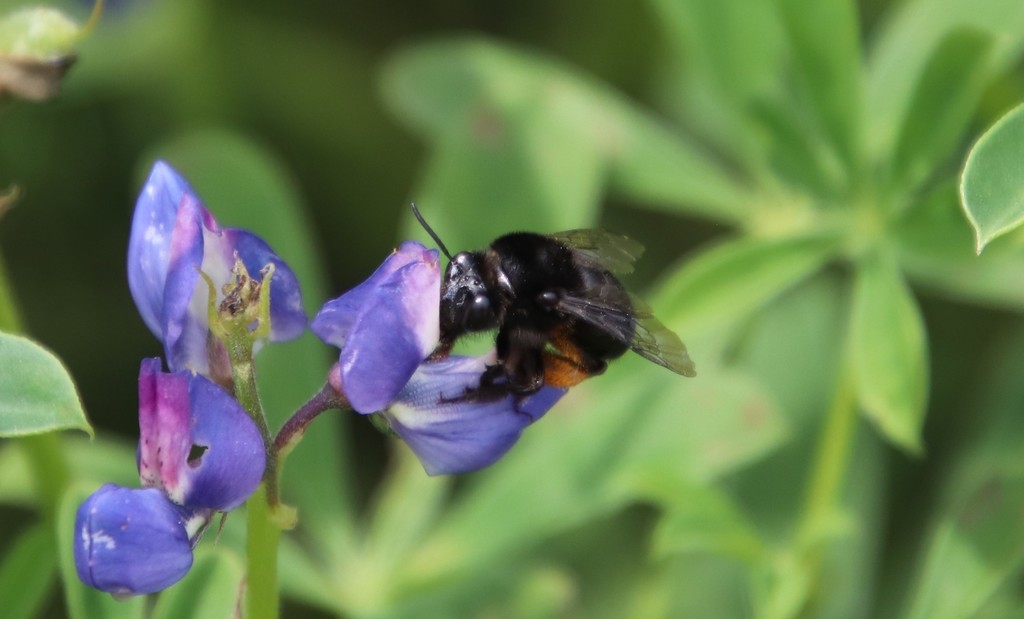
(c) Millie Basden, some rights reserved (CC BY) · licence
Family: Apidae · Class: Insecta · Order: Hymenoptera
Habropoda tristissima (Dimorphic Mountain-digger Bee) is a California animal in the Apidae family.
The Dimorphic Mountain-digger Bee (Habropoda tristissima) is a solitary bee species in the family Apidae. The species exhibits sexual dimorphism, with males and females displaying distinct morphological characteristics, though detailed physical descriptions remain limited in the scientific literature. As a member of the genus Habropoda, this species likely measures 10-15 mm in length, with robust bodies adapted for ground-nesting behavior. Habropoda tristissima is endemic to California, with documented occurrences in the state's mountainous regions. According to NatureServe, the species has been recorded at Pinnacles National Park, where it contributes to the diverse native bee fauna across various habitats (NatureServe Explorer 2025). The species' distribution appears to be associated with montane environments, though comprehensive range mapping has not been completed. Current records suggest a relatively restricted geographic distribution within California's mountain ecosystems. The species inhabits mountain habitats, likely preferring areas with suitable nesting substrates and abundant floral resources. As a ground-nesting bee, H. tristissima probably excavates burrows in well-drained soils, following the typical behavior pattern of other Habropoda species. The specific habitat requirements, including elevation ranges, soil preferences, and associated plant communities, have not been thoroughly documented in available scientific literature. Like other members of the genus Habropoda, this species is likely a specialist or generalist forager that provisions its underground nests with pollen and nectar collected from flowering plants. The timing of flight activity, preferred host plants, and reproductive biology remain poorly documented. Most Habropoda species are active during specific seasonal windows that coincide with the flowering periods of their preferred plant hosts. The species likely follows a univoltine life cycle, with one generation per year, though this has not been confirmed through field studies. The conservation status of Habropoda tristissima has not been formally assessed by federal or state agencies. NatureServe assigns the species a Global Rank of G3, indicating it is vulnerable to extirpation due to a restricted range, relatively few populations, recent and widespread declines, or other factors making it vulnerable (NatureServe Explorer 2025). The species does not appear on federal or California endangered species lists as of December 2025. Limited distribution data and lack of comprehensive population surveys make it difficult to assess current threats or population trends. Potential threats may include habitat loss, climate change impacts on montane ecosystems, and changes in floral resource availability, though specific threat assessments have not been conducted. The species' presence at Pinnacles National Park provides some level of habitat protection, but additional research is needed to understand its full range and conservation needs. Detailed ecological studies of this species remain limited. The information presented here synthesizes available data from NatureServe and taxonomic databases. We welcome contributions of verified scientific data, photographs, or field observations to enhance this species account.
Classification
Class: Insecta · Order: Hymenoptera · Family: Apidae
Frequently asked questions
How is Habropoda tristissima classified?
Habropoda tristissima belongs to class Insecta, order Hymenoptera, family Apidae.
What family does Habropoda tristissima belong to?
Habropoda tristissima is in the Apidae family.
What is Habropoda tristissima?
The Dimorphic Mountain-digger Bee (Habropoda tristissima) is a solitary bee species in the family Apidae.
Is Habropoda tristissima found in California?
Yes. Habropoda tristissima is recorded in California in The California Species Project's catalogue.
Related species
Other California species in the same genus, family, or bioregion.
Data from The California Species Project — 14,000+ California species with verified data from CNPS, CDFW, USFWS, and more.