Hadrurus arizonensis
Desert Hairy Scorpion
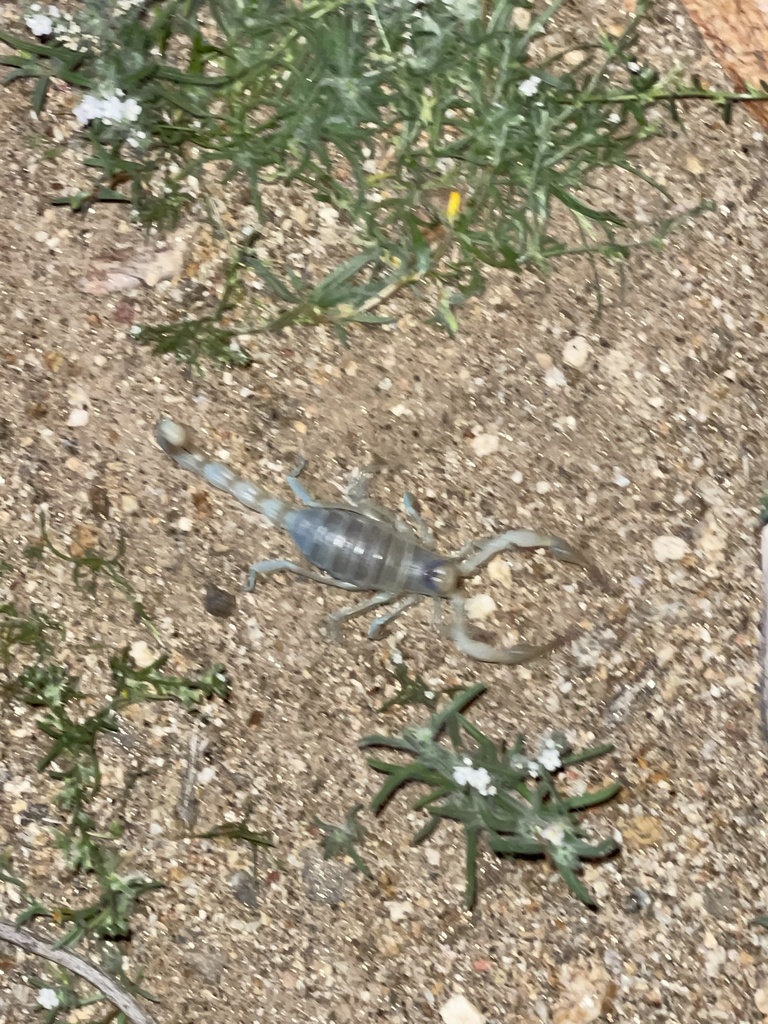
(c) Sula Vanderplank, some rights reserved (CC BY) · licence
Family: Iuridae · Class: Arachnida · Order: Scorpiones
Hadrurus arizonensis (Desert Hairy Scorpion) is a California animal in the Iuridae family.
The Desert Hairy Scorpion is the largest scorpion species in North America, with adults reaching lengths exceeding 100 mm (4 inches) and some specimens measuring up to 127 mm (5 inches). The species displays distinctive yellowish to tan coloration with darker markings on the carapace and segments. Dense setae (hairs) cover the body and appendages, giving the species its common name. The large pedipalps end in robust chelae (pincers), and the five-segmented metasoma (tail) terminates in a curved stinger. Sexual dimorphism is evident, with males typically having longer, more slender metasomas and larger chelae relative to body size. The Desert Hairy Scorpion ranges across the southwestern United States, including California, Arizona, Nevada, Utah, and extending into Baja California, Mexico. In California, the species occurs in the Mojave and Sonoran desert regions, from areas near Hollister and Fresno southward through the Mojave Desert to north of Calexico in Imperial County (BugGuide). The species is also found in rocky areas of Riverside County and other desert regions of southern California. This species inhabits diverse desert environments, from sandy washes and alluvial fans to rocky hillsides and talus slopes. Desert Hairy Scorpions construct extensive burrow systems to access stable temperatures and humidity levels. According to research on related Hadrurus species, burrows typically extend 0.5 to 3 meters deep, though specific data for H. arizonensis burrow architecture remains limited (Polis & Farley 1979). These burrows provide essential thermoregulation and protection from predators. The species demonstrates adaptability to various substrate types, from loose sand dunes to consolidated rocky terrain. Desert Hairy Scorpions are nocturnal predators that emerge from their burrows after sunset to hunt. Their diet consists primarily of large insects, other arachnids, and occasionally small vertebrates such as lizards and rodents. Field studies indicate they consume beetles, crickets, roaches, and other scorpions, with prey selection influenced by size availability (Polis 1979). Reproduction involves complex courtship behaviors, with males using their pedipalps to guide females during mating dances. Females carry developing young on their backs for several weeks after birth, a behavior documented across Hadrurus species (Williams 1969). The species exhibits slow growth rates, with individuals requiring several years to reach sexual maturity. The Desert Hairy Scorpion currently has no federal or state conservation listing status in California. However, like many desert species, populations may face pressure from habitat modification, urban development, and climate change effects on desert ecosystems. The species' extensive range and adaptability to various desert habitats suggest relatively stable populations, though specific population studies are limited. Their role as predators makes them important components of desert food webs, controlling populations of insects and other arthropods in arid environments.
Classification
Class: Arachnida · Order: Scorpiones · Family: Iuridae
Frequently asked questions
How is Hadrurus arizonensis classified?
Hadrurus arizonensis belongs to class Arachnida, order Scorpiones, family Iuridae.
What family does Hadrurus arizonensis belong to?
Hadrurus arizonensis is in the Iuridae family.
What is Hadrurus arizonensis?
The Desert Hairy Scorpion is the largest scorpion species in North America, with adults reaching lengths exceeding 100 mm (4 inches) and some specimens measuring up to 127 mm (5 inches).
Is Hadrurus arizonensis found in California?
Yes. Hadrurus arizonensis is recorded in California in The California Species Project's catalogue.
Related species
Other California species in the same genus, family, or bioregion.
Data from The California Species Project — 14,000+ California species with verified data from CNPS, CDFW, USFWS, and more.