Hadrurus spadix
Black Hairy Scorpion
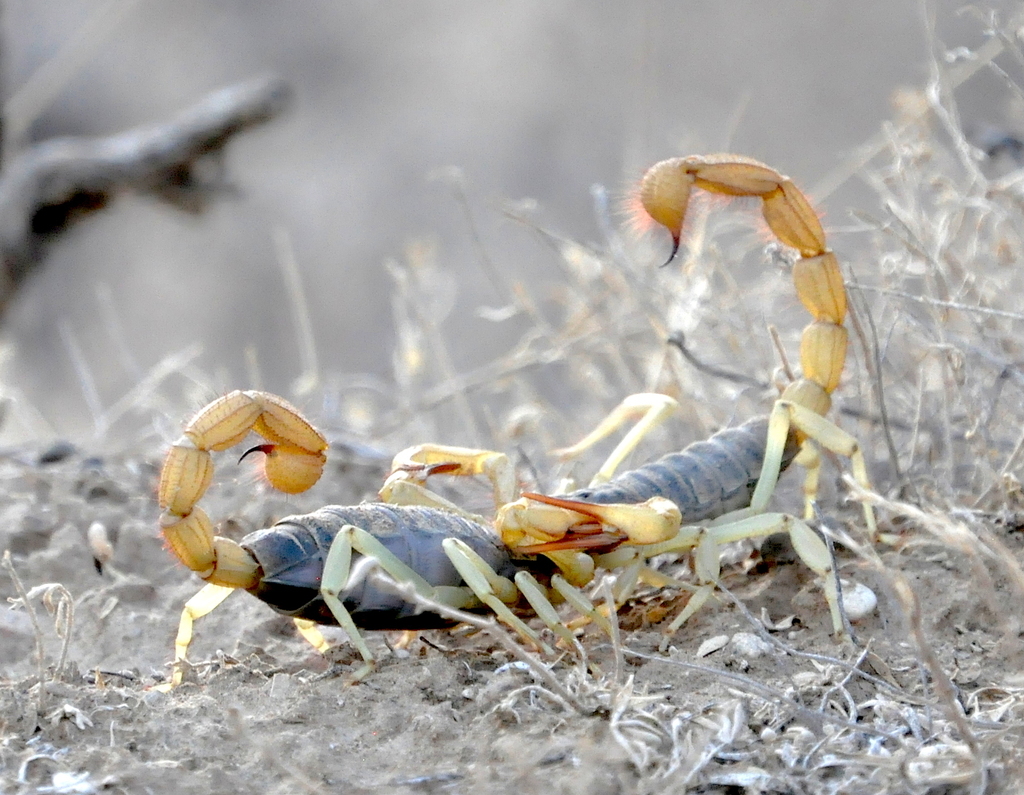
no rights reserved · CC0
Family: Iuridae · Class: Arachnida · Order: Scorpiones
Hadrurus spadix (Black Hairy Scorpion) is a California animal in the Iuridae family.
The Black Hairy Scorpion (Hadrurus spadix) is a large arachnid measuring approximately 15 centimeters (5.9 inches) in total length, making it one of the largest scorpions in North America (iNaturalist). The species exhibits the characteristic robust build of the genus Hadrurus, with a thick body and powerful pincers. The common name derives from the dark coloration and the presence of numerous setae (hairs) covering the body and appendages. The tail segments are thick and muscular, terminating in a bulbous telson containing the venom glands and stinger. Hadrurus spadix is native to the southern deserts of North America, with populations documented in the Sonoran Desert region (Animalia.bio). The species occurs in southern California, particularly in desert areas of Riverside, Imperial, and San Bernardino counties. Its range extends beyond California into Arizona and northwestern Mexico, occupying the broader Sonoran Desert ecosystem. This scorpion inhabits sandy desert environments where it can effectively construct and maintain burrows. The species shows a strong preference for areas with loose, well-drained soils that facilitate digging. Black Hairy Scorpions are typically found in creosote bush scrub, palo verde-mixed cacti associations, and other low desert vegetation communities. They avoid rocky substrates and prefer flatter terrain where burrowing is feasible. Hadrurus spadix is primarily a fossorial species, spending considerable time underground in self-constructed burrows (Wikipedia). These burrows serve multiple functions including temperature regulation, moisture conservation, and protection from predators. The scorpions actively dig in sand and regularly enlarge their burrows as needed. They are nocturnal hunters, emerging from their burrows after dark to forage for prey. The diet consists primarily of insects, spiders, and other small arthropods, which they capture using their powerful pedipalps and subdue with venom delivered through the stinger. Like other scorpions, they detect prey through ground vibrations sensed by specialized organs. Reproduction involves courtship rituals where males deposit spermatophores that females pick up during a mating dance. Females are ovoviviparous, giving birth to live young that initially ride on the mother's back until their first molt. The species exhibits typical scorpion maternal care, with females protecting and carrying their offspring. Currently, Hadrurus spadix lacks formal conservation status designations at federal or state levels. The species appears to maintain stable populations throughout its range, though specific population data are not well documented. Primary threats likely include habitat loss from urban development and agriculture in desert regions, particularly in Southern California where human development pressures are intense. Climate change may also impact the species through altered precipitation patterns and increased temperatures in desert ecosystems. The burrowing lifestyle provides some buffer against environmental fluctuations, but extreme changes in desert conditions could affect prey availability and suitable habitat. No specific conservation measures or monitoring programs are currently in place for this species.
Classification
Class: Arachnida · Order: Scorpiones · Family: Iuridae
Frequently asked questions
How is Hadrurus spadix classified?
Hadrurus spadix belongs to class Arachnida, order Scorpiones, family Iuridae.
What family does Hadrurus spadix belong to?
Hadrurus spadix is in the Iuridae family.
What is Hadrurus spadix?
The Black Hairy Scorpion (Hadrurus spadix) is a large arachnid measuring approximately 15 centimeters (5.9 inches) in total length, making it one of the largest scorpions in North America (iNaturalist).
Is Hadrurus spadix found in California?
Yes. Hadrurus spadix is recorded in California in The California Species Project's catalogue.
Related species
Other California species in the same genus, family, or bioregion.
Data from The California Species Project — 14,000+ California species with verified data from CNPS, CDFW, USFWS, and more.