Haematopus palliatus
American Oystercatcher
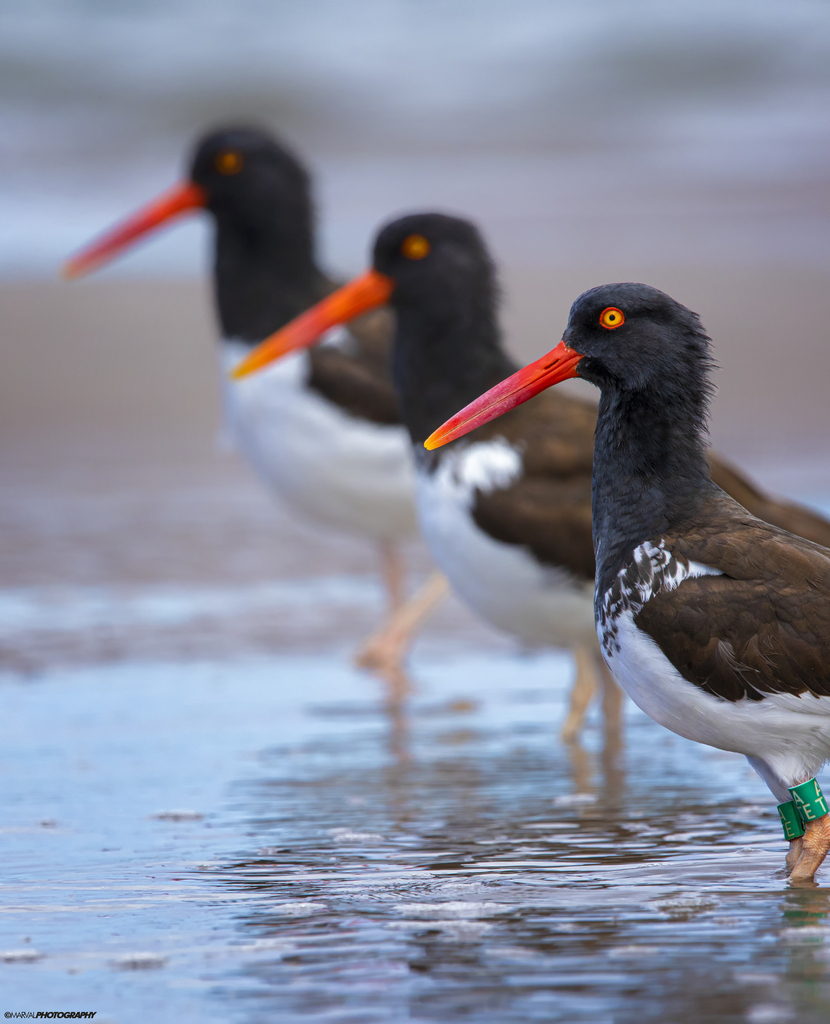
(c) MarvalPhotography19, some rights reserved (CC BY) · licence
Family: Haematopodidae · Class: Aves · Order: Charadriiformes
Haematopus palliatus (American Oystercatcher) is a California animal in the Haematopodidae family.
The American Oystercatcher is a large, distinctive shorebird measuring 42 to 52 cm (16.5 to 20.5 inches) in length with a wingspan of 81 to 86 cm (32 to 34 inches). Adults weigh between 400 to 700 grams (14 to 25 ounces). The species displays striking black and white plumage, with a blackish-brown head, neck, and upper breast contrasting sharply with white underparts and lower breast. The back and wings are dark brown to black. Most distinctive is the bright orange to red, laterally compressed bill, measuring 7 to 9 cm (2.8 to 3.5 inches) in length, which is perfectly adapted for prying open bivalves. The legs and feet are thick and pink to flesh-colored. In flight, the species shows prominent white wing stripes and white rump patches. Historically, American Oystercatchers bred along the Atlantic and Gulf coasts from Massachusetts to Texas, with Pacific coast populations extending from Baja California to Chile. The species experienced significant population declines in the late 1800s and early 1900s due to hunting and egg collection. Current breeding range in North America extends from Massachusetts south to Florida and west along the Gulf Coast to Texas. Pacific coast populations occur primarily from central California southward. In California, the species is found along rocky coastlines, sandy beaches, and salt marshes, with concentrations in central and southern coastal areas including Monterey Bay, Morro Bay, and the Channel Islands. American Oystercatchers inhabit intertidal zones of rocky shores, sandy beaches, mudflats, and oyster reefs. The species requires areas with abundant shellfish populations, particularly mussels, oysters, clams, and other bivalves. Nesting occurs on beaches, dunes, shell banks, and rocky outcrops above the high tide line. The species shows strong site fidelity, often returning to the same territories year after year. The diet consists primarily of bivalves, including mussels, oysters, clams, and scallops, which they extract using specialized feeding techniques. Birds use their chisel-like bills to either hammer through shells or insert the bill between shell halves to sever the adductor muscle. Marine worms, crustaceans, and other invertebrates supplement the diet. Breeding occurs from April through August, with peak nesting in May and June. Pairs are monogamous and highly territorial. Females lay 2 to 4 buff-colored eggs with dark blotches in a simple scrape lined with shells and pebbles. Incubation lasts 24 to 28 days, shared by both parents. Chicks are precocial but remain with parents for 35 to 40 days until fledging. The American Oystercatcher is not federally listed but faces ongoing conservation challenges. According to the North American Bird Conservation Initiative, the species is considered a species of moderate conservation concern due to habitat loss from coastal development, human disturbance at nesting sites, and sea level rise. Climate change poses increasing threats through altered storm patterns and coastal erosion. Population monitoring indicates slow recovery from historical lows, with current estimates suggesting approximately 11,000 pairs in North America. Conservation efforts focus on protecting nesting beaches, reducing human disturbance, and habitat restoration in key coastal areas.
Classification
Class: Aves · Order: Charadriiformes · Family: Haematopodidae
Frequently asked questions
How is Haematopus palliatus classified?
Haematopus palliatus belongs to class Aves, order Charadriiformes, family Haematopodidae.
What family does Haematopus palliatus belong to?
Haematopus palliatus is in the Haematopodidae family.
What is Haematopus palliatus?
The American Oystercatcher is a large, distinctive shorebird measuring 42 to 52 cm (16.5 to 20.5 inches) in length with a wingspan of 81 to 86 cm (32 to 34 inches).
Is Haematopus palliatus found in California?
Yes. Haematopus palliatus is recorded in California in The California Species Project's catalogue.
Related species
Other California species in the same genus, family, or bioregion.
Data from The California Species Project — 14,000+ California species with verified data from CNPS, CDFW, USFWS, and more.