Haemorhous cassinii
Cassin's Finch
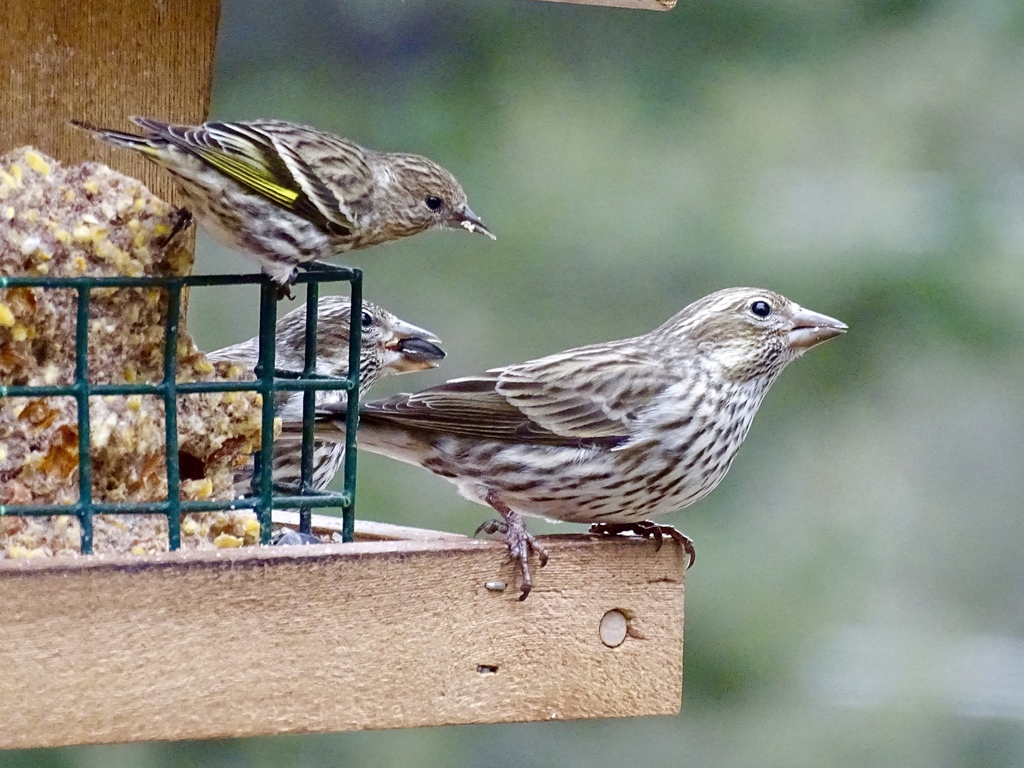
(c) CK2AZ, some rights reserved (CC BY) · licence
Family: Fringillidae · Class: Aves · Order: Passeriformes
Haemorhous cassinii (Cassin's Finch) is a California animal in the Fringillidae family.
Cassin's Finch is a medium-sized songbird in the family Fringillidae, measuring 14 to 16 centimeters (5.5 to 6.3 inches) in length with a wingspan of 24 to 26 centimeters (9.4 to 10.2 inches). Adult males display a distinctive rosy-pink wash across the head, breast, and rump, with brownish-pink streaking on the back and flanks. The crown shows a pronounced red coloration that extends down the nape. Females and juveniles are grayish-brown with heavy dark streaking throughout the underparts and back. Both sexes possess a relatively large, thick conical bill adapted for seed cracking, with males showing a slightly more robust bill structure. The species can be distinguished from the similar House Finch by its longer bill, more extensive streaking, and different head coloration pattern. Cassin's Finch breeds across mountainous regions of western North America, with California populations occurring primarily in the Sierra Nevada, Cascade Range, and scattered locations in the Coast Ranges and Transverse Ranges. The species' range extends from British Columbia south through California, Nevada, Utah, and Colorado. In California, breeding populations are documented from Siskiyou and Modoc counties south to Kern County, with post-breeding dispersal extending the range to include coastal and desert mountain ranges. The species inhabits coniferous and mixed forests at elevations ranging from 1,200 to 3,400 meters (4,000 to 11,200 feet). Primary breeding habitat consists of open ponderosa pine, Douglas fir, and mixed conifer forests, often in areas with forest edges, clearings, or burned areas that provide seed sources. During winter, Cassin's Finch may descend to lower elevations and utilize oak woodlands, riparian areas, and suburban environments with suitable food sources. The species shows a preference for areas with diverse tree species that provide varied seed resources throughout the year. Cassin's Finch feeds primarily on seeds from coniferous trees, particularly pine, fir, and spruce, but also consumes seeds from deciduous trees, shrubs, and herbaceous plants. During the breeding season, insects and other arthropods supplement the diet, providing protein for growing nestlings. Breeding occurs from May through August, with females constructing cup-shaped nests typically placed 3 to 12 meters high in coniferous trees. Clutch size ranges from 3 to 6 eggs, with an incubation period of 12 to 14 days. The species exhibits irregular irruptive migration patterns, with some populations moving to lower elevations or different geographic areas during winter depending on seed crop availability. Cassin's Finch is not federally or state listed and maintains stable populations across most of its range according to breeding bird survey data. The species benefits from forest management practices that maintain diverse age classes and tree species composition. Climate change may affect future distribution patterns through shifts in suitable habitat zones and changes in seed production cycles of preferred tree species.
Classification
Class: Aves · Order: Passeriformes · Family: Fringillidae
Frequently asked questions
How is Haemorhous cassinii classified?
Haemorhous cassinii belongs to class Aves, order Passeriformes, family Fringillidae.
What family does Haemorhous cassinii belong to?
Haemorhous cassinii is in the Fringillidae family.
What is Haemorhous cassinii?
Cassin's Finch is a medium-sized songbird in the family Fringillidae, measuring 14 to 16 centimeters (5.5 to 6.3 inches) in length with a wingspan of 24 to 26 centimeters (9.4 to 10.2 inches).
Is Haemorhous cassinii found in California?
Yes. Haemorhous cassinii is recorded in California in The California Species Project's catalogue.
Related species
Other California species in the same genus, family, or bioregion.
Data from The California Species Project — 14,000+ California species with verified data from CNPS, CDFW, USFWS, and more.