Haliaeetus leucocephalus
Bald eagle
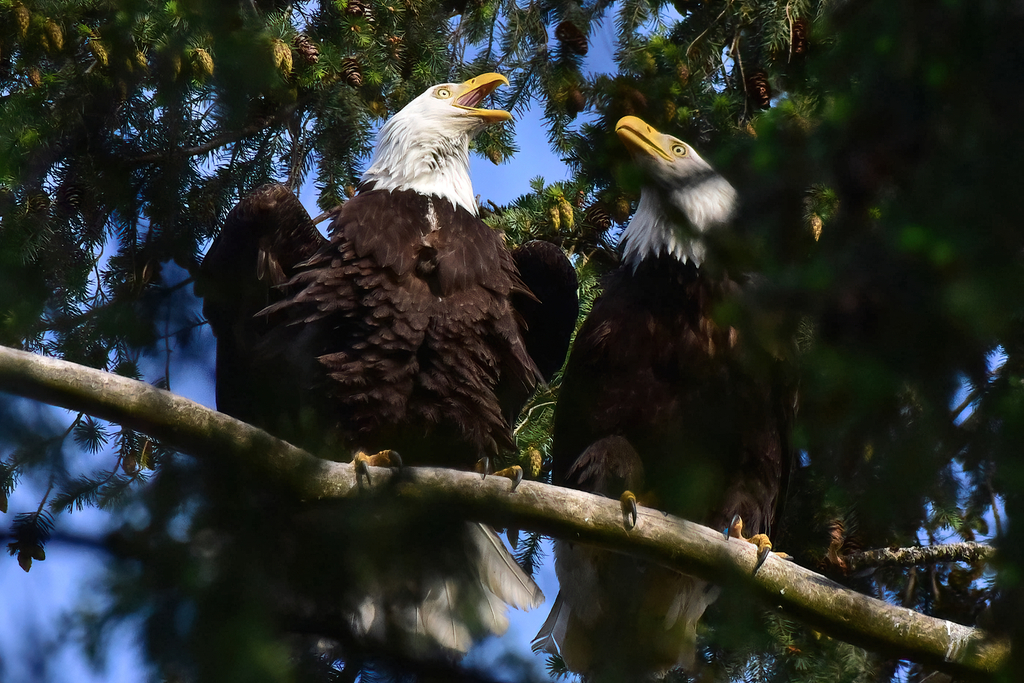
(c) Marcel_Pepin, some rights reserved (CC BY) · licence
Family: Accipitridae · Class: Aves · Order: Accipitriformes
Conservation status: FP · Delisted · G5 S3
Haliaeetus leucocephalus (Bald eagle) is a California animal in the Accipitridae family.
The bald eagle is a large raptor with adults measuring 71 to 96 centimeters (28 to 38 inches) in length and possessing a wingspan of 1.8 to 2.3 meters (6 to 7.5 feet). Adult birds weigh between 3 to 6.3 kilograms (6.6 to 14 pounds), with females typically larger than males. Adults display distinctive white head and tail feathers contrasting with dark brown body plumage and bright yellow beaks and talons. Juveniles lack the white head and tail, appearing mostly brown with mottled plumage until reaching sexual maturity at four to five years of age. The species exhibits sexual dimorphism, with females averaging 25 percent larger than males. In California, bald eagles occur primarily in mountainous regions, coastal areas, and large inland water bodies. The species historically nested throughout much of the state but experienced severe population decline through the mid-20th century. Current breeding populations are concentrated in the northern Sierra Nevada, Cascade Range, and scattered locations in southern California including the Channel Islands. Winter populations increase significantly as birds migrate south from Alaska, Canada, and the Pacific Northwest, with concentrations occurring along major river systems and reservoirs. Bald eagles inhabit areas near large bodies of water including lakes, rivers, reservoirs, and coastal regions. Nesting sites are typically located in tall, sturdy trees within 1.6 kilometers (1 mile) of water. Preferred nest trees include pines, firs, and cottonwoods, with nests constructed 15 to 38 meters (50 to 125 feet) above ground. The species requires open water for foraging and suitable perching sites with clear views of surrounding areas. Bald eagles are opportunistic predators feeding primarily on fish, which comprise 60 to 90 percent of their diet. Common prey species include salmon, trout, and other large fish, supplemented by waterfowl, small mammals, and carrion. The species exhibits kleptoparasitic behavior, stealing prey from other birds including ospreys and smaller raptors. Breeding occurs from January through August, varying by latitude and elevation. Females lay one to three eggs, with an average clutch size of two. Incubation lasts 35 days, and young fledge at 10 to 14 weeks of age. The bald eagle was federally delisted in 2007 following recovery from severe population declines caused primarily by DDT contamination. However, the species remains listed as endangered under California state law and designated as Fully Protected. According to the California Department of Fish and Wildlife, the Post-delisting Monitoring Plan monitors bald eagle status over a 20-year period with sampling events conducted every five years. California populations have shown steady recovery, with breeding pairs increasing from fewer than 10 pairs in the 1970s to over 200 pairs by 2020. Primary current threats include habitat loss, human disturbance at nesting sites, and occasional lead poisoning from ammunition in carrion.
Classification
Class: Aves · Order: Accipitriformes · Family: Accipitridae
Conservation status
FP · Delisted · G5 S3
Frequently asked questions
How is Haliaeetus leucocephalus classified?
Haliaeetus leucocephalus belongs to class Aves, order Accipitriformes, family Accipitridae.
What family does Haliaeetus leucocephalus belong to?
Haliaeetus leucocephalus is in the Accipitridae family.
Is Haliaeetus leucocephalus protected or of conservation concern?
Haliaeetus leucocephalus carries the following status: FP · Delisted · G5 S3.
What is Haliaeetus leucocephalus?
The bald eagle is a large raptor with adults measuring 71 to 96 centimeters (28 to 38 inches) in length and possessing a wingspan of 1.8 to 2.3 meters (6 to 7.5 feet).
Is Haliaeetus leucocephalus found in California?
Yes. Haliaeetus leucocephalus is recorded in California in The California Species Project's catalogue.
Related species
Other California species in the same genus, family, or bioregion.
Data from The California Species Project — 14,000+ California species with verified data from CNPS, CDFW, USFWS, and more.