Halictus harmonius
Haromonius Halictid Bee
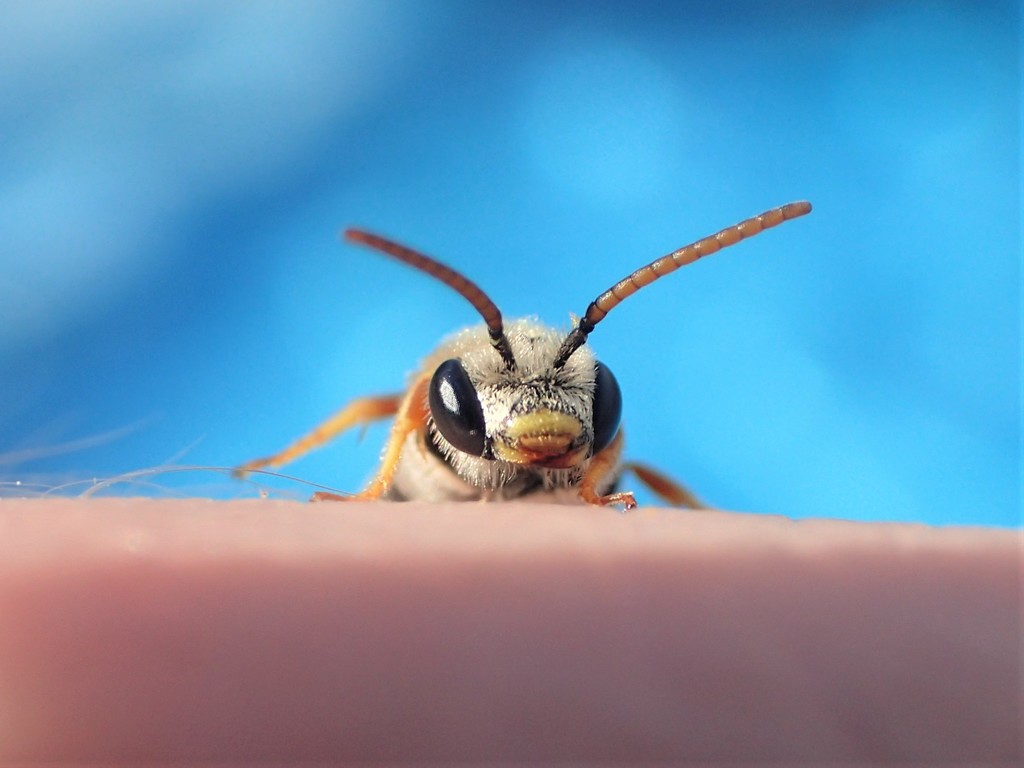
(c) Kristen Diesburg, some rights reserved (CC BY) · licence
Family: Halictidae · Class: Insecta · Order: Hymenoptera
Conservation status: G3 S3
Halictus harmonius (Haromonius Halictid Bee) is a California animal in the Halictidae family.
Halictus harmonius is a member of the subgenus Seladonia, distinguished as the only subgenus of Halictine bee in North America that combines greenish metallic coloration with apical bands of pale hairs on the metasomal terga (Xerces Society 2019). This sweat bee displays the characteristic features of its group, with females exhibiting the typical robust build associated with primitively eusocial species, including macrocephalic queens and smaller workers. This species is narrowly endemic to a very restricted range in southern California, specifically known from the San Bernardino Mountain area. The limited distribution represents one of the most geographically constrained ranges among North American Halictus species. Historical collection records indicate the species has been documented on comparatively few occasions, suggesting either naturally low population densities or limited survey effort in suitable habitat areas. Halictus harmonius inhabits areas that have experienced considerable agricultural development and urban expansion. The species occurs in regions that receive substantial pollution from the Los Angeles metropolitan area, indicating some tolerance for degraded environmental conditions. However, the specific microhabitat requirements and soil preferences for nesting remain poorly documented, as is typical for many specialist ground-nesting bees. The species exhibits a primitively eusocial lifestyle characteristic of many Halictus bees, with distinct queen and worker castes. Queens are notably macrocephalic (large-headed) compared to the smaller workers. Halictus harmonius demonstrates extended activity periods during spring and summer months, suggesting multiple generations or prolonged foraging seasons. Unlike some specialist bees, this species appears to be generalist in its pollen and nectar source plants, potentially providing some ecological flexibility in disturbed habitats. The species' response to drought conditions remains unknown, representing a significant knowledge gap given California's variable precipitation patterns. The conservation status of Halictus harmonius reflects its extremely limited range and poorly understood population dynamics. The Xerces Society has designated this species as Critically Imperiled on their Red List, reflecting the high risk of extinction due to the restricted geographic range and ongoing habitat pressures (Xerces Society 2019). The species faces multiple threats including residential construction, agricultural conversion, and air pollution from urban centers. The San Bernardino Mountain region continues to experience development pressure from expanding human populations and associated infrastructure. Population status remains poorly known due to limited survey efforts across the species' range. The combination of narrow endemism, habitat degradation, and insufficient monitoring data places this species at considerable conservation risk. A comprehensive survey of suitable habitat within the restricted range is critically needed to assess population status and identify priority areas for conservation action. The species currently lacks formal protection under federal or state endangered species legislation, despite meeting criteria for listing consideration based on its restricted range and ongoing threats.
Classification
Class: Insecta · Order: Hymenoptera · Family: Halictidae
Conservation status
G3 S3
Frequently asked questions
How is Halictus harmonius classified?
Halictus harmonius belongs to class Insecta, order Hymenoptera, family Halictidae.
What family does Halictus harmonius belong to?
Halictus harmonius is in the Halictidae family.
Is Halictus harmonius protected or of conservation concern?
Halictus harmonius carries the following status: G3 S3.
What is Halictus harmonius?
Halictus harmonius is a member of the subgenus Seladonia, distinguished as the only subgenus of Halictine bee in North America that combines greenish metallic coloration with apical bands of pale hairs on the metasomal terga (Xerces Society 2019).
Is Halictus harmonius found in California?
Yes. Halictus harmonius is recorded in California in The California Species Project's catalogue.
Related species
Other California species in the same genus, family, or bioregion.
Data from The California Species Project — 14,000+ California species with verified data from CNPS, CDFW, USFWS, and more.