Halictus ligatus
Ligated Furrow Bee
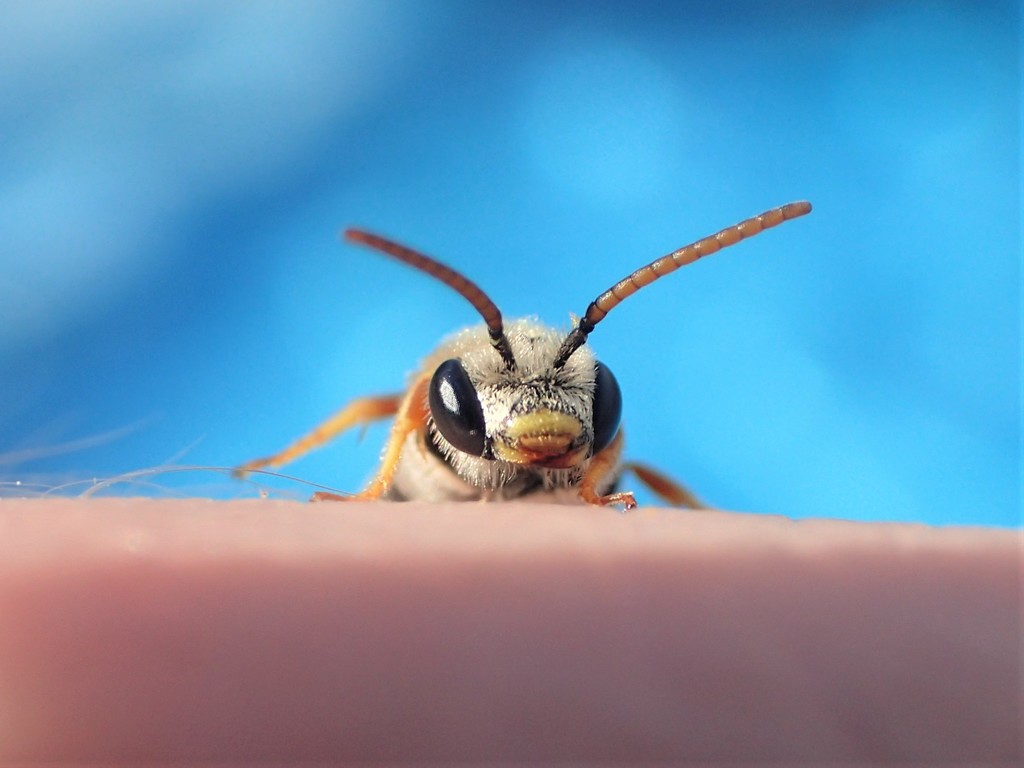
(c) Kristen Diesburg, some rights reserved (CC BY) · licence
Family: Halictidae · Class: Insecta · Order: Hymenoptera
Halictus ligatus (Ligated Furrow Bee) is a California animal in the Halictidae family.
The ligated furrow bee is a medium-sized sweat bee measuring approximately 6-12 mm in length. Adults display the characteristic metallic sheen typical of the Halictidae family, with a dark bronze to greenish-black coloration on the head and thorax. The abdomen shows distinct pale bands of pubescence, giving the species its common name reference to 'ligated' or banded appearance. Females are generally larger than males and possess specialized pollen-collecting structures on their hind legs called scopae. This species exhibits a broad distribution across North America, ranging from southern Canada through much of the United States. In California, Halictus ligatus occurs throughout various elevations and habitat types, from coastal areas to inland valleys and foothills. The species has been documented in multiple western states and extends eastward across the continental United States. Recent surveys at Middle Mississippi River National Wildlife Refuge found H. ligatus comprising 8% of collected bee specimens, indicating stable populations in suitable habitat (USFWS 2023). Ligated furrow bees occupy diverse habitat types including agricultural areas, native grasslands, riparian zones, and urban environments. They demonstrate particular affinity for areas with abundant flowering plants and suitable nesting substrates. The species nests in the ground, typically in sandy or well-drained soils where females excavate burrows for their offspring. Adults are commonly observed foraging on various flowering plants, including sunflowers where they serve as important native pollinators alongside other bee species (Xerces Society). This species exhibits eusocial behavior with overlapping generations and division of labor among colony members. Females emerge in spring and establish nests, with subsequent generations continuing through summer and fall. The species demonstrates broad floral preferences, visiting numerous plant families for nectar and pollen resources. In agricultural systems, H. ligatus serves as a valuable pollinator of hybrid sunflowers in California's Central Valley, where native bees including this species contribute significantly to crop pollination alongside managed honey bee colonies (Xerces Society). Adults are active from spring through fall, with peak abundance typically occurring during mid-summer flowering periods. Currently, Halictus ligatus holds no special conservation status at federal or state levels. The species appears to maintain stable populations across its range and demonstrates adaptability to various habitat types including agricultural landscapes. However, like many native bee species, populations may face pressure from habitat loss, pesticide use, and agricultural intensification. The species' presence in wildlife refuge surveys suggests it benefits from habitat conservation efforts. Continued monitoring of native pollinator communities, including H. ligatus, remains important for understanding long-term population trends and potential conservation needs. The species' role as a crop pollinator highlights its economic value and the importance of maintaining diverse native bee communities in agricultural landscapes.
Classification
Class: Insecta · Order: Hymenoptera · Family: Halictidae
Frequently asked questions
How is Halictus ligatus classified?
Halictus ligatus belongs to class Insecta, order Hymenoptera, family Halictidae.
What family does Halictus ligatus belong to?
Halictus ligatus is in the Halictidae family.
What is Halictus ligatus?
The ligated furrow bee is a medium-sized sweat bee measuring approximately 6-12 mm in length.
Is Halictus ligatus found in California?
Yes. Halictus ligatus is recorded in California in The California Species Project's catalogue.
Related species
Other California species in the same genus, family, or bioregion.
Data from The California Species Project — 14,000+ California species with verified data from CNPS, CDFW, USFWS, and more.