Haliotis corrugata
Pink Abalone
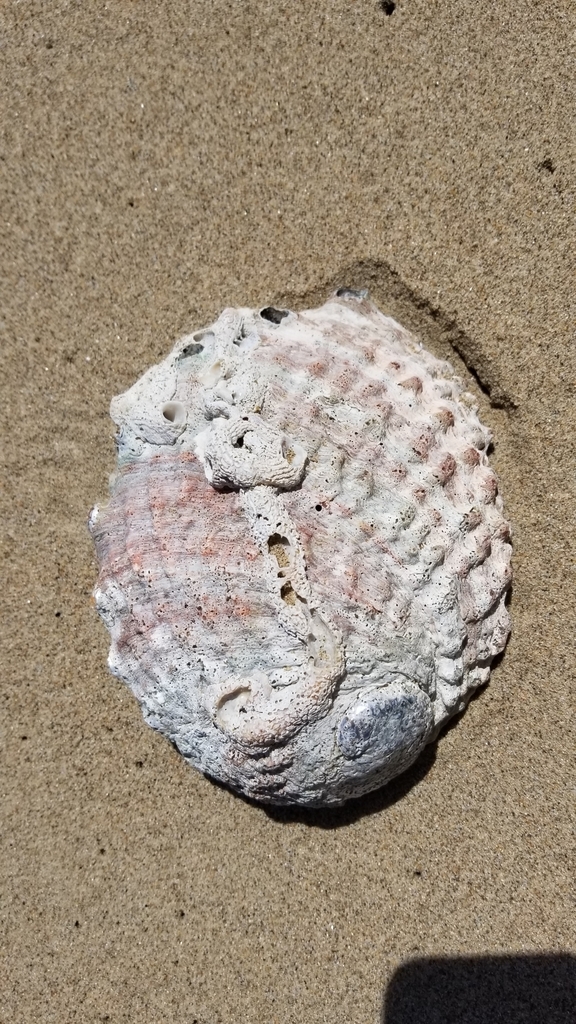
(c) Nicole, some rights reserved (CC BY) · licence
Family: Haliotidae · Class: Gastropoda · Order: Lepetellida
Conservation status: G3? S2?
Haliotis corrugata (Pink Abalone) is a California animal in the Haliotidae family.
The pink abalone is a large marine gastropod mollusk in the family Haliotidae. Adults typically reach 200 to 250 mm (8 to 10 inches) in shell length, making it one of the larger abalone species along the California coast. The shell exterior displays a dull green to reddish-brown coloration with irregular corrugated sculpture and a distinctive mottled, sharp scalloped margin. Pink abalone are distinguished from other species by having 2 to 4 round, highly elevated respiratory holes and a black body with black tentacles. The shell interior exhibits the characteristic iridescent nacre (mother-of-pearl) with pink and blue tones. Pink abalone occur along the southern California coast, including both mainland waters and the Channel Islands. According to the California Department of Fish and Wildlife, their primary geographic range encompasses southern regions of the state, with populations documented around the mainland coast and offshore islands. Historically, pink abalone were more widely distributed, but their current range has contracted significantly due to various pressures. This species inhabits rocky reef environments and kelp bed ecosystems, typically at depths ranging from the intertidal zone to 37 meters (120 feet). Pink abalone prefer areas with crevices in rocky reefs, kelp beds, and rock outcrops that provide shelter and protection. According to CDFW data, they generally occur where water temperatures remain above 14°C (57°F), indicating their preference for warmer southern California waters. Juveniles utilize similar crevice habitats in rocky reef systems. Pink abalone are herbivorous grazers that feed primarily on drift algae, including various species of kelp and other marine macroalgae. Like other abalone species, they exhibit planktonic larval development with a larval duration of 4 to 7 days, allowing for potential dispersal during this phase. However, adult dispersal potential is low, as mature individuals are relatively sedentary and remain closely associated with their preferred rocky habitat. Reproduction involves external fertilization, with females releasing eggs and males releasing sperm into the water column. The conservation status of pink abalone reflects significant population declines throughout their range. While not currently listed under the federal Endangered Species Act, the species carries a Global/State Rank of G3?/S2?, indicating it is vulnerable globally and imperiled in California. Commercial and recreational harvest pressures, combined with habitat degradation, disease outbreaks, and climate change effects, have contributed to substantial population reductions. The species' low adult dispersal capability limits natural recolonization of depleted areas, making recovery particularly challenging. Marine protected areas, including state marine reserves around the Channel Islands, now provide critical refuge habitat where pink abalone populations can potentially recover without harvest pressure. Current management efforts focus on harvest restrictions and habitat protection to prevent further population decline.
Classification
Class: Gastropoda · Order: Lepetellida · Family: Haliotidae
Conservation status
G3? S2?
Frequently asked questions
How is Haliotis corrugata classified?
Haliotis corrugata belongs to class Gastropoda, order Lepetellida, family Haliotidae.
What family does Haliotis corrugata belong to?
Haliotis corrugata is in the Haliotidae family.
Is Haliotis corrugata protected or of conservation concern?
Haliotis corrugata carries the following status: G3? S2?.
What is Haliotis corrugata?
The pink abalone is a large marine gastropod mollusk in the family Haliotidae.
Is Haliotis corrugata found in California?
Yes. Haliotis corrugata is recorded in California in The California Species Project's catalogue.
Related species
Other California species in the same genus, family, or bioregion.
Data from The California Species Project — 14,000+ California species with verified data from CNPS, CDFW, USFWS, and more.