Haliotis cracherodii
Black abalone
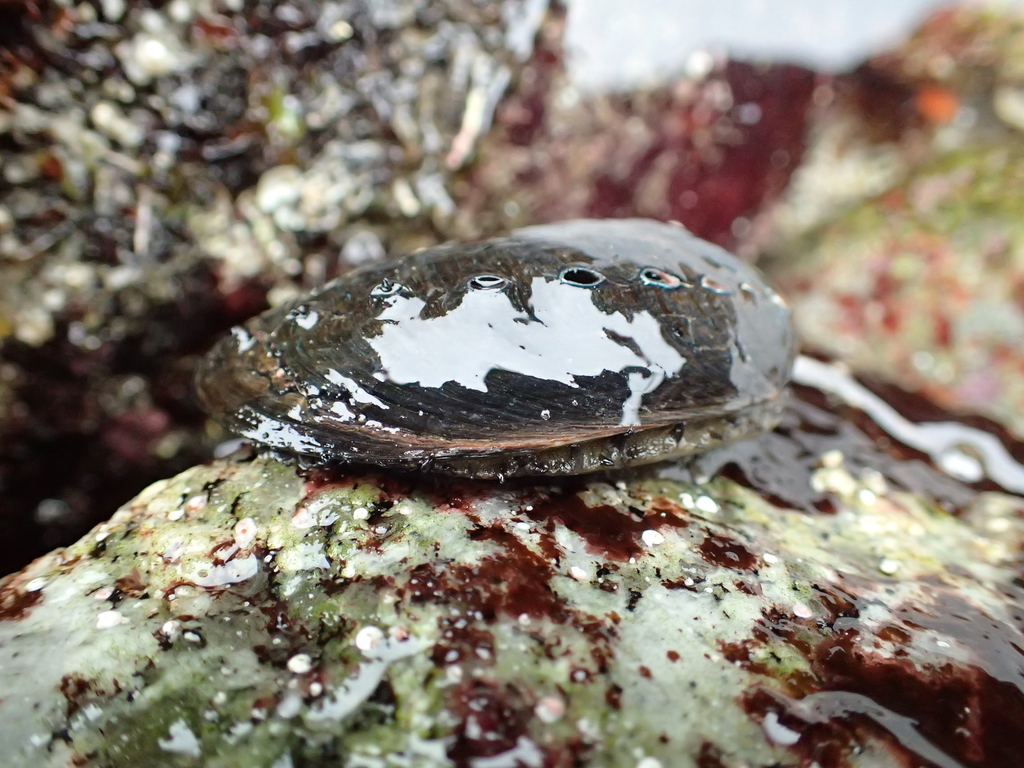
(c) Allison Gong, some rights reserved (CC BY) · licence
Family: Haliotidae · Class: Gastropoda · Order: Lepetellida
Conservation status: Endangered · G3 S2
Haliotis cracherodii (Black abalone) is a California animal in the Haliotidae family.
The black abalone is a marine gastropod mollusk endemic to the rocky intertidal zones of the eastern Pacific Ocean. Adults typically measure 15 to 20 centimeters (6 to 8 inches) in shell length, making it one of the smaller abalone species. The shell is characterized by its distinctive black or dark brown coloration, with a relatively smooth exterior surface compared to other abalone species. The shell features a series of respiratory holes along its edge, typically numbering five to nine open pores. The muscular foot, used for attachment to rocky substrates, appears dark gray to black. Historically, black abalone ranged from Point Arena in northern California south to Baja California, Mexico. The species was once abundant throughout this range, particularly in the Channel Islands and along the mainland coast of Southern California. Current populations are severely fragmented, with the most stable remaining populations found in the northern portions of the range, including areas around Monterey Bay and the northern Channel Islands. Black abalone inhabit the high to mid-intertidal zone, typically occupying cracks, crevices, and surge channels in rocky substrates. They are found from the intertidal zone to depths of approximately 6 meters (20 feet), though they are most abundant in areas regularly exposed to wave action. The species requires hard substrates for attachment and areas with sufficient algal growth for feeding. Unlike deeper-dwelling abalone species, black abalone are well-adapted to the extreme conditions of the intertidal zone, including temperature fluctuations and periodic air exposure. Black abalone are herbivorous grazers, feeding primarily on drift algae and kelp fragments, as well as algae growing on rock surfaces. They use their radula, a rasping feeding structure, to scrape food from substrates. The species exhibits limited mobility, typically remaining within small home ranges. Reproduction occurs through broadcast spawning, with females releasing eggs and males releasing sperm into the water column. Spawning typically occurs during warmer months, with larvae spending several days in the plankton before settling and metamorphosing. The black abalone was listed as endangered under the Endangered Species Act in 2009 by the National Marine Fisheries Service. The primary cause of population decline was withering syndrome, a disease caused by a rickettsial-like prokaryote that devastated populations throughout Southern California during the 1980s and 1990s. The disease is temperature-dependent, with higher water temperatures increasing both infection rates and mortality. Additional threats include habitat degradation, pollution, predation, and climate change effects. Current population estimates suggest the species has experienced declines exceeding 90% from historical levels. Recovery efforts focus on habitat protection through marine protected areas, disease monitoring, and potential captive breeding programs to support population restoration.
Classification
Class: Gastropoda · Order: Lepetellida · Family: Haliotidae
Conservation status
Endangered · G3 S2
Frequently asked questions
How is Haliotis cracherodii classified?
Haliotis cracherodii belongs to class Gastropoda, order Lepetellida, family Haliotidae.
What family does Haliotis cracherodii belong to?
Haliotis cracherodii is in the Haliotidae family.
Is Haliotis cracherodii protected or of conservation concern?
Haliotis cracherodii carries the following status: Endangered · G3 S2.
What is Haliotis cracherodii?
The black abalone is a marine gastropod mollusk endemic to the rocky intertidal zones of the eastern Pacific Ocean.
Is Haliotis cracherodii found in California?
Yes. Haliotis cracherodii is recorded in California in The California Species Project's catalogue.
Related species
Other California species in the same genus, family, or bioregion.
Data from The California Species Project — 14,000+ California species with verified data from CNPS, CDFW, USFWS, and more.