Haliotis fulgens
Green Abalone
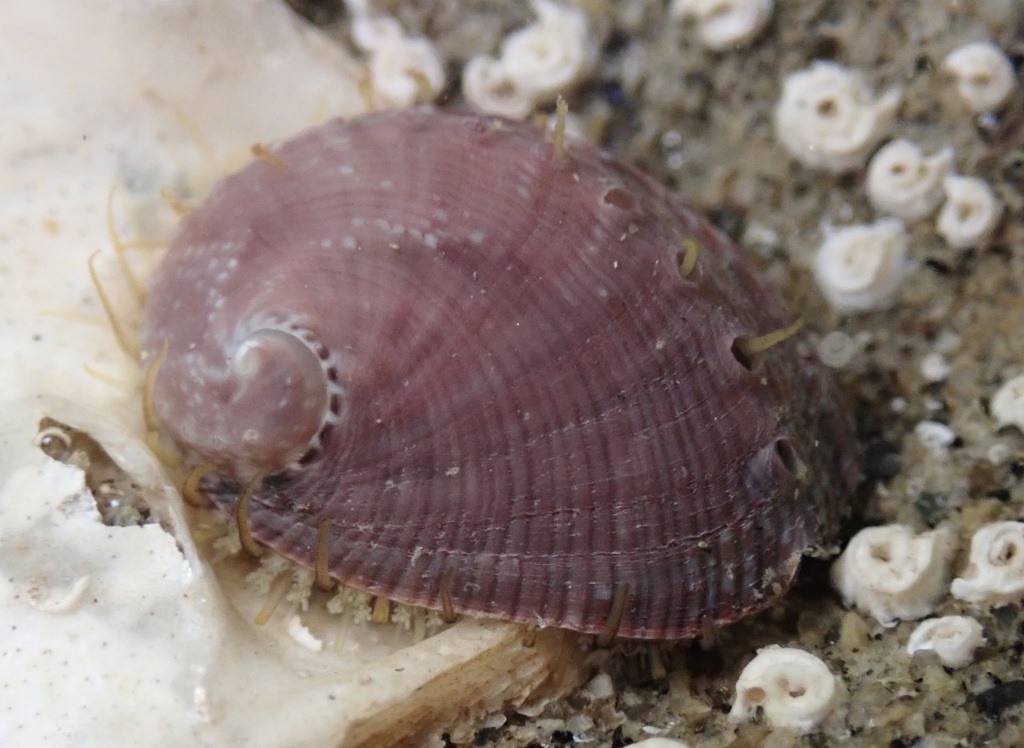
(c) Cricket Raspet, some rights reserved (CC BY) · licence
Family: Haliotidae · Class: Gastropoda · Order: Lepetellida
Conservation status: G3G4 S2
Haliotis fulgens (Green Abalone) is a California animal in the Haliotidae family.
The green abalone (Haliotis fulgens) is a large marine gastropod mollusk endemic to the eastern Pacific coast. Adults typically measure 150 to 250 mm (6 to 10 inches) in shell length, making it one of the larger abalone species. The shell exhibits a characteristic oval shape with a series of respiratory holes along the outer edge. The exterior surface displays a mottled brown to reddish-brown coloration, while the interior reveals an iridescent mother-of-pearl lining. The muscular foot, used for attachment to rocky surfaces, is dark green to black, giving the species its common name. Green abalone range from Point Conception, California, south to Bahia Magdalena, Baja California, Mexico (SeaLifeBase). In California waters, populations occur along the mainland coast and around the Channel Islands. The species was historically abundant throughout this range but has experienced significant population declines, particularly in California waters north of Point Conception. This species inhabits rocky intertidal and subtidal zones, typically at depths ranging from the low intertidal zone to approximately 30 meters (California Department of Fish and Wildlife). Green abalone occupy crevices in rocky reefs and areas adjacent to kelp beds, where they seek shelter during daylight hours. The species shows a preference for areas with moderate to strong wave action and rocky substrates that provide both food sources and protection from predators. Green abalone are herbivorous, feeding primarily on drift algae including giant kelp, feather boa kelp, and various red algae species. Juveniles consume encrusting coralline algae and small drift algae fragments. The species exhibits nocturnal feeding behavior, emerging from crevices at night to graze on available algae. Reproduction occurs through external fertilization, with females releasing eggs and males releasing sperm into the water column. Larvae spend 4 to 7 days in the plankton before settling and metamorphosing into juvenile abalone (California Department of Fish and Wildlife). Sexual maturity is reached at approximately 4 to 6 years of age, with individuals potentially living several decades. Green abalone populations have declined dramatically due to overharvesting, disease outbreaks, and habitat degradation. The species is particularly vulnerable to withering syndrome, a bacterial disease that has caused mass mortalities in southern California populations. Commercial and recreational fishing pressure historically reduced populations to critically low levels in many areas. Climate change and ocean acidification pose additional threats by affecting kelp forest ecosystems and shell formation. The species currently holds a state rank of S2 (imperiled) and a global rank of G3G4 (vulnerable to apparently secure), reflecting conservation concerns. Recovery efforts include habitat restoration, disease monitoring, and outplanting programs using captive-bred individuals to supplement wild populations.
Classification
Class: Gastropoda · Order: Lepetellida · Family: Haliotidae
Conservation status
G3G4 S2
Frequently asked questions
How is Haliotis fulgens classified?
Haliotis fulgens belongs to class Gastropoda, order Lepetellida, family Haliotidae.
What family does Haliotis fulgens belong to?
Haliotis fulgens is in the Haliotidae family.
Is Haliotis fulgens protected or of conservation concern?
Haliotis fulgens carries the following status: G3G4 S2.
What is Haliotis fulgens?
The green abalone (Haliotis fulgens) is a large marine gastropod mollusk endemic to the eastern Pacific coast.
Is Haliotis fulgens found in California?
Yes. Haliotis fulgens is recorded in California in The California Species Project's catalogue.
Related species
Other California species in the same genus, family, or bioregion.
Data from The California Species Project — 14,000+ California species with verified data from CNPS, CDFW, USFWS, and more.