Haliotis kamtschatkana
Pinto Abalone
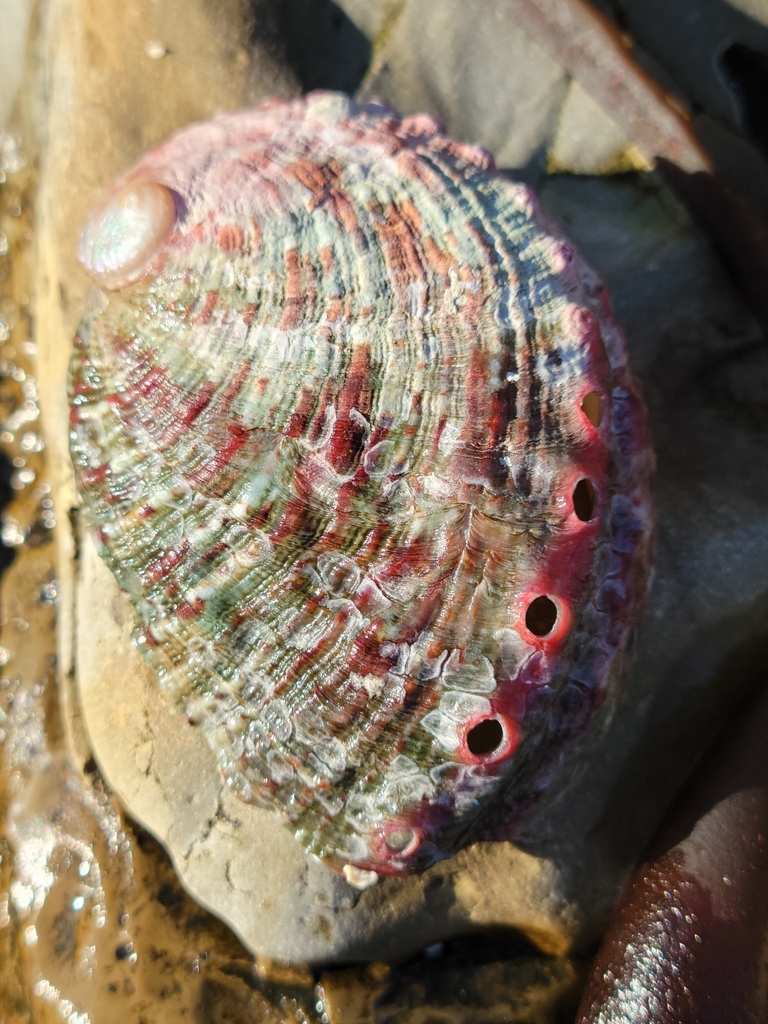
no rights reserved · CC0
Family: Haliotidae · Class: Gastropoda · Order: Lepetellida
Conservation status: G4 S2
Haliotis kamtschatkana (Pinto Abalone) is a California animal in the Haliotidae family.
The pinto abalone is a large marine gastropod mollusk native to the northeastern Pacific Ocean. Adults typically reach 150 to 175 mm (5.9 to 6.9 inches) in shell length, with some individuals exceeding 200 mm (7.9 inches). The shell is oval-shaped with a relatively low profile and displays mottled coloration ranging from reddish-brown to greenish-brown with darker patches. The interior exhibits the characteristic iridescent nacre typical of abalone species. Five to seven open respiratory holes along the shell's left margin distinguish this species from other Pacific abalone. Pinto abalone occur along the Pacific coast from southeastern Alaska to Point Conception in central California. The species ranges from the intertidal zone to depths of approximately 160 meters (525 feet), with highest densities typically found between 10 and 40 meters (33 to 131 feet). Populations are distributed across rocky subtidal habitats from British Columbia through Washington, Oregon, and northern California. The subspecies H. k. assimilis historically occurred in southern California waters but has experienced severe population decline. This species inhabits rocky reefs, boulder fields, and areas with hard substrate interspersed with sand channels. Pinto abalone prefer areas with moderate to strong water movement and adequate crevices for shelter. Juveniles often occupy shallower waters with dense kelp cover, while adults may be found in deeper, more exposed locations. The species requires rocky surfaces for attachment and areas where drift kelp and other marine algae accumulate. Pinto abalone are herbivorous, feeding primarily on drift kelp and other detached marine algae rather than grazing directly on attached plants. According to the California Department of Fish and Wildlife (2005), this feeding behavior distinguishes abalone from sea urchins, which can overgraze live kelp and create barren areas. Reproduction occurs through broadcast spawning, with females releasing millions of eggs into the water column where external fertilization takes place. Larvae undergo a planktonic stage before settling and metamorphosing into juvenile abalone. The species exhibits slow growth rates and delayed sexual maturity, typically reaching reproductive age at 4 to 6 years. Pinto abalone populations have experienced significant decline throughout their range due to multiple factors including overfishing, disease, and habitat degradation. The species currently holds a Global rank of G4 (apparently secure globally) but a State rank of S2 (imperiled in California), reflecting the contrast between stable northern populations and severely depleted California stocks. Commercial and recreational fisheries historically targeted this species, contributing to population declines. Withering syndrome, a bacterial disease affecting abalone species, has further impacted populations. Ocean acidification poses an emerging threat to this calcifying species, potentially affecting shell development and larval survival. The California Abalone Recovery and Management Plan provides a framework for population recovery and future management of all California abalone species, including pinto abalone.
Classification
Class: Gastropoda · Order: Lepetellida · Family: Haliotidae
Conservation status
G4 S2
Frequently asked questions
How is Haliotis kamtschatkana classified?
Haliotis kamtschatkana belongs to class Gastropoda, order Lepetellida, family Haliotidae.
What family does Haliotis kamtschatkana belong to?
Haliotis kamtschatkana is in the Haliotidae family.
Is Haliotis kamtschatkana protected or of conservation concern?
Haliotis kamtschatkana carries the following status: G4 S2.
What is Haliotis kamtschatkana?
The pinto abalone is a large marine gastropod mollusk native to the northeastern Pacific Ocean.
Is Haliotis kamtschatkana found in California?
Yes. Haliotis kamtschatkana is recorded in California in The California Species Project's catalogue.
Related species
Other California species in the same genus, family, or bioregion.
Data from The California Species Project — 14,000+ California species with verified data from CNPS, CDFW, USFWS, and more.