Haliotis rufescens
Red Abalone
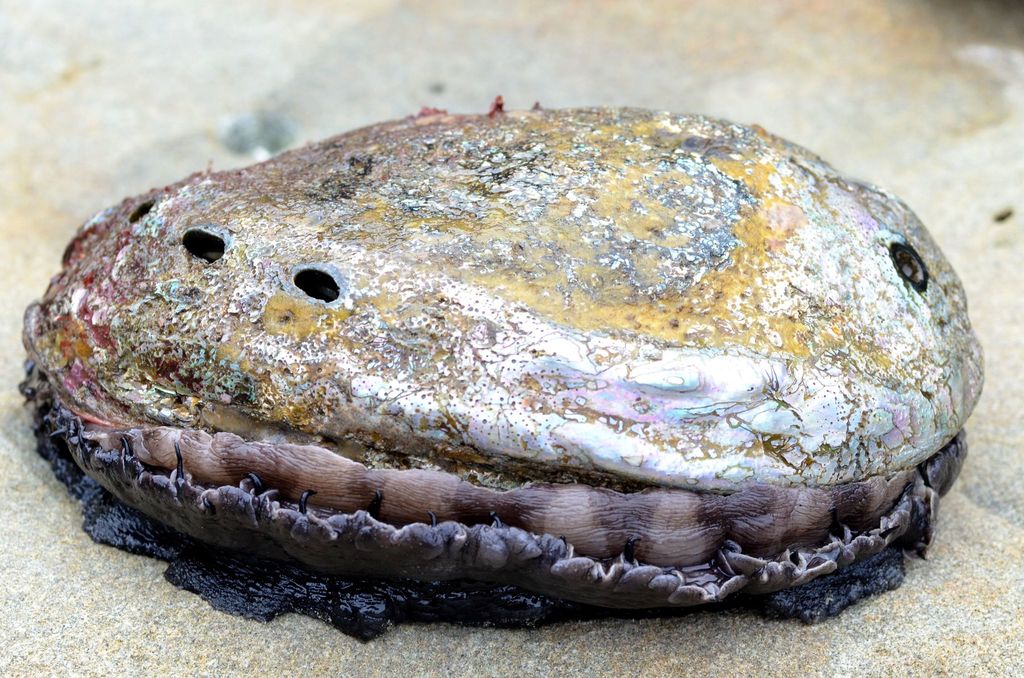
(c) dloarie, some rights reserved (CC BY) · licence
Family: Haliotidae · Class: Gastropoda · Order: Lepetellida
Haliotis rufescens (Red Abalone) is a California animal in the Haliotidae family.
The red abalone is the largest species of abalone found in California waters and the largest gastropod mollusk in North America. Adults typically measure 200 to 250 mm (7.9 to 9.8 inches) in shell length, though exceptional specimens can reach 300 mm (11.8 inches). The shell exhibits a distinctive red-brown coloration on the exterior with a brilliant iridescent nacre (mother-of-pearl) interior displaying blue, green, and pink hues. The shell is characterized by three to four open respiratory holes near the edge and a relatively low, flattened profile compared to other abalone species. Historically, red abalone ranged from Sunset Bay, Oregon, south to Baja California, Mexico. The species was abundant throughout California's rocky intertidal and subtidal zones, with particularly dense populations along the North Coast from Mendocino to Sonoma counties. Currently, the species maintains viable populations primarily in Northern California waters, with the most robust populations occurring north of San Francisco Bay. Populations in Central and Southern California have experienced severe declines, with the species now rare or absent from much of its former range. Red abalone inhabit rocky intertidal and shallow subtidal environments from the low tide zone to depths of approximately 40 meters (131 feet). The species requires hard substrate for attachment and prefers areas with strong water movement that delivers food and oxygen. Prime habitat includes granite and sandstone reefs, boulder fields, and rocky ledges with crevices that provide shelter. Kelp forests, particularly those dominated by bull kelp (Nereocystis luetkeana) and giant kelp (Macrocystis pyrifera), constitute essential habitat as they provide both food and habitat structure. Red abalone are herbivorous grazers that feed primarily on drift algae, including various species of kelp, sea lettuce, and other macroalgae. They use their muscular foot to move along rocky surfaces and their rasping radula to scrape algae from substrates. The species exhibits seasonal reproductive patterns, with spawning typically occurring from April through October when water temperatures are optimal. Females can produce millions of eggs during peak reproductive years. Red abalone are long-lived, with individuals reaching sexual maturity at 4 to 6 years and potentially living several decades. While red abalone lacks federal listing status, the species has experienced significant population declines throughout much of its range due to multiple stressors. Overharvesting, habitat degradation, disease outbreaks, and climate change impacts including marine heatwaves and ocean acidification have contributed to population reductions. The recreational red abalone fishery, once economically important to California, was closed in 2017 and remains closed until at least 2026 to allow population recovery (California Department of Fish and Wildlife). Conservation efforts focus on habitat protection through marine protected areas, population monitoring, and research into restoration techniques including aquaculture programs aimed at supplementing wild populations.
Classification
Class: Gastropoda · Order: Lepetellida · Family: Haliotidae
Frequently asked questions
How is Haliotis rufescens classified?
Haliotis rufescens belongs to class Gastropoda, order Lepetellida, family Haliotidae.
What family does Haliotis rufescens belong to?
Haliotis rufescens is in the Haliotidae family.
What is Haliotis rufescens?
The red abalone is the largest species of abalone found in California waters and the largest gastropod mollusk in North America.
Is Haliotis rufescens found in California?
Yes. Haliotis rufescens is recorded in California in The California Species Project's catalogue.
Related species
Other California species in the same genus, family, or bioregion.
Data from The California Species Project — 14,000+ California species with verified data from CNPS, CDFW, USFWS, and more.