Haploembia solieri
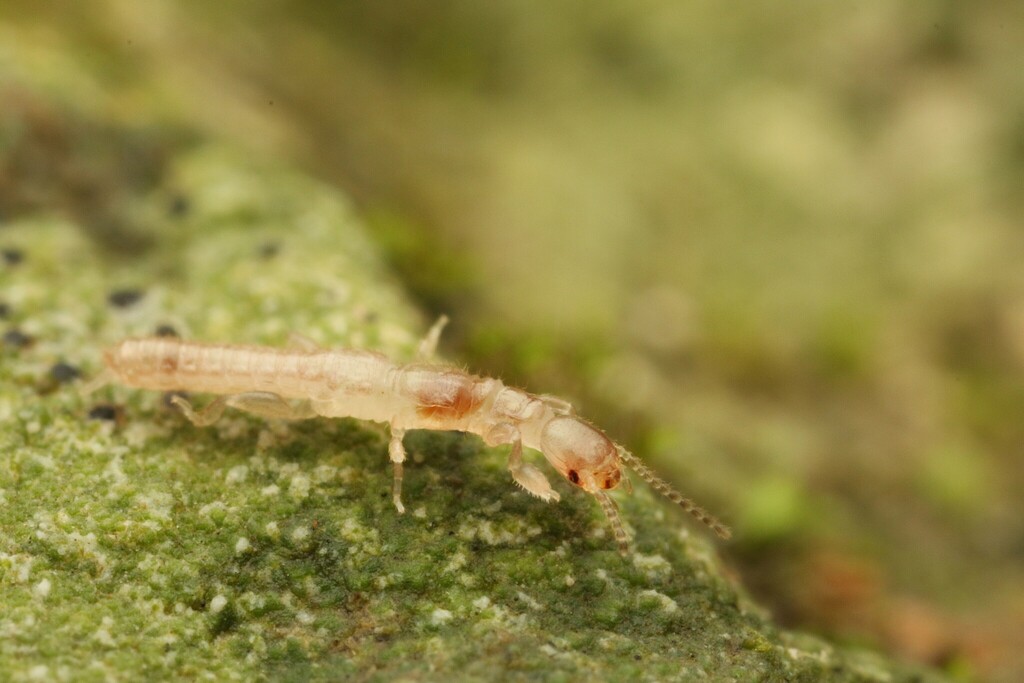
(c) Chaym Turak, some rights reserved (CC BY-SA) · licence
Family: Oligotomidae · Class: Insecta · Order: Embioptera
Haploembia solieri is a California animal in the Oligotomidae family.
Haploembia solieri is a member of the order Embioptera, commonly known as webspinners or footspinners, within the family Oligotomidae. This species belongs to a small and relatively obscure order of insects characterized by their ability to produce silk from specialized glands in their front tarsi. Members of the genus Haploembia are distinguished from other embiopterans by specific morphological features, though detailed taxonomic descriptions for H. solieri remain limited in readily accessible literature. The current distribution of Haploembia solieri is not well documented in available databases. The species appears in the U.S. Fish and Wildlife Service taxonomic database, indicating its recognition within North American fauna, though specific range information requires further documentation. Like other members of Embioptera, this species likely has a restricted distribution that may include parts of the western United States, but precise locality records are needed to establish its current range. Habitat requirements for Haploembia solieri have not been thoroughly studied or documented. Embiopterans generally inhabit cryptic microhabitats including leaf litter, under bark, in soil crevices, and among dead vegetation. Many species in this order prefer areas with stable moisture conditions and protection from direct sunlight. The specific substrate preferences, elevation range, and vegetation associations for H. solieri remain to be characterized through systematic field surveys. As with other webspinners, Haploembia solieri likely constructs silk galleries or tunnels where individuals feed and shelter. Embiopterans are generally detritivores, feeding on dead plant material, lichens, and organic debris within their silk structures. The reproductive biology of this species has not been well studied, though embiopterans typically exhibit maternal care behaviors and may show some degree of social organization within their silk colonies. Seasonal activity patterns and development timing for H. solieri require documentation through field observations. The conservation status of Haploembia solieri is currently unknown, with no federal or state listing designations as of December 2025. The species lacks population trend data, threat assessments, or specific conservation recommendations. This knowledge gap reflects the broader challenge of studying Embioptera, which are often overlooked in biodiversity surveys due to their cryptic nature and small size. The order Embioptera contains fewer than 400 described species worldwide, suggesting that many taxa may be naturally rare or highly localized in distribution. Scientific documentation for this species remains extremely limited. The information presented here synthesizes available taxonomic records and general knowledge of embiopteran biology. Detailed ecological studies, distribution surveys, and population assessments are needed to understand the biology and conservation needs of H. solieri. We welcome contributions of verified field observations, photographs, or research data to enhance this species account.
Classification
Class: Insecta · Order: Embioptera · Family: Oligotomidae
Frequently asked questions
How is Haploembia solieri classified?
Haploembia solieri belongs to class Insecta, order Embioptera, family Oligotomidae.
What family does Haploembia solieri belong to?
Haploembia solieri is in the Oligotomidae family.
What is Haploembia solieri?
Haploembia solieri is a member of the order Embioptera, commonly known as webspinners or footspinners, within the family Oligotomidae.
Is Haploembia solieri found in California?
Yes. Haploembia solieri is recorded in California in The California Species Project's catalogue.
Related species
Other California species in the same genus, family, or bioregion.
Data from The California Species Project — 14,000+ California species with verified data from CNPS, CDFW, USFWS, and more.