Haplotrema duranti
Ribbed Lancetooth
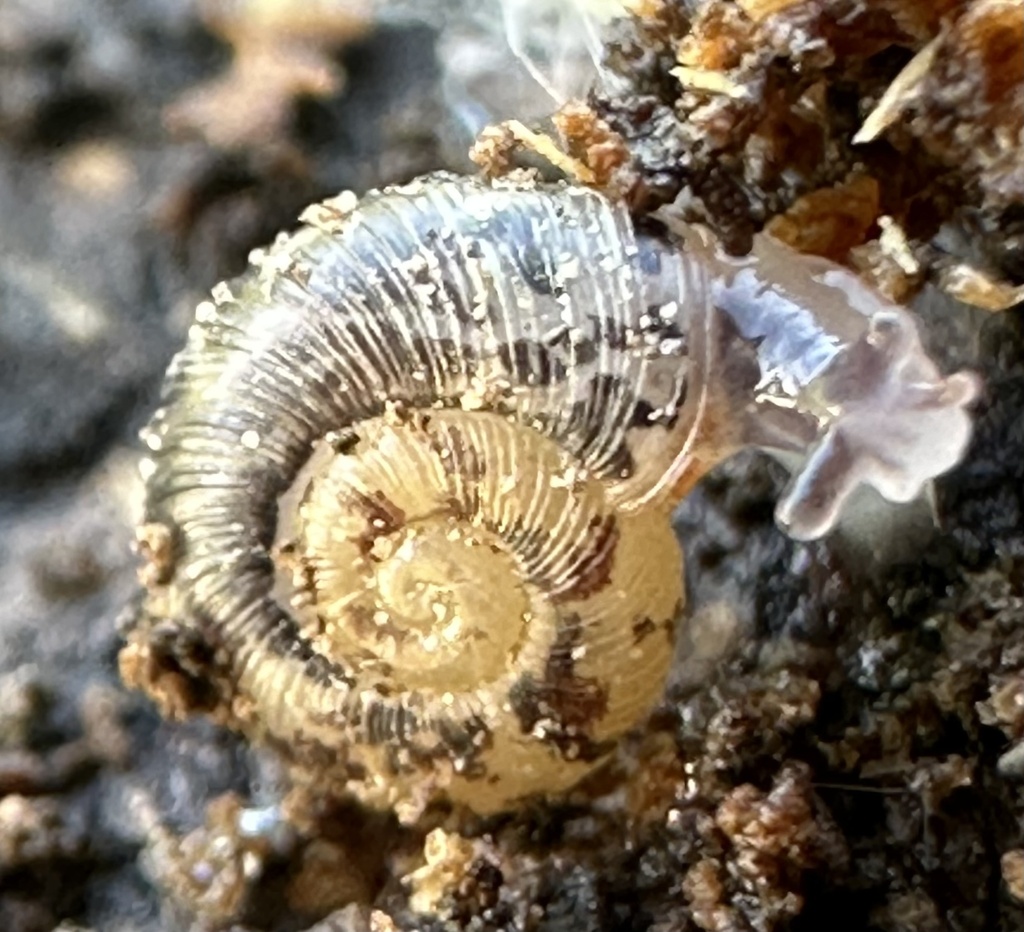
(c) william_hoyer, some rights reserved (CC BY) · licence
Family: Haplotrematidae · Class: Gastropoda · Order: Stylommatophora
Conservation status: G1G2 S1S2
Haplotrema duranti (Ribbed Lancetooth) is a California animal in the Haplotrematidae family.
The ribbed lancetooth is a small terrestrial gastropod mollusk belonging to the family Haplotrematidae. As with other members of the genus Haplotrema, this species exhibits the characteristic predatory behavior of hunting other gastropods. Terrestrial gastropods are generally sedentary, moving primarily to find food or reproduce, with olfaction serving as their primary sensory mechanism for locating prey and mates (NatureServe Explorer). The ribbed lancetooth is endemic to California, with its distribution limited to specific locations within the state. The species has been documented in San Francisco County, though current population status and exact distribution boundaries remain poorly documented. Some taxonomic sources have recognized a subspecies H. duranti continentis from San Francisco County, though the validity of this subspecies classification requires further verification (iNaturalist). Habitat requirements for H. duranti have not been extensively documented in the scientific literature. Based on the ecology of related Haplotrema species, the ribbed lancetooth likely inhabits moist terrestrial environments such as leaf litter, under rocks, or in areas with decaying organic matter. These microhabitats provide the moisture requirements essential for gastropod survival and hunting activities. The species may be associated with coastal or near-coastal environments given its documented occurrence in San Francisco County. As a member of the Haplotrematidae family, the ribbed lancetooth is carnivorous, specializing in predation on other gastropod species. This dietary specialization places the species in an important ecological role as a population regulator of other snail and slug species within its habitat. Reproductive biology and seasonal activity patterns for this species remain undocumented in available scientific literature. Like other terrestrial gastropods, the species likely exhibits seasonal activity patterns correlated with moisture availability and temperature conditions. The conservation status of the ribbed lancetooth reflects significant concern for the species' long-term viability. With a global rank of G1G2, the species is considered critically imperiled to imperiled globally, indicating extremely high to high risk of extinction. The state rank of S1S2 indicates the species is critically imperiled to imperiled within California. These rankings suggest very few populations exist, and those that do may be highly vulnerable to environmental changes or human activities. Limited scientific documentation exists for this species, making assessment of population trends and specific threats challenging. The restricted distribution and low conservation rankings suggest that habitat loss, urban development, and environmental changes pose significant risks to remaining populations. Climate change may pose additional threats through altered precipitation patterns affecting the moist microhabitats required by terrestrial gastropods. Further research is needed to document current population status, habitat requirements, and specific conservation threats facing this endemic California species.
Classification
Class: Gastropoda · Order: Stylommatophora · Family: Haplotrematidae
Conservation status
G1G2 S1S2
Frequently asked questions
How is Haplotrema duranti classified?
Haplotrema duranti belongs to class Gastropoda, order Stylommatophora, family Haplotrematidae.
What family does Haplotrema duranti belong to?
Haplotrema duranti is in the Haplotrematidae family.
Is Haplotrema duranti protected or of conservation concern?
Haplotrema duranti carries the following status: G1G2 S1S2.
What is Haplotrema duranti?
The ribbed lancetooth is a small terrestrial gastropod mollusk belonging to the family Haplotrematidae.
Is Haplotrema duranti found in California?
Yes. Haplotrema duranti is recorded in California in The California Species Project's catalogue.
Related species
Other California species in the same genus, family, or bioregion.
Data from The California Species Project — 14,000+ California species with verified data from CNPS, CDFW, USFWS, and more.