Haplotrema minimum
California Lancetooth Snail
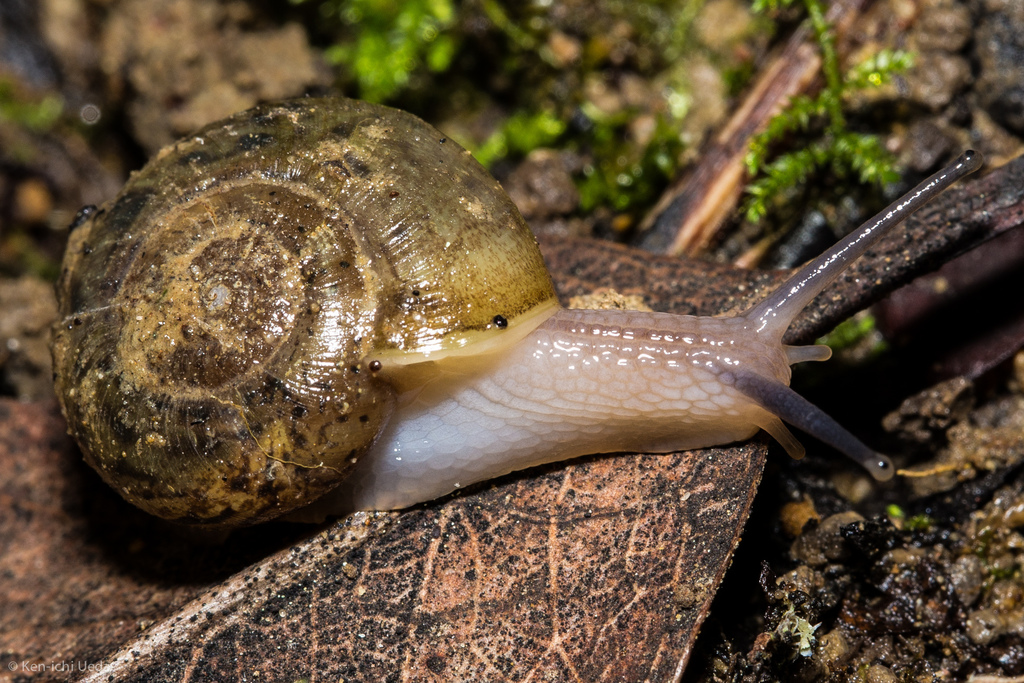
(c) Ken-ichi Ueda, some rights reserved (CC BY) · licence
Family: Haplotrematidae · Class: Gastropoda · Order: Stylommatophora
Haplotrema minimum (California Lancetooth Snail) is a California animal in the Haplotrematidae family.
The California lancetooth snail is a small terrestrial gastropod belonging to the family Haplotrematidae, a group of predatory land snails. This species represents one of approximately 19 species within the Haplotrematidae family documented in North America. Physical characteristics specific to this species have not been extensively documented in the scientific literature, though members of the genus Haplotrema typically possess elongated, conical shells with distinctive aperture features that facilitate their predatory lifestyle. The California lancetooth snail occurs in California, though its precise distribution within the state requires further documentation. The species is part of a broader group of Haplotrematidae found across western North America, with related species occurring in mixed hardwood forests and diverse elevation ranges. According to NatureServe, Haplotrema minimum has a global conservation rank of G4, indicating the species is apparently secure globally (NatureServe 2025). Habitat preferences for this species have not been well documented in available scientific literature. Related species within the genus Haplotrema typically inhabit forest environments, with some species showing preferences for mixed hardwood forests across various elevations. The family Haplotrematidae generally favors moist forest floor environments that support both the snails and their prey species. As members of the Haplotrematidae family, California lancetooth snails are specialized predators that feed primarily on other terrestrial gastropods. This carnivorous lifestyle distinguishes them from most other land snails, which are typically herbivorous or detritivorous. The predatory behavior involves tracking prey through chemical cues and consuming smaller snail species. Reproductive biology and seasonal activity patterns for this specific species have not been thoroughly studied, though related species typically exhibit seasonal reproduction cycles corresponding with favorable moisture and temperature conditions. The conservation status of the California lancetooth snail appears stable based on its G4 global ranking from NatureServe, suggesting populations are not currently at significant risk. However, like many terrestrial mollusks, the species may face threats from habitat modification, particularly changes to forest floor conditions that affect moisture retention and prey availability. The limited scientific documentation available for this species highlights the need for additional research into its distribution, habitat requirements, and population status within California. Land snail populations can be sensitive to environmental changes, including alterations in forest management practices, climate conditions, and introduction of non-native species that may compete for resources or modify habitat conditions. Scientific documentation for this species remains limited. The information presented here synthesizes available data from taxonomic databases and comparative information from related species. Additional field studies would enhance understanding of this species' specific ecological requirements, distribution patterns, and conservation needs within California's diverse terrestrial ecosystems.
Classification
Class: Gastropoda · Order: Stylommatophora · Family: Haplotrematidae
Frequently asked questions
How is Haplotrema minimum classified?
Haplotrema minimum belongs to class Gastropoda, order Stylommatophora, family Haplotrematidae.
What family does Haplotrema minimum belong to?
Haplotrema minimum is in the Haplotrematidae family.
What is Haplotrema minimum?
The California lancetooth snail is a small terrestrial gastropod belonging to the family Haplotrematidae, a group of predatory land snails.
Is Haplotrema minimum found in California?
Yes. Haplotrema minimum is recorded in California in The California Species Project's catalogue.
Related species
Other California species in the same genus, family, or bioregion.
Data from The California Species Project — 14,000+ California species with verified data from CNPS, CDFW, USFWS, and more.