Harmostes reflexulus
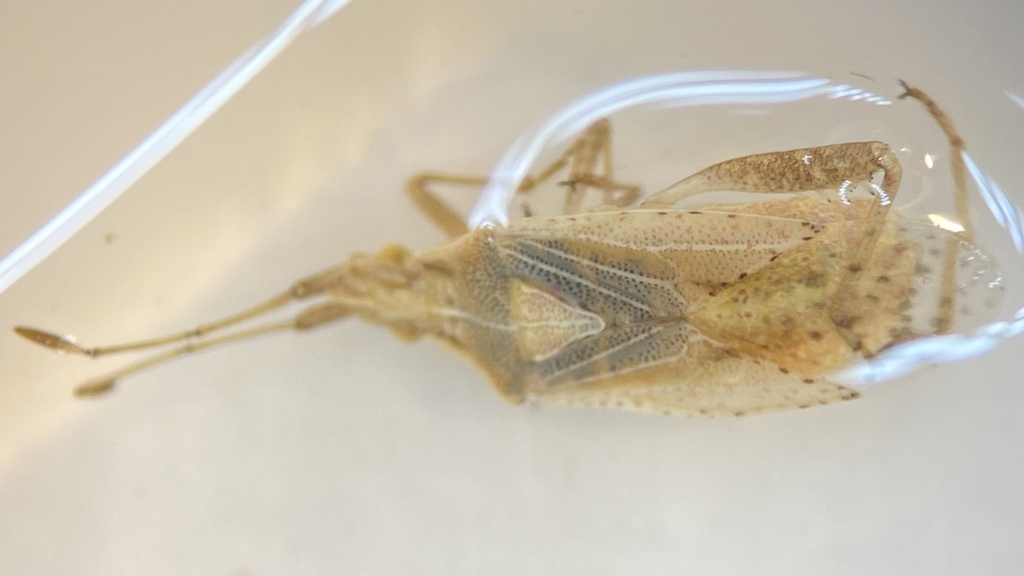
(c) Elliott Gordon, some rights reserved (CC BY) · licence
Family: Rhopalidae · Class: Insecta · Order: Hemiptera
Harmostes reflexulus is a California animal in the Rhopalidae family.
Harmostes reflexulus is a member of the family Rhopalidae, commonly known as scentless plant bugs. This family belongs to the order Hemiptera, the true bugs, which are characterized by piercing-sucking mouthparts and hemimetabolous development. Rhopalidae species are typically small to medium-sized bugs that feed on plant juices, though specific details about H. reflexulus morphology have not been well documented in accessible scientific literature. The geographic distribution of Harmostes reflexulus remains poorly documented. While other members of the genus Harmostes are known from various regions of North America, the specific range of H. reflexulus has not been clearly established in available sources. The species may occur in California based on its inclusion in state species databases, but detailed distribution records are lacking. Habitat requirements for Harmostes reflexulus have not been specifically documented. Members of the family Rhopalidae typically inhabit areas with their host plants, which vary by species. Many rhopalids are associated with herbaceous plants, shrubs, or trees where they feed on plant fluids. Without specific host plant associations documented for H. reflexulus, its preferred habitat types remain unclear. Ecological information for Harmostes reflexulus is extremely limited. Like other Rhopalidae, this species likely feeds on plant juices using its piercing-sucking mouthparts. The family exhibits typical hemipteran development with five nymphal instars before reaching adulthood. Reproductive behavior, seasonal activity patterns, and specific host plant relationships have not been documented for this species. Many rhopalids are multivoltine, producing multiple generations per year, though this has not been confirmed for H. reflexulus. The conservation status of Harmostes reflexulus is unknown. The species does not appear on federal or state threatened or endangered species lists, nor does it have an established conservation ranking from NatureServe or similar organizations. The lack of detailed ecological and distributional information makes it difficult to assess population trends or conservation needs. This data deficiency is common among many lesser-studied insect species, particularly those that may be rare, geographically restricted, or taxonomically problematic. Scientific documentation for this species remains extremely limited despite thorough database searches. The information presented here represents the extent of readily available data about Harmostes reflexulus. If you have verified information about this species' biology, distribution, ecology, or taxonomy, please contact Species List Pro to help improve this species account. Additional field research and taxonomic work may be needed to better understand this species' status and conservation needs.
Classification
Class: Insecta · Order: Hemiptera · Family: Rhopalidae
Frequently asked questions
How is Harmostes reflexulus classified?
Harmostes reflexulus belongs to class Insecta, order Hemiptera, family Rhopalidae.
What family does Harmostes reflexulus belong to?
Harmostes reflexulus is in the Rhopalidae family.
What is Harmostes reflexulus?
Harmostes reflexulus is a member of the family Rhopalidae, commonly known as scentless plant bugs.
Is Harmostes reflexulus found in California?
Yes. Harmostes reflexulus is recorded in California in The California Species Project's catalogue.
Related species
Other California species in the same genus, family, or bioregion.
Data from The California Species Project — 14,000+ California species with verified data from CNPS, CDFW, USFWS, and more.