Harpaphe haydeniana
Yellow-spotted Millipede
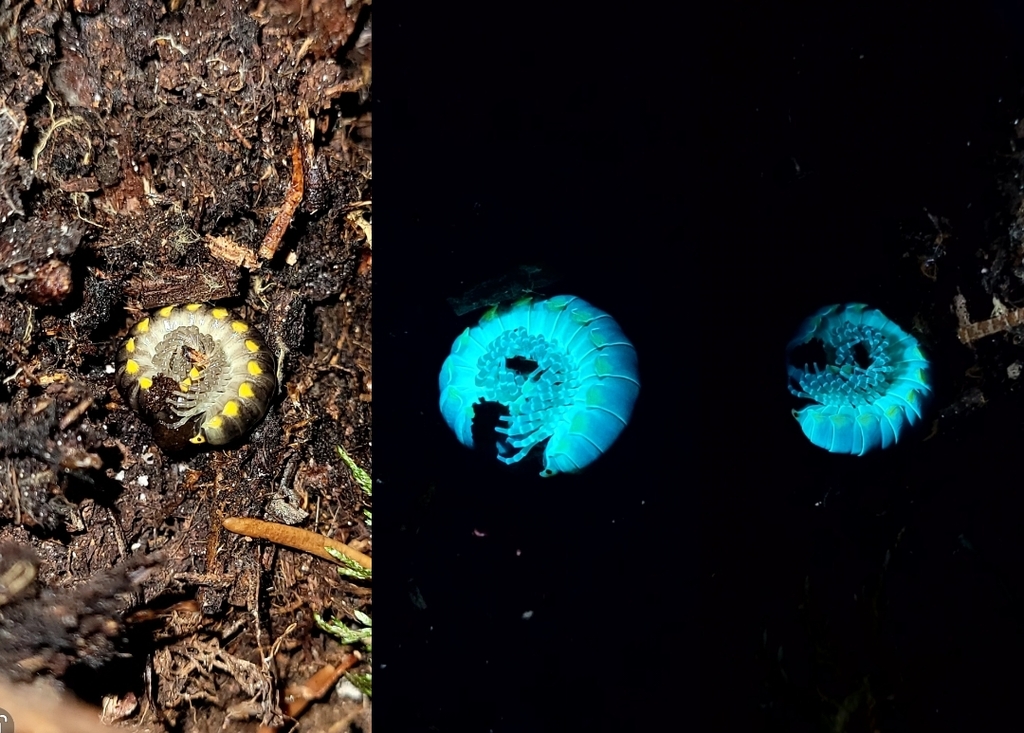
(c) Rand Workman, some rights reserved (CC BY-SA) · licence
Family: Xystodesmidae · Class: Diplopoda · Order: Polydesmida
Harpaphe haydeniana (Yellow-spotted Millipede) is a California animal in the Xystodesmidae family.
The yellow-spotted millipede is a distinctive myriapod arthropod measuring 38 to 51 mm (1.5 to 2.0 inches) in length. The species displays characteristic black body segments with bright yellow spots arranged in pairs along the dorsal surface, creating a warning coloration pattern. Adults possess approximately 20 body segments, each bearing two pairs of legs, giving the millipede its characteristic undulating locomotion. The cylindrical body tapers slightly toward both ends, with a rounded head bearing short antennae. Harpaphe haydeniana occurs along the Pacific Coast from British Columbia south through California. The species inhabits coastal and montane forests from sea level to approximately 1,500 meters (4,900 feet) elevation. In California, populations are documented in the Coast Ranges and Sierra Nevada foothills, with the species showing preference for moist coniferous and mixed forests dominated by Douglas fir, redwood, and other Pacific Northwest tree species. This millipede requires consistently moist forest floor conditions with abundant leaf litter and organic debris. The species thrives in areas with thick humus layers and decaying wood, typically found under fallen logs, in deep leaf litter, and beneath bark. Optimal habitat includes well-developed forest canopies that maintain high humidity and moderate temperatures year-round. The millipede shows sensitivity to habitat disturbance and desiccation, requiring stable microclimate conditions. Yellow-spotted millipedes are detritivores that play a crucial role in forest nutrient cycling. Juveniles feed primarily on humus, the rich organic layer of decomposed plant and animal matter at the soil surface (Xerces Society). Adults consume decaying leaves, wood fragments, and other organic debris, helping break down forest litter into soil components. The species exhibits defensive behavior by secreting hydrogen cyanide from specialized glands when threatened, earning it the alternative common name "cyanide millipede" (Xerces Society). This chemical defense produces a distinctive almond-like odor and serves as an effective deterrent against predators. Adults are most active during spring and fall months when moisture conditions are optimal. The species reproduces through direct development, with females depositing eggs in soil or humus. Juveniles emerge as miniature versions of adults and undergo multiple molts to reach maturity, adding body segments with each molt until reaching the adult complement of approximately 20 segments. Currently, Harpaphe haydeniana lacks federal or state conservation status designation. However, the species faces potential threats from forest habitat fragmentation, timber harvesting practices that remove critical organic debris, and climate change impacts on Pacific coastal forest moisture regimes. The millipede's dependence on stable forest floor conditions makes it vulnerable to logging activities that alter microhabitat humidity and remove essential organic matter. Conservation of old-growth and mature forest stands with well-developed understory and abundant coarse woody debris supports population persistence.
Classification
Class: Diplopoda · Order: Polydesmida · Family: Xystodesmidae
Frequently asked questions
How is Harpaphe haydeniana classified?
Harpaphe haydeniana belongs to class Diplopoda, order Polydesmida, family Xystodesmidae.
What family does Harpaphe haydeniana belong to?
Harpaphe haydeniana is in the Xystodesmidae family.
What is Harpaphe haydeniana?
The yellow-spotted millipede is a distinctive myriapod arthropod measuring 38 to 51 mm (1.5 to 2.0 inches) in length.
Is Harpaphe haydeniana found in California?
Yes. Harpaphe haydeniana is recorded in California in The California Species Project's catalogue.
More California species
This species has no close relatives in our California data — here are other species to explore.
Data from The California Species Project — 14,000+ California species with verified data from CNPS, CDFW, USFWS, and more.