Harrisina metallica
Western Grapeleaf Skeletonizer
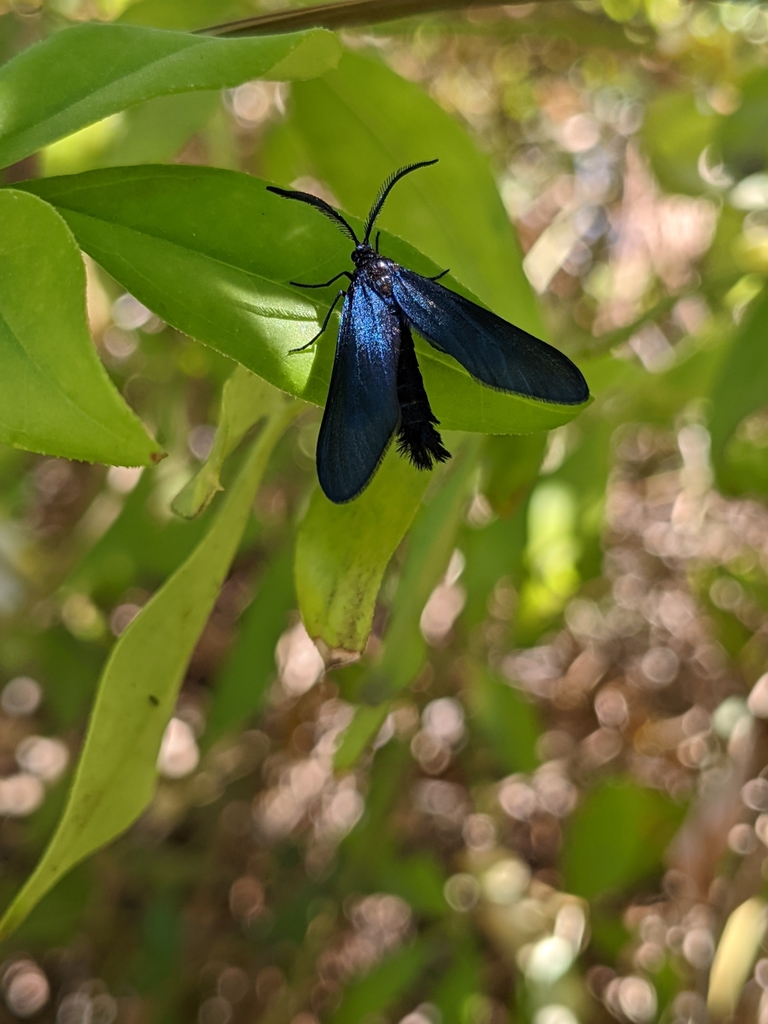
(c) Nick Lavoie, some rights reserved (CC BY) · licence
Family: Zygaenidae · Class: Insecta · Order: Lepidoptera
Harrisina metallica (Western Grapeleaf Skeletonizer) is a California animal in the Zygaenidae family.
The Western Grapeleaf Skeletonizer (Harrisina metallica) is a small day-flying moth in the family Zygaenidae. Adults measure approximately 10-12 mm (0.4-0.5 inches) in length with a wingspan of 18-22 mm (0.7-0.9 inches). The forewings are metallic blue-black or blue-green with an iridescent sheen, while the hindwings are typically darker with less metallic coloration. The body is slender and dark-colored, with feathery antennae in males and thread-like antennae in females. The larvae are distinctive yellow caterpillars with black spots and tufts of branched spines. This species occurs throughout much of western North America, from British Columbia south to Baja California and east to Colorado and New Mexico. In California, Harrisina metallica is found primarily in areas where wild grapes grow naturally, including the Central Valley, coastal ranges, and Sierra Nevada foothills at elevations from sea level to approximately 1,500 meters (4,900 feet). The species has been recorded from numerous counties including Alameda, Contra Costa, Fresno, Kern, Los Angeles, Napa, Riverside, Sacramento, San Bernardino, Sonoma, and Tulare. The Western Grapeleaf Skeletonizer inhabits areas with native and cultivated grapevines, including riparian woodlands, oak woodlands, chaparral edges, and vineyard margins. Adults are most commonly observed in sunny, open areas near grape foliage during late spring and summer months. The species shows a preference for areas with adequate moisture and partial shade provided by the host plant canopy. Adults are active during daylight hours, typically flying from May through August with peak activity in June and July. Males engage in patrolling flight behavior to locate females for mating. Females deposit small, pale yellow eggs in clusters on the undersides of grape leaves. The species completes one generation per year in most locations. Larvae feed gregariously on grape foliage, initially consuming only the leaf tissue between veins, creating a characteristic skeletonized appearance that gives the species its common name. As caterpillars mature, they may consume entire leaves. Pupation occurs in cocoons attached to bark, stems, or other protected surfaces. The larvae are specialist feeders on plants in the genus Vitis, including both wild species such as California wild grape (Vitis californica) and cultivated wine and table grapes (Vitis vinifera). This feeding specialization makes the species economically significant in grape-growing regions, where larval feeding can cause defoliation and reduce vine vigor. Currently, Harrisina metallica has no special conservation status at federal or state levels. The species appears to maintain stable populations throughout most of its range, likely benefiting from the widespread cultivation of grapes in California. However, localized populations may face pressure from intensive agricultural practices, including pesticide applications in commercial vineyards. The continued presence of native grape species in riparian and woodland habitats provides important refuge areas for wild populations of this specialized herbivore.
Classification
Class: Insecta · Order: Lepidoptera · Family: Zygaenidae
Frequently asked questions
How is Harrisina metallica classified?
Harrisina metallica belongs to class Insecta, order Lepidoptera, family Zygaenidae.
What family does Harrisina metallica belong to?
Harrisina metallica is in the Zygaenidae family.
What is Harrisina metallica?
The Western Grapeleaf Skeletonizer (Harrisina metallica) is a small day-flying moth in the family Zygaenidae.
Is Harrisina metallica found in California?
Yes. Harrisina metallica is recorded in California in The California Species Project's catalogue.
More California species
This species has no close relatives in our California data — here are other species to explore.
Data from The California Species Project — 14,000+ California species with verified data from CNPS, CDFW, USFWS, and more.