Hedriodiscus binotatus
Green Soldier Fly
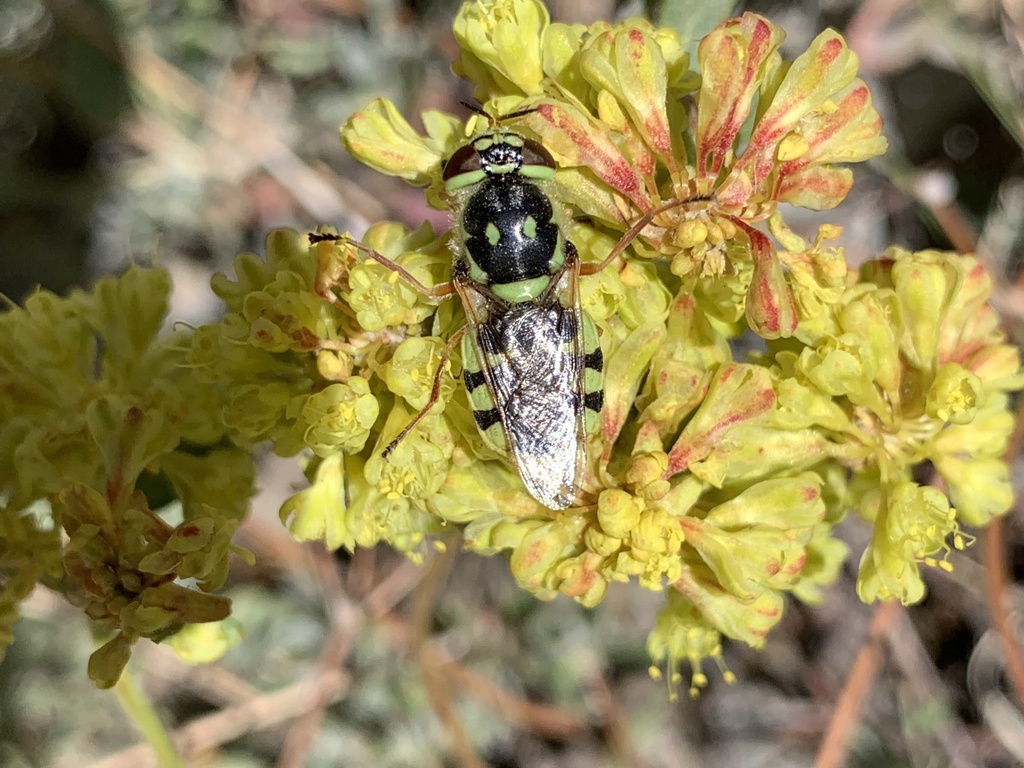
no rights reserved · CC0
Family: Stratiomyidae · Class: Insecta · Order: Diptera
Hedriodiscus binotatus (Green Soldier Fly) is a California animal in the Stratiomyidae family.
Hedriodiscus binotatus, commonly known as the green soldier fly, is a member of the family Stratiomyidae within the order Diptera. This species belongs to a diverse group of flies characterized by their often metallic coloration and distinctive wing venation patterns. Adult green soldier flies typically display the metallic green coloration suggested by their common name, though specific morphological details for this species remain poorly documented in the scientific literature. The distribution and range of Hedriodiscus binotatus have not been comprehensively mapped in available taxonomic databases. Like other members of the Stratiomyidae family, this species likely occurs across multiple regions, but specific locality records and range boundaries require further documentation. The genus Hedriodiscus represents a relatively small group within the soldier fly family, with limited distributional data available for most constituent species. Habitat preferences for H. binotatus are not well-established in current literature. Most stratiomyid flies occupy diverse ecological niches, with adults commonly found in areas with abundant flowering plants where they feed on nectar and pollen. Larval stages of soldier flies typically develop in decaying organic matter, including rotting vegetation, compost, or animal waste, though the specific substrate requirements for this species have not been documented. The life cycle and behavioral ecology of the green soldier fly follow the general pattern observed in Stratiomyidae. Adults are likely active during warmer months and engage in mating behaviors around suitable larval development sites. Female flies deposit eggs in appropriate organic substrates where larvae develop through several instars before pupating. The duration of the life cycle and seasonal activity patterns for H. binotatus specifically have not been studied in detail. Adult flies likely serve as pollinators for various flowering plants while larvae contribute to decomposition processes in their respective habitats. Hedriodiscus binotatus currently holds no formal conservation status at federal or state levels. The species is not listed under the Endangered Species Act, nor does it appear on California's special concern species lists as of December 2025. The lack of comprehensive population data and ecological studies makes it difficult to assess the conservation needs of this species. Like many invertebrates, particularly smaller dipterans, H. binotatus likely faces potential threats from habitat loss, pesticide use, and climate change, though the magnitude of these impacts remains unknown. Scientific documentation for this species remains extremely limited despite thorough searches of taxonomic databases and entomological literature. The information presented here represents the current state of knowledge for Hedriodiscus binotatus, which primarily consists of its taxonomic classification within the Stratiomyidae family. Detailed studies of this species' morphology, distribution, ecology, and life history are needed to provide a more comprehensive understanding of its biology and conservation requirements. We welcome contributions of verified scientific data, photographs, or field observations to enhance this species account.
Classification
Class: Insecta · Order: Diptera · Family: Stratiomyidae
Frequently asked questions
How is Hedriodiscus binotatus classified?
Hedriodiscus binotatus belongs to class Insecta, order Diptera, family Stratiomyidae.
What family does Hedriodiscus binotatus belong to?
Hedriodiscus binotatus is in the Stratiomyidae family.
What is Hedriodiscus binotatus?
Hedriodiscus binotatus, commonly known as the green soldier fly, is a member of the family Stratiomyidae within the order Diptera.
Is Hedriodiscus binotatus found in California?
Yes. Hedriodiscus binotatus is recorded in California in The California Species Project's catalogue.
Related species
Other California species in the same genus, family, or bioregion.
Data from The California Species Project — 14,000+ California species with verified data from CNPS, CDFW, USFWS, and more.