Hedya ochroleucana
Off-white Hedya
no rights reserved · CC0
Family: Tortricidae · Class: Insecta · Order: Lepidoptera
Hedya ochroleucana (Off-white Hedya) is a California animal in the Tortricidae family.
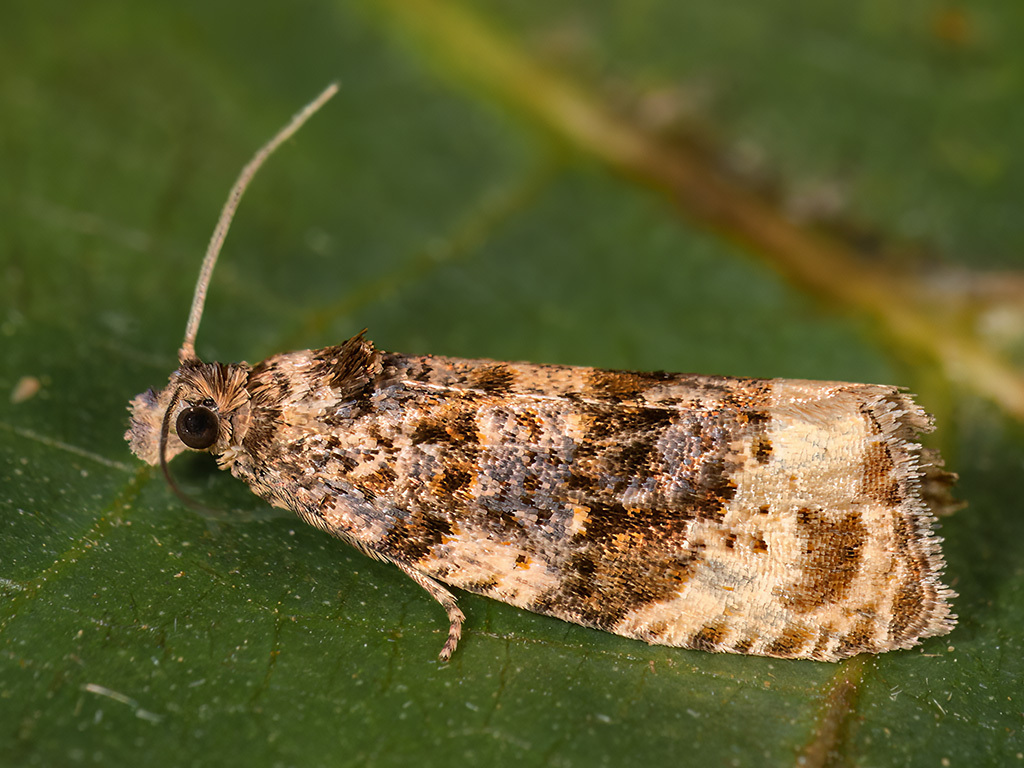
The Off-white Hedya (Hedya ochroleucana) is a small moth in the family Tortricidae, commonly known as leafroller moths. Adults typically measure 8 to 12 mm in forewing length, with a wingspan ranging from 16 to 24 mm. The forewings are pale cream to off-white in coloration, giving the species its common name. The wings display subtle markings that may include faint brownish or grayish patches, though these can be quite variable among individuals. The hindwings are typically paler than the forewings, often appearing nearly translucent white. Like other tortricids, the moths hold their wings in a bell-shaped or triangular position when at rest. Hedya ochroleucana appears to have a limited distribution in North America, though comprehensive range data for this species remains incomplete. The species has been documented in western North America, including portions of California, though specific county-level distribution records are not well-established in current literature. The moth's range may extend into other western states, but verification of these records requires additional taxonomic work within the Hedya genus. The habitat preferences of H. ochroleucana are not thoroughly documented in available scientific literature. As a member of the Tortricidae family, the species likely inhabits areas where its larval host plants occur. Many tortricid moths are associated with woody plants, shrubs, or herbaceous vegetation, though the specific plant associations for this species require further study. The elevation range and microhabitat requirements remain poorly characterized. The life history and behavior of the Off-white Hedya follow the typical tortricid pattern of complete metamorphosis. Larvae are likely leaf-tiers or leaf-rollers, creating shelters within folded or rolled leaves of their host plants. The larval feeding behavior and specific host plant relationships have not been well-documented for this species. Adult flight periods and reproductive timing are not clearly established, though many western tortricids are active during spring and early summer months. Overwintering strategy, whether as eggs, larvae, pupae, or adults, remains unknown for this species. The conservation status of Hedya ochroleucana is not formally assessed by federal or state agencies. The species does not appear on the U.S. Fish and Wildlife Service's list of threatened or endangered species, nor is it included in California's special status species lists as of December 2025. The lack of conservation status likely reflects insufficient data on population trends, distribution, and threats rather than confirmed population stability. Many small moth species face challenges from habitat loss, pesticide use, light pollution, and climate change, but specific threats to H. ochroleucana have not been evaluated. The species may benefit from broader conservation efforts targeting native plant communities and reducing pesticide applications in natural areas. Additional research is needed to better understand the species' distribution, ecology, and conservation needs before meaningful status assessments can be conducted.
Classification
Class: Insecta · Order: Lepidoptera · Family: Tortricidae
Frequently asked questions
How is Hedya ochroleucana classified?
Hedya ochroleucana belongs to class Insecta, order Lepidoptera, family Tortricidae.
What family does Hedya ochroleucana belong to?
Hedya ochroleucana is in the Tortricidae family.
What is Hedya ochroleucana?
The Off-white Hedya (Hedya ochroleucana) is a small moth in the family Tortricidae, commonly known as leafroller moths.
Is Hedya ochroleucana found in California?
Yes. Hedya ochroleucana is recorded in California in The California Species Project's catalogue.
Related species
Other California species in the same genus, family, or bioregion.
Data from The California Species Project — 14,000+ California species with verified data from CNPS, CDFW, USFWS, and more.