Hedychridium milleri
Borax Lake Cuckoo Wasp
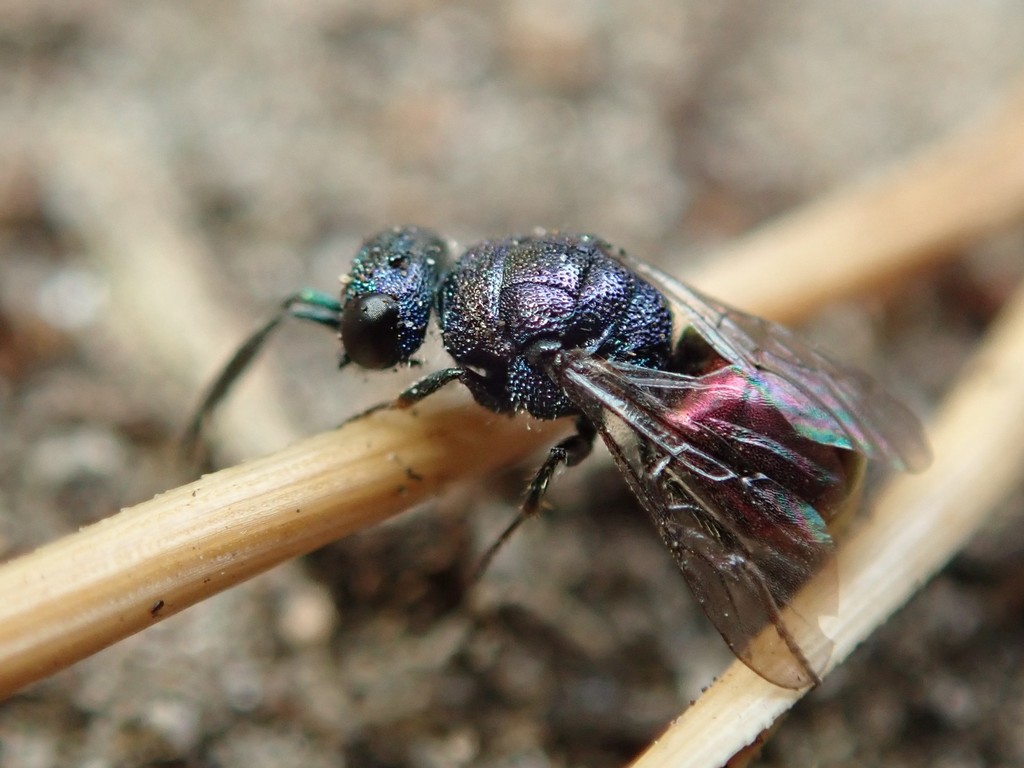
(c) Alexis Tinker-Tsavalas, some rights reserved (CC BY) · licence
Family: Chrysididae · Class: Insecta · Order: Hymenoptera
Conservation status: G1 S1
Hedychridium milleri (Borax Lake Cuckoo Wasp) is a California animal in the Chrysididae family.
Hedychridium milleri, commonly known as the Borax Lake Cuckoo Wasp, is a parasitoid wasp in the family Chrysididae. This species belongs to a group of metallic wasps characterized by their brilliant metallic coloration and cuckoo-like parasitic behavior. Adult cuckoo wasps typically measure 3-12 mm in length, with heavily sculptured integument that produces iridescent blue, green, or bronze reflections. The species exhibits the characteristic chrysidid body form with a compact, robust build and a concave pygidium that allows the wasp to curl into a defensive ball when threatened. Hedychridium milleri is endemic to California and represents one of the state's most geographically restricted arthropod species. The species' range is extraordinarily limited, being known only from the immediate vicinity of Borax Lake in Lake County, California. Borax Lake is located in the Clear Lake volcanic field of the California Coast Range, approximately 120 miles north of San Francisco. This highly restricted distribution makes the species one of California's rarest insects. The species inhabits the unique alkaline wetland ecosystem surrounding Borax Lake. This unusual habitat is characterized by highly alkaline soils with pH levels exceeding 9.0, hot springs, and specialized plant communities adapted to the extreme chemical conditions. The lake itself contains high concentrations of boron compounds, sodium carbonate, and other minerals that create a distinctive ecological niche. Elevation at the site is approximately 1,300 feet above sea level. The surrounding vegetation includes specialized alkali-tolerant plant species that may serve as habitat for the wasp's host insects. As a member of the Chrysididae, H. milleri exhibits parasitoid behavior, with females seeking out the nests of solitary bees or wasps to lay their eggs. The larvae develop as parasitoids or cleptoparasites, consuming the host's provisions or the host larva itself. Specific host relationships for this species have not been documented, but related Hedychridium species typically parasitize sphecid wasps and megachilid bees. Adult activity likely occurs during the warm months when potential hosts are active, though detailed life history information remains limited. The conservation status of Hedychridium milleri reflects its extreme rarity and restricted range. The species carries a global rank of G1, indicating it is critically imperiled globally, and a state rank of S1, indicating critical imperilment within California. With its occurrence limited to a single location, the species faces significant extinction risk from habitat modification, water diversions, geothermal development, or other disturbances to the Borax Lake ecosystem. The alkaline wetland habitat itself is considered rare and vulnerable to human activities. Climate change poses additional threats through potential alterations to the lake's hydrology and chemistry. The species' conservation depends entirely on protection of the Borax Lake area and maintenance of its unique geochemical conditions. Scientific documentation for this species remains limited. If you have additional verified information about this species' biology, distribution, or ecology, please contact Species List Pro to help improve this species account.
Classification
Class: Insecta · Order: Hymenoptera · Family: Chrysididae
Conservation status
G1 S1
Frequently asked questions
How is Hedychridium milleri classified?
Hedychridium milleri belongs to class Insecta, order Hymenoptera, family Chrysididae.
What family does Hedychridium milleri belong to?
Hedychridium milleri is in the Chrysididae family.
Is Hedychridium milleri protected or of conservation concern?
Hedychridium milleri carries the following status: G1 S1.
What is Hedychridium milleri?
Hedychridium milleri, commonly known as the Borax Lake Cuckoo Wasp, is a parasitoid wasp in the family Chrysididae.
Is Hedychridium milleri found in California?
Yes. Hedychridium milleri is recorded in California in The California Species Project's catalogue.
Related species
Other California species in the same genus, family, or bioregion.
Data from The California Species Project — 14,000+ California species with verified data from CNPS, CDFW, USFWS, and more.